

After two years in Hamas captivity, brothers David Cunio and Ariel Cunio, Argentine citizens who were abducted on October 7, are speaking together for the first time about being held separately, the hunger, fear and abuse they endured, and the moment they realized their family had survived. In an interview with Argentina’s TN network, produced with Fuente Latina, they describe what they call an ongoing nightmare that, in their words, has not truly ended.
“It was simply a nightmare,” David Cunio said of the 738 days he was held in Gaza. “When you are there, you do not know what is happening outside. Only after your release do you begin to understand the scale of the disaster.” During their captivity, the brothers had no contact with one another. “We thought the other was dead,” they said.
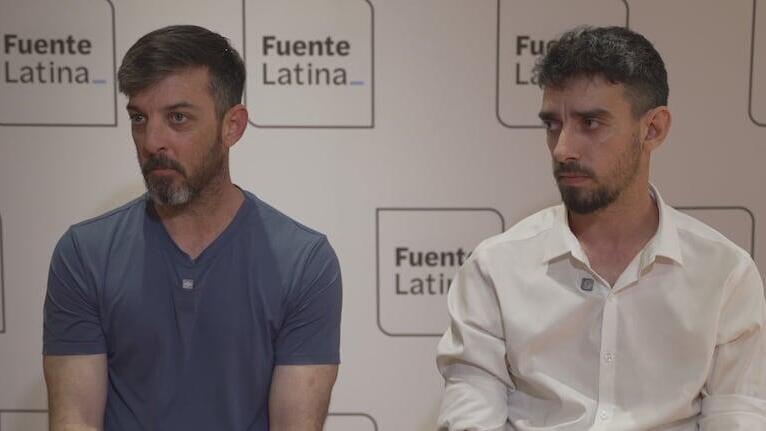
Ariel was held above ground, in homes and businesses, and was moved from place to place, mostly at night, hidden under blankets inside vehicles. David was held for most of the time in Hamas tunnels.
“I did not see the sun for 689 days,” David said. “It is an underground city. There is everything there: rooms, food, weapons.” He said they were forced to walk for long hours through narrow tunnels, sometimes for 13 hours straight, without food or water.
Separation from family: ‘The worst day of my life’
David was abducted along with his wife, Sharon, and their twin daughters, Emma and Yuli. On the 49th day of captivity, he was separated from them without receiving any information about their condition. “That was the worst day of my life,” he said. “I thought I was going to die.”
For two years, he knew nothing about his family’s fate. The last message he received was from his twin brother on the morning of the massacre, describing their home on fire and family members suffocating in the safe room. “After that, nothing,” he said. “I did not know who was alive and who was not.”

David Cunio returns to his home in Yavne alongside his wife, Sharon
(Photo: REUTERS/Hannah McKay)
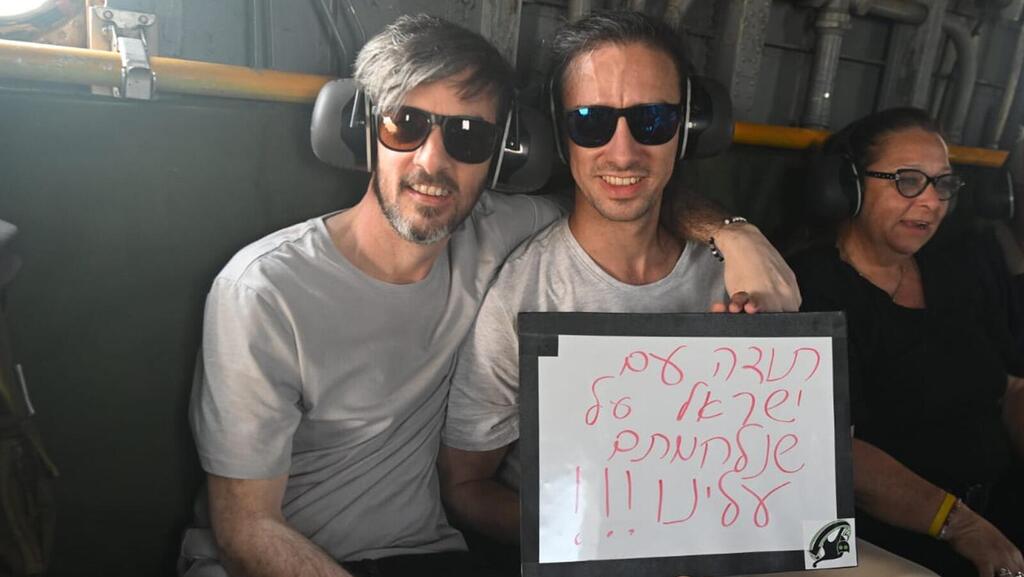
David and Ariel aboard an Israeli military helicopter after their release
(Photo: IDF Spokesperson)
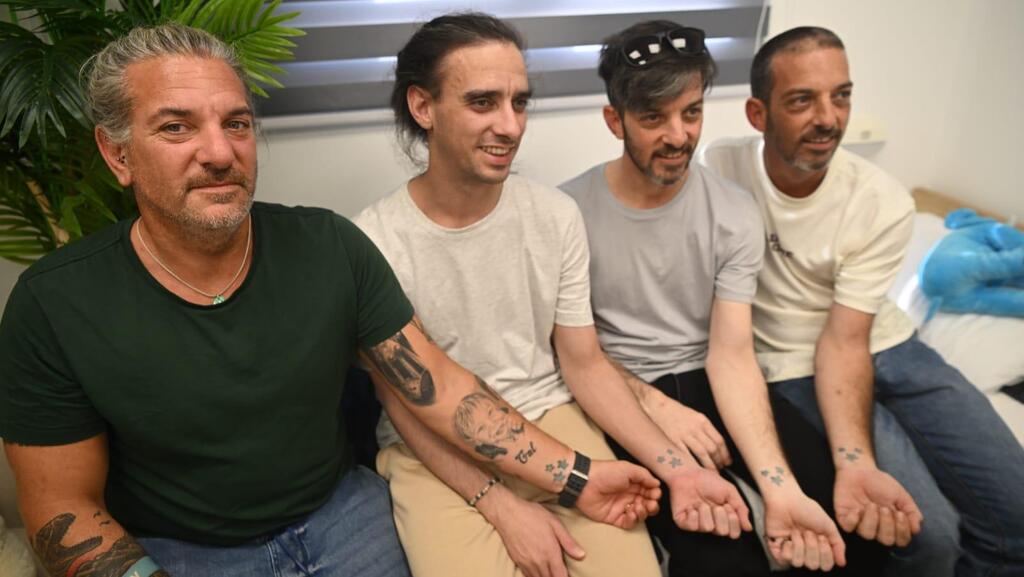
The four brothers reunited after two years
(Photo: IDF Spokesperson)
Ariel, who was abducted from the kibbutz along with his partner, Arbel Yehud, also described constant anxiety about his family, many of whom lived on the kibbutz. “The terrorists were in all the houses, at my brothers’ homes, at my grandmother’s,” he said.
The two described extremely harsh captivity conditions. “There were periods when we had one plate of rice for five people, once a day,” David said. “Sleep is not really sleep. You live in constant tension.” Alongside hunger, they also described physical and psychological violence. “There were beatings, threats with knives and weapons,” Ariel said. David described prolonged psychological abuse. “They told me my wife had left me, that my family was dead. They told every hostage something about their family, except me. That breaks you.”
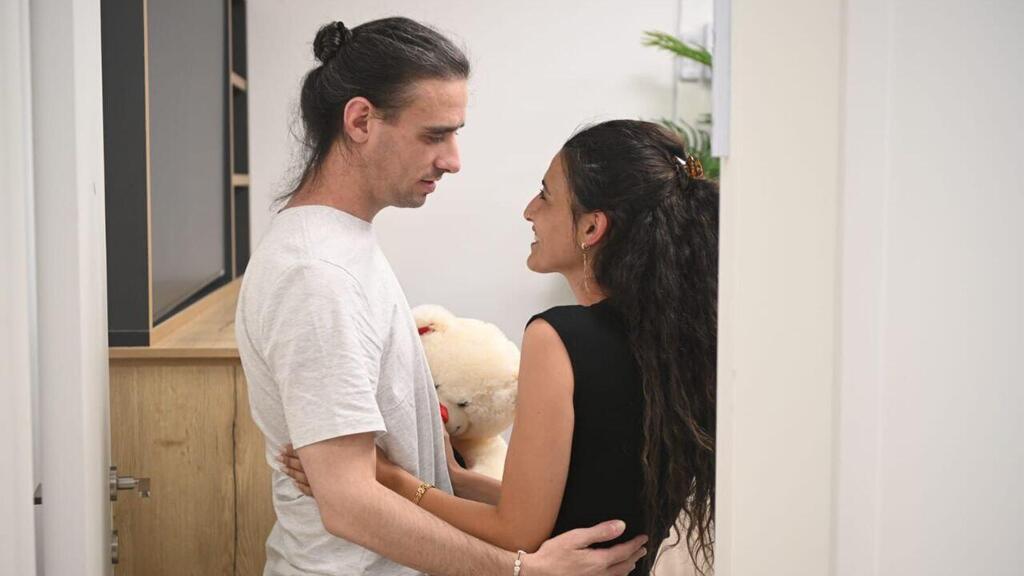
Ariel and Arbel meet for the first time after two years
(Photo: GPO)
‘As time passes, you stop believing you will be released’
Asked whether they believed they might lose their lives in captivity, both answered without hesitation. “All the time,” David said. “As time passes, you stop believing you will be released. You lose faith.” Ariel added, “I did not hear Hebrew for two years. Only Arabic. Even your thoughts start to be in Arabic. And I thought David was dead.”
Since their release, the brothers have been coping with information revealed to them only afterward and with the process of psychological rehabilitation. “We are undergoing treatment, trying to understand how to live with this,” David said. Ariel added, “I am trying not to live in the past, but to think about the future. To get married, to start a family, to live.”
At the end of the interview, they also addressed the political reality. “There can be no peace with Hamas,” David said. “They told us they would do it again, that they would kill everyone.” Alongside those words, they delivered a clear message: “There are still hostages in Gaza. Ran Gvili must come home. This cannot end like this.”