

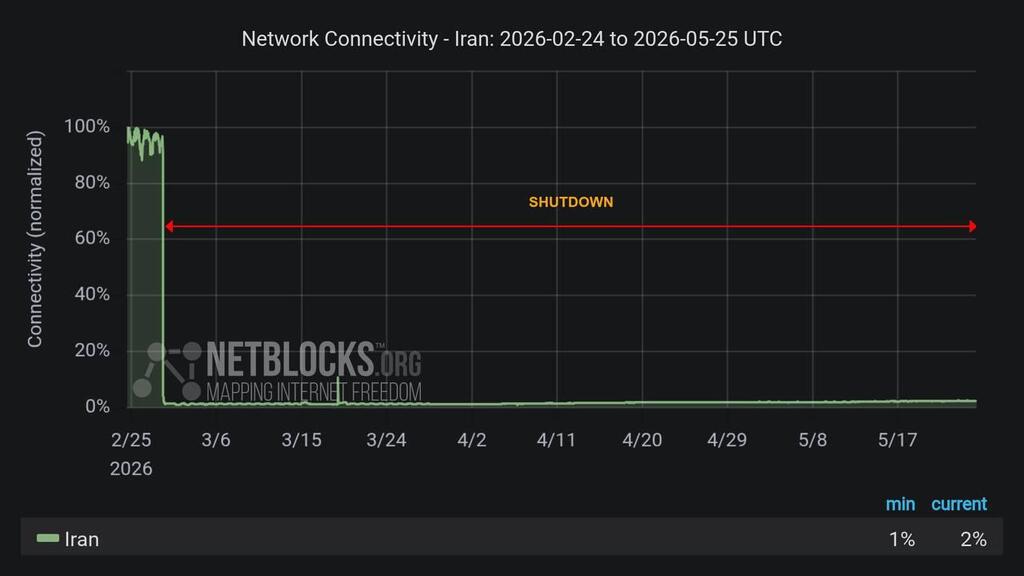
Iranian media reported Monday evening that President Masoud Pezeshkian ordered the restoration of citizens’ access to the global internet after 87 days of near-total blackout in the Islamic Republic.
The reports of the order come amid advanced contacts between the United States and Iran on an agreement to extend the ceasefire, though it was not clear whether the two developments are connected. In any case, the reports did not specify exactly when the restrictions would be lifted or how. It also remains unclear how much decision-making power Pezeshkian actually holds in Tehran, with the Revolutionary Guards, whose influence has grown significantly since the outbreak of the war, seen as the real power in the regime. So far, there have been no reports of internet access being restored in practice.
Iran’s clerical regime has routinely cut off citizens’ internet access whenever it fears a serious challenge to its rule. That was the case, for example, in January, at the height of anti-regime protests in which thousands of opponents were massacred. When the leadership felt the threat was growing, it cut off access for 18 days. When the protests subsided, internet access was restored only partially, with extensive filtering and heavy restrictions.
On February 28, when the Israeli-American attack on Iran began, internet access was blocked again. Since then, 87 days have passed, during which access has stood at only about 2% of normal levels, according to the cybersecurity and internet monitoring organization NetBlocks.
Although NetBlocks has identified long periods of internet disruption in the past, those were regional rather than nationwide, unlike the blackout now being recorded. In principle, the world record holder for disconnection from the internet is North Korea, an impoverished, closed communist dictatorship that has never connected to the global network. But among countries that did connect to it and became accustomed to using it, none has blocked access for a longer period than Iran.
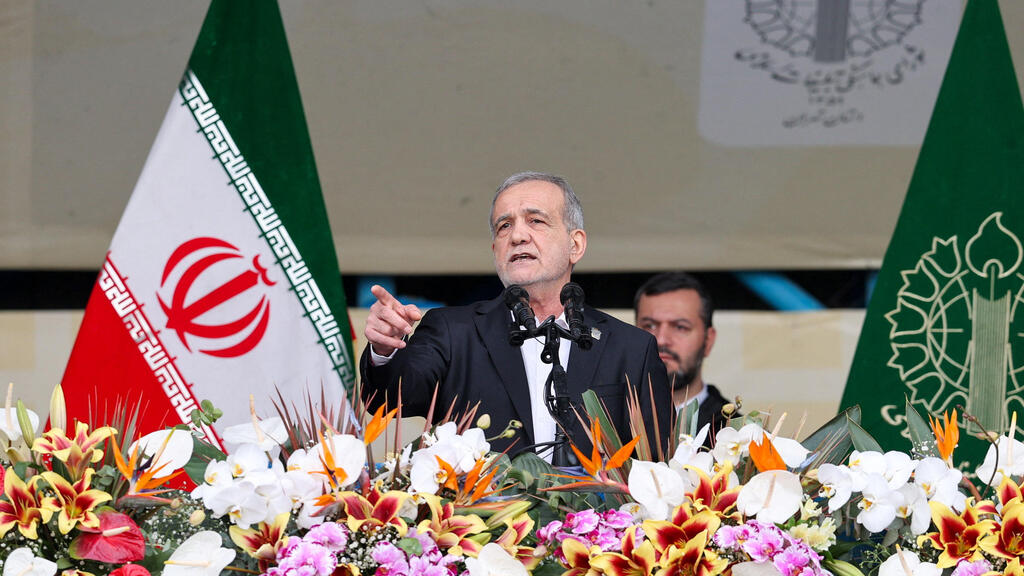
Iranian President Masoud Pezeshkian
(Photo: Majid Asgaripour/WANA (West Asia News Agency) via REUTERS)
Only Iran’s national intranet is operating in the country. The internal network allows local use of instant messaging apps and banking services, but is insufficient for the full functioning of an economy already buckling under heavy international sanctions.
To bypass the restrictions, some Iranians are occasionally able to use VPN services, which mask their real location and allow relatively free browsing. Even fewer have access to satellite internet services such as Elon Musk’s Starlink. In Iran, however, using such services can lead to arrest by the authorities.
The prolonged disconnection from the world, and at times even from other cities in Iran, has severely harmed small businesses. Last month, for example, Mahla, a 55-year-old interior designer from Tehran who did not want to disclose her surname, said that without an internet connection she had been forced to sell valuables and gold just to pay her employees. She said the lack of internet access also prevents her from properly using artificial intelligence tools, Google and her email, making it impossible for her to do her work.
Mehdi, a 49-year-old accountant from the capital, added: “The employment situation was already bad before, and now it is even worse. To find work, you need internet access, but it does not work, and job listings on websites are not being updated.”