

At 10 p.m. Tuesday, as polls closed in Israel's election, all six television news channels released their exit polls. Not all painted the same picture. Channel 12 News, Channel 13 News and Kan 11 projected 50 seats for Prime Minister Benjamin Netanyahu's bloc, while i24NEWS projected 55, Channel 16 projected 53 and Channel 14 projected 60. There were also differences in the projected strength of individual parties.
As in every election, the exit polls were updated throughout the night as actual results from sampled polling stations came in. Most of the projections eventually moved closer to what are now the preliminary official results.
Gallery
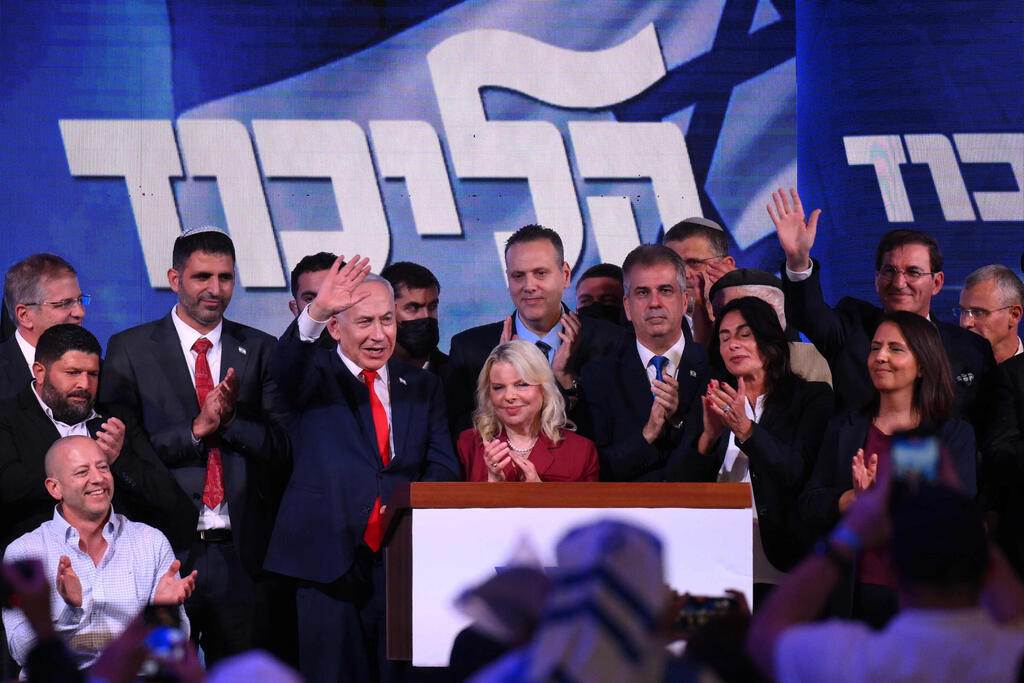
Prime Minister Benjamin Netanyahu delivers an election-night speech
(Photo: Jewel SAMAD / AFP)
The differences between the channels are only part of the story. Polls published in the days and weeks leading up to the election sometimes presented a different picture from the exit polls.
One of the most striking examples is Likud. In Channel 13's final preelection poll, published Oct. 23, the party was projected to win just 19 seats. In the channel's initial exit poll, that figure rose to 25, and an overnight update put it at 27. According to the latest official count, Likud stands at 26 seats.
Now, with vote counting still underway, questions are emerging about the gaps between the forecasts, pollsters' ability to identify changes in voting patterns and the professional lessons to be drawn from the election.
In interviews with ynet, two pollsters who were at the center of election night described what they saw in the data, what surprised them and their initial conclusions.
'Likud's strength was something we didn't see in the polls'
Shmuel Rosner, Channel 13's pollster, acknowledged that Likud's strong showing was the biggest surprise for him. Although preelection polls identified several major trends, he said, they failed to reflect the governing party's strength.
"Some things surprised me, and others less so. The main surprise was Likud's strength, something we didn't see in the polls but which appeared fairly early in the exit polls and continued to grow throughout the evening."
And when the actual results began to emerge, were there other surprises?
"Apart from the surprise over Likud, which requires us to think about how it happened and why we didn't see it, we also didn't expect the bloc with a certain advantage to be the coalition bloc rather than the opposition.
"At the same time, some things weren't surprising. For example, we had been seeing for some time that turnout among Arab voters would be high and that the Arab parties would win many seats. We also consistently saw that neither bloc would probably reach 61 seats and that the ultra-Orthodox parties were weakening. Those were things we identified."
What is the professional lesson from this election? Will you do anything differently next time?
"It's still a little early to say what lessons we'll draw. First, we need to understand whether something happened and what it was, and then try to apply the professional lessons accordingly.
"This isn't just about an election campaign. I conduct polls regularly, so obviously, after an event like this, both I and the team I work with need to examine it and understand what happened. We need to try to figure out, as best we can, what went wrong and what we can improve.
"I've only done this once so far, and I'm not sure I'll do it again, so we'll wait and see."
'I was very, very confident in the numbers'
Tzuriel Sharon, founder and owner of the Direct Polls research institute, which conducted the preelection surveys and exit poll for i24NEWS, said he was not surprised by the results of his projection.
According to Sharon, the figures were consistent with trends he had identified throughout the campaign, and his confidence in those assessments had grown in recent weeks.
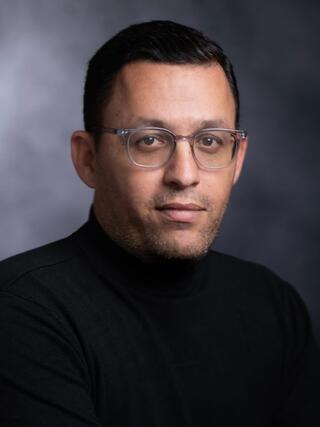 Tzuriel SharonPhoto: Sharon Gabay
What went through your mind when the exit polls were released?
"Anticipation. Certainly when you see everyone else's numbers. On the other hand, I was very, very confident in the numbers."
What gave you that confidence?
"The numbers were very consistent with what I had been seeing throughout the entire period. I felt I had a handle on what was happening, that I understood the system, the election, Israeli sociology and the dynamics of Israeli public sentiment.
"I felt very confident in my understanding of the situation throughout the election campaign, and that feeling became much stronger in recent weeks."
How do you explain the large differences between the channels' exit polls?
"First of all, that's a question you should ask them. I believe I have the No. 1 polling system in Israel in terms of technology. I've invested enormous resources in it and its development, particularly over the past year.
"That was partly because of the election, but not only. It was also because of very large commercial clients working with the company.
"Beyond that, I wasn't living in echo chambers. I was very connected to Israeli public sentiment in all its forms. I was highly focused and insulated from background noise. In other words, I understood the mindset of voters across all the different sectors that ultimately make up the political landscape. In that respect, I felt very confident."
One of the main surprises Sharon identified was the high turnout among Arab voters. He said its scale surprised even those who had anticipated significant gains for the Arab parties.
"We knew the Arab sector would probably turn out. Conservative estimates spoke of 14 seats, while the higher estimates were already talking about 15. I think the numbers astonished everyone, and I'm inclined to believe these are figures we won't see again in future elections."
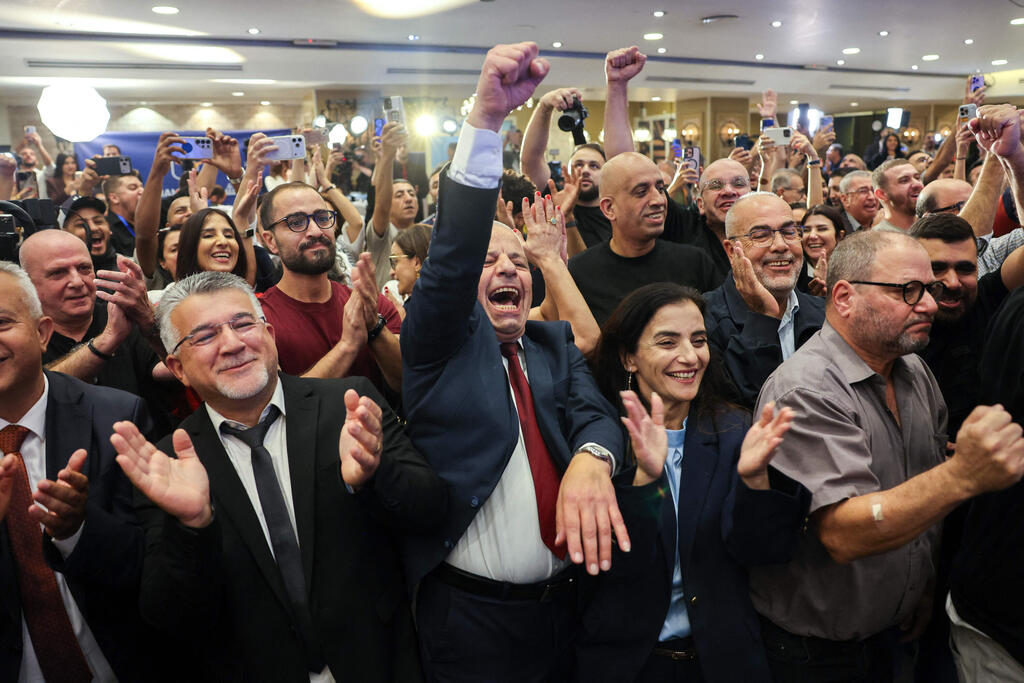
Supporters celebrate at the predominantly Arab Joint List alliance's headquarters in Nazareth as exit poll results are announced
(Photo: AHMAD GHARABLI / AFP)
How much did the high turnout affect the exit polls?
"It affects the weight you assign to different population groups. That's something a pollster needs to know how to handle in real time. It shouldn't surprise you once you have the turnout figures.
"In preelection polls, you can estimate turnout. Here, you receive the actual figures and updates from the Central Elections Committee throughout the day."
'Don't throw the baby out with the bathwater'
Sharon also addressed questions about the reliability of polling following the discrepancies between the channels.
He said the results should not be taken as an indictment of the entire polling industry, although he expects the episode to have consequences for the media as well.
After a night like this, the public could lose faith in polls.
"I hope the Israeli public will look at Direct Polls' surveys, because here's a company that has proven itself.
"I don't think we should throw the baby out with the bathwater. It's not as though this entire industry has gone bankrupt. But there are four players who will need to do some soul-searching.
"I expect this episode to have consequences in the short term and perhaps over the longer term as well, not only for the polling industry but also for the media industry."
Still, is there anything you personally would do differently?
"You can always streamline processes and improve them. You learn from everything. There are things we tried that didn't work, and there are things we tried that turned out to be tremendous successes. It's a process of trial and error."
Sharon, like the other pollsters, has completed his work on this election campaign. But with the results failing to deliver a decisive victory to either side, the question immediately arises: Could another polling season be just around the corner, with another election?
Sharon, at least, believes not.
"I don't think we'll go to a second round. I expect we'll see a government with a different composition from the current one.
"Even if I'm going against everyone's predictions here, you saw that I went against everyone during the election campaign, too. I'm not afraid of that."
What do you think was the main message voters sent in this election?
"I think the public has spoken. Netanyahu received a yellow card from voters over his partnership with the ultra-Orthodox parties, and the center-left received a yellow card over its willingness to sit with the Arab parties.
"The public has made it very clear what kind of government it wants to see, and the politicians will have to act."