


Officers serving along the so-called “yellow line” ceasefire demarcation in the Gaza Strip say commanders have quietly changed how troops apply open-fire rules near the boundary, shifting from orders to shoot adults who cross the line to a suspect-arrest procedure that generally ends, at most, with shots to the legs.
The IDF denied any change, saying troops remain authorized and required to remove threats while seeking to avoid harming civilians.
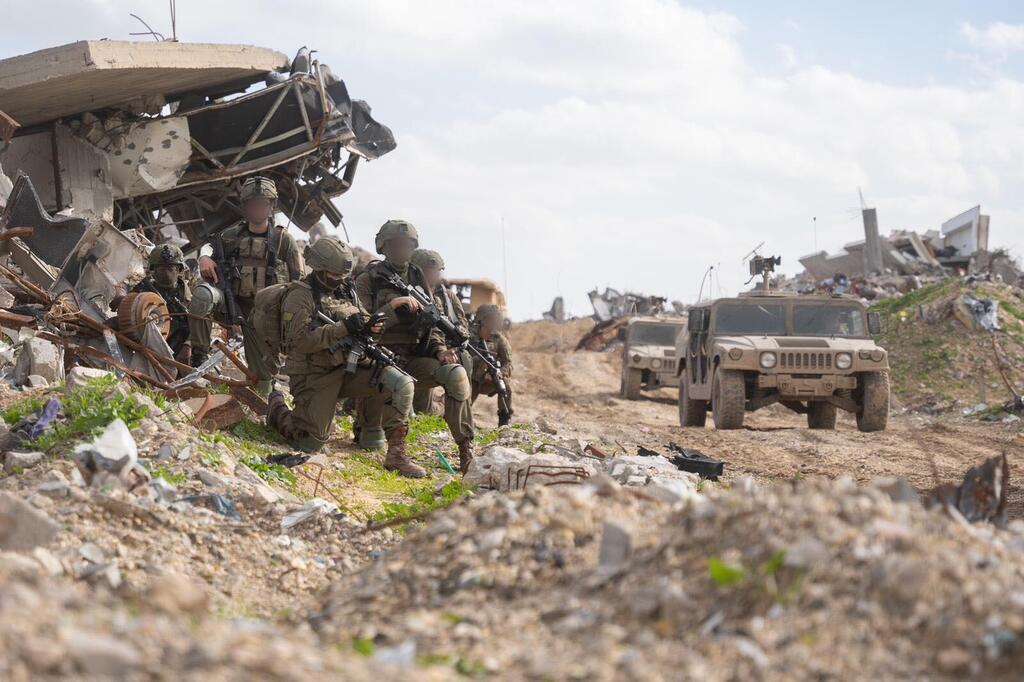
The “yellow line” refers to the deployment line inside Gaza where Israeli forces remain positioned under the ceasefire agreement. Officers told ynet that Brig. Gen. Liron Batito, commander of the Gaza Division, instructed forces in recent weeks to alter how they respond to Palestinians who approach or cross the line.
“Until now, the battalion commander would brief us that any adult who crossed the yellow line was subject to ‘shoot to kill,’” one officer serving at a position along the line said. “That has changed to a suspect-arrest procedure that ends, at most, with shooting at the knees.”
Several officers and commanders said Batito visited outposts and explained that the move followed incidents that drew criticism, including the shooting of a Palestinian who used crutches and another incident in which Israeli forces killed two humanitarian aid truck drivers near the yellow line.
The military rejected the officers’ account. “There has been no change in the rules of engagement,” the IDF said. “IDF soldiers operating in the Gaza Strip are authorized and required to remove any threat while avoiding harm to uninvolved civilians as much as possible.”
Officers said Palestinians approach or cross the line daily and acknowledged that not everyone who does so is necessarily a terrorist or directly involved in hostilities. But they said some civilians may be used by Hamas to test Israeli troop deployment and response patterns.

An IDF engineering vehicle carries a marker used to designate the yellow line inside the Gaza Strip
(Photo: IDF)
“We are stunned by the recent change in the open-fire rules,” a reserve officer serving in the sector said. “Moving from the simple instruction to neutralize any enemy who crosses the yellow line toward us to a suspect-arrest procedure that ends with shots to the knees is the start of a slippery slope.”
The officer said commanders believe Hamas has been deterred, while soldiers in the field see signs of renewed organization. “The enemy has intent, means and the ability to carry out significant offensive moves,” he said.
Another officer described growing frustration among troops, saying drones and large numbers of people cross the line without approval being given to fire. “They are playing games with us,” he said. “All the soldiers here are frustrated.”
Officers said their main concern is that the alleged policy shift will be interpreted by Hamas as weakness, erode deterrence and encourage further attempts to test Israel’s response.
The IDF said the matter involved a clarification of procedures after incidents it viewed as problematic, not a change in policy, and that forces continue to act according to operational needs and threat assessments in each case.