


Opposition leader Yair Lapid on Wednesday morning criticized Prime Minister Benjamin Netanyahu over the ceasefire with Iran, without mentioning U.S. President Donald Trump.
Lapid said, “There has never been such a diplomatic disaster in our history. Israel was not even at the table when decisions were made concerning the core of our national security. The military carried out everything it was asked to do, the public showed remarkable resilience, but Netanyahu failed diplomatically, failed strategically and did not meet a single goal he himself set.”
According to Lapid, “It will take us years to repair the diplomatic and strategic damage Netanyahu caused due to arrogance, negligence and a lack of strategic planning.”
As early as late March, an Israeli official told ynet that the Americans had marked April 9 as the target date for ending the war. President Donald Trump, who had promised the war would end within six weeks of its start, met that commitment, in part through a significant escalation in his rhetoric — including a threat to destroy an entire civilization, in his words — which helped create an exit path from the conflict.
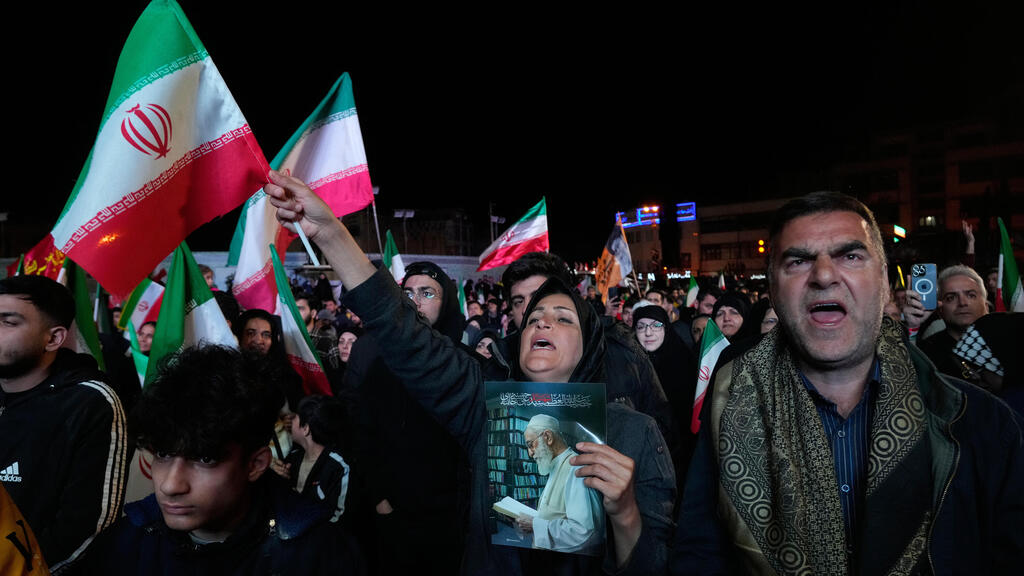
Iran, which in recent weeks had firmly refused to accept a temporary ceasefire, ultimately agreed to the proposal and consented to hold negotiations with the United States in Pakistan. Just yesterday afternoon, a senior Iranian official told Reuters that Tehran rejected any temporary ceasefire initiative and demanded a final and absolute one. However, Iran reversed course and is now boasting that Trump accepted its 10-point plan as a basis for negotiations.
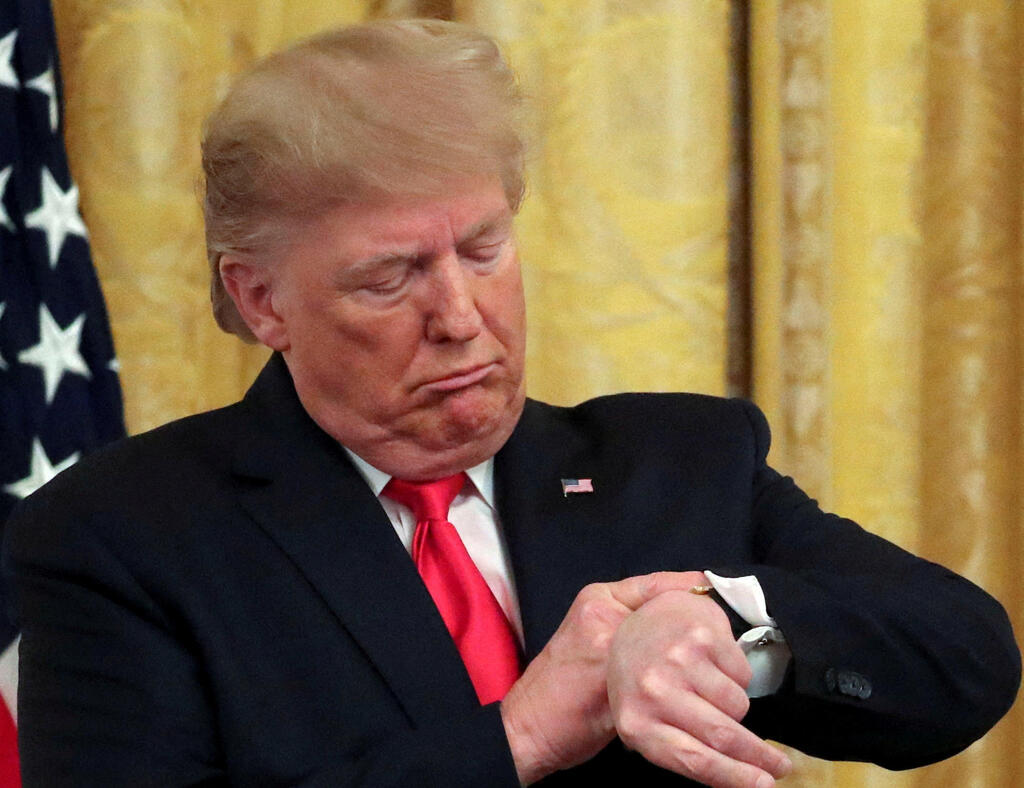
(Photo: Jonathan Ernst/Reuters)
In practice, the Iranian plan does not resolve the core issues that led the president to go to war. There has been no regime change in Iran, despite Trump’s claims that less radical figures are now in place: Mojtaba Khamenei remains at the head of the ayatollah regime, and the status of the Islamic Revolutionary Guard Corps, an elite military force, has only strengthened.
Enriched uranium at a level of 60% — close to weapons-grade — also remains on Iranian soil, one of the main triggers for the war. Trump has promised that the uranium issue “will be resolved perfectly,” but it remains unclear how.
Reopening unresolved issues
Beyond the uranium and the lack of regime change, U.S. allies in the Gulf — which reportedly urged Trump to continue the war — are left with significant damage and without the removal of those who launched hundreds of drones and missiles at them.
Trump now faces a new challenge: reaching a permanent arrangement while also proving to the United States and the world that he has prevented Iran from producing nuclear weapons — and demonstrating that he has curbed Iran’s control over the Strait of Hormuz, a strategic waterway for global oil shipments.
Iran, for its part, says passage through the strait will be allowed under the control of its armed forces, which will determine who may pass, when and under what conditions. Trump has raised the possibility that he and “the ayatollah” would jointly control the strait, but according to descriptions from Iran — which Trump has not denied — it appears that Iran would retain control, sharing revenues with Oman. Before the war, Iran did not control the Strait of Hormuz or impose any transit fees.
The New York Times also noted Trump’s demand for “unconditional surrender” about four weeks ago, which has since shifted to accepting Iran’s 10-point plan as a basis for talks. Richard Fontaine, head of a Washington-based think tank, told the newspaper: “Have you looked at Iran’s plan? It’s like a wish list from Tehran before the war. It calls for international recognition of its right to enrich uranium, the withdrawal of all U.S. forces from the region and the lifting of sanctions. It also calls for compensation payments to Iran for war damage.”
The Times added that, in practice, achieving a permanent agreement within two weeks — under the threat of renewed fighting — will require what it described as diplomatic “jujitsu.” Trump must remove the enriched uranium, compel Iran to limit its ballistic missile program and bring about some form of regime change — so that he is not seen as having abandoned the Iranian people after previously calling on them to overthrow the regime with which he is now negotiating.
First published: 09:10, 04.08.26