

European governments reacted Saturday to the combined U.S.-Israel strike on Iran, calling for urgent diplomatic efforts and warning of broader regional consequences.
French President Emmanuel Macron called for an emergency meeting of the U.N. Security Council, saying the developments require immediate international attention.
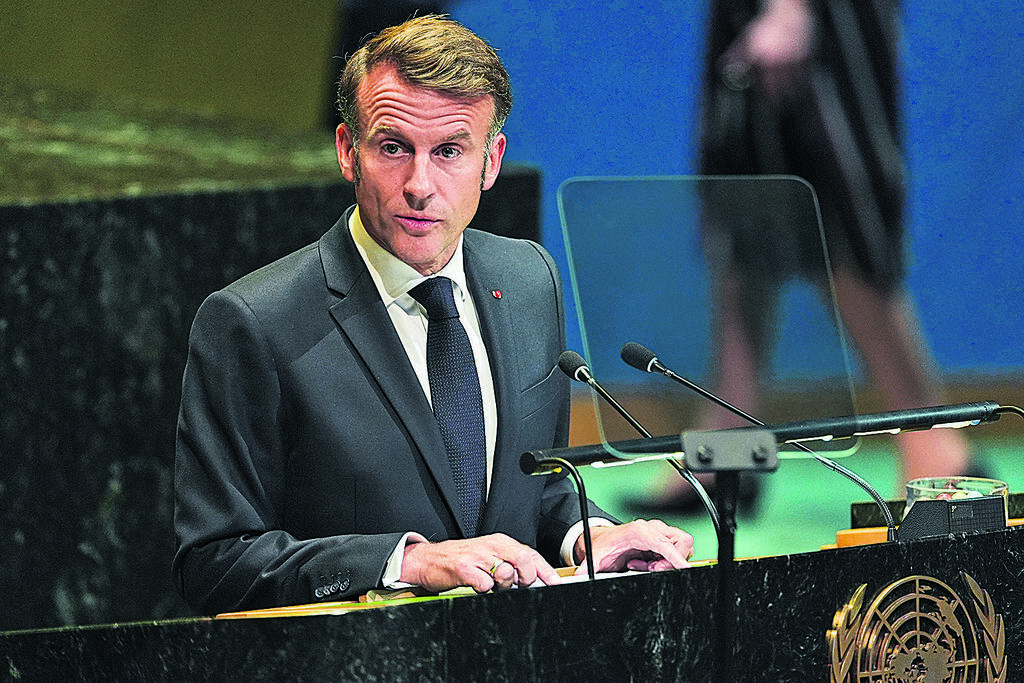
“The massacre carried out by the Islamic regime has damaged its standing and requires giving the people their voice, sooner rather than later,” Macron said in a statement. He added that Iran’s leadership “must understand that it now has no choice but to negotiate in good faith to end its nuclear and ballistic missile programs, as well as its actions to destabilize the region. The Iranian people must also be able to build their future freely.”
Iran also requested an emergency session of the Security Council. The council is scheduled to convene Saturday night at 11 p.m. Diplomatic assessments had earlier indicated the meeting might be delayed until Sunday. The timing could complicate matters for Tehran, as the United States is set to assume the council’s rotating presidency, replacing Britain.
Despite his criticism of Tehran, Macron cautioned that the confrontation carries serious risks.
“The war between the United States, Israel and Iran carries grave consequences for peace and international security,” he said. “The current escalation is dangerous for everyone and must stop.” He added that France is in close contact with its European partners and Middle East allies and is prepared to use necessary resources to protect its closest partners if requested.
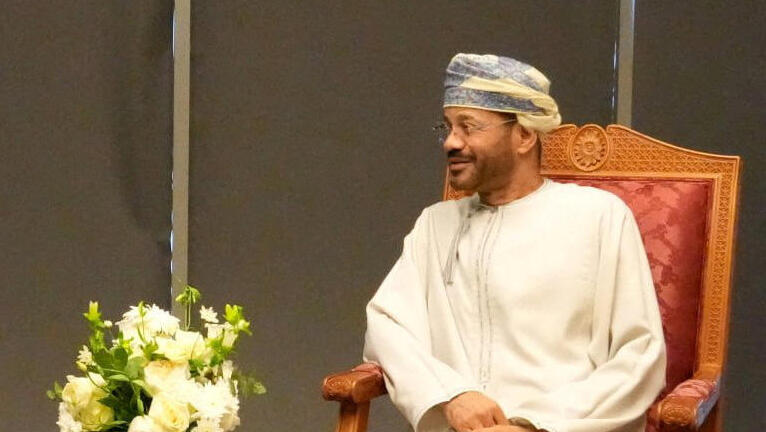
Oman’s foreign minister, Badr al-Busaidi, who had been mediating talks between Washington and Tehran until Friday, sharply criticized the strikes. Writing on X, he said he was “shocked” and described the attack as undermining “active and serious negotiations.”
“This does not serve the interests of the United States nor the goal of global peace,” al-Busaidi wrote. “I pray for the innocent who will suffer. I urge the United States not to be drawn deeper. This is not your war.”
In a separate statement, Oman’s Foreign Ministry said it “expresses deep regret over the military actions of Israel and the United States against Iran” and warned of further escalation. It described the strikes as a violation of international law and the principle of resolving disputes through peaceful means, calling for an immediate halt to military operations and urging the Security Council to convene an emergency session to impose a ceasefire.
(Photo: Iranian Ministry of Foreign Affairs/WANA (West Asia News Agency)/ Handout via REUTERS)
Russia’s Foreign Ministry condemned the joint strike, calling it “a premeditated act of armed aggression against a sovereign U.N. member state without provocation, in violation of the principles and norms of international law.” It warned that Washington and Tel Aviv had embarked on a “dangerous adventure” that could rapidly push the region toward humanitarian, economic and possibly radiological disaster.
Former Russian President Dmitry Medvedev, now deputy chairman of Russia’s Security Council, suggested that diplomatic efforts had been a cover. “The talks with Iran were only a façade. Everyone knew it,” he said, adding, “The United States is only 249 years old. The Persian Empire was founded more than 2,500 years ago. Let’s see what happens in about 100 years.”
Egypt’s Foreign Ministry said it was “deeply concerned about the dangerous military escalation in the region and the risk of the conflict expanding,” warning that military solutions would lead only to further violence and bloodshed.
Reza Pahlavi, the exiled son of Iran’s last shah who was overthrown in the 1979 Islamic Revolution, welcomed the developments. Writing on X, he said the assistance promised by the U.S. president to the Iranian people “has now arrived,” describing the intervention as humanitarian and aimed at the regime’s “apparatus of repression and killing machine, not the country and people of Iran.”
“Despite this assistance, the final victory will be ours,” Pahlavi wrote. “We, the Iranian people, will finish the job in this final battle. The time to return to the streets is near.” He also called on Iran’s military, law enforcement and security forces to remember that they had sworn to protect Iran and its people, “not the Islamic Republic and its leaders.”