


Iranian lawmakers have begun drafting an emergency plan to withdraw from the Nuclear Non-Proliferation Treaty, or NPT, in response to a decision by European powers to reimpose international sanctions on the Islamic Republic through the United Nations "snapback" mechanism, local media reported Friday.
The proposed legislation, which is expected to be presented in parliament later Friday, could be approved as early as next week. According to the reports, the plan includes a formal withdrawal from the NPT, suspension of nuclear negotiations with the United States and European powers and the termination of cooperation with the International Atomic Energy Agency (IAEA).
Gallery
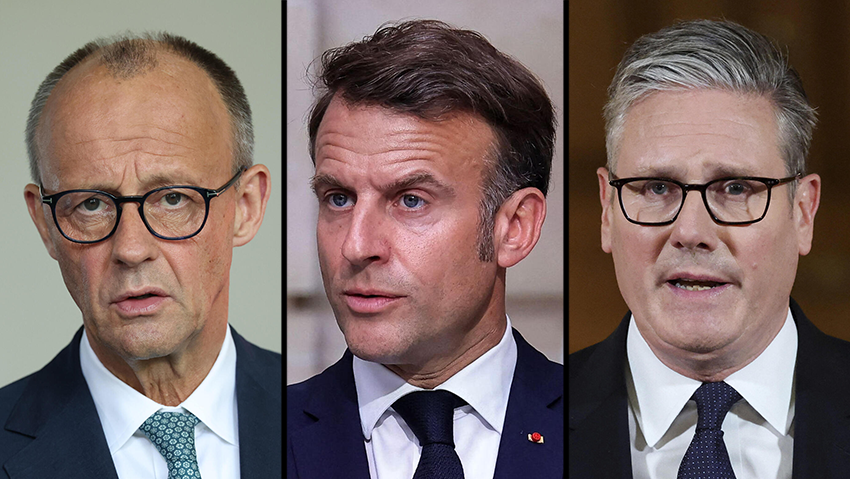
German Chancellor Friedrich Merz, French President Emmanuel Macron, British Prime Minister Keir Starmer
(Photo: Toby Melville, Pool Photo via AP, Christophe PETIT TESSON / POOL / AFP, Sean Gallup/Getty Images)
The move comes a day after Britain, France and Germany—collectively known as the E3—formally notified the UN Security Council of their decision to invoke the snapback provision. This mechanism, included in the 2015 nuclear deal and endorsed by Resolution 2231, allows for the reimposition of all UN sanctions lifted under the agreement if the council fails to extend the sanctions relief within 30 days—a scenario now seen as likely.
In a letter to the Security Council, the E3 wrote: "We remain committed to using all diplomatic means to ensure that Iran never develops a nuclear weapon. This includes our decision to trigger the snapback mechanism today." The letter also called on Iran to engage in renewed diplomacy to address concerns over its nuclear program, saying the coming 30 days would be used to attempt to resolve the dispute.
An Iranian lawmaker, reacting to the European move, said, "With what these three countries have done, there is no point in negotiating with them."
Iranian Foreign Minister Abbas Araghchi sent a letter to the UN Security Council and to Secretary-General António Guterres, dismissing the E3’s arguments as “a distortion of facts” and warning that such actions could undermine the credibility of the council and its decisions.
Nevertheless, Araghchi said Tehran remains willing to resume nuclear talks if the West demonstrates goodwill and avoids actions that could derail potential progress. He laid out these conditions in a separate letter addressed to European Union foreign policy chief Kaja Kallas.
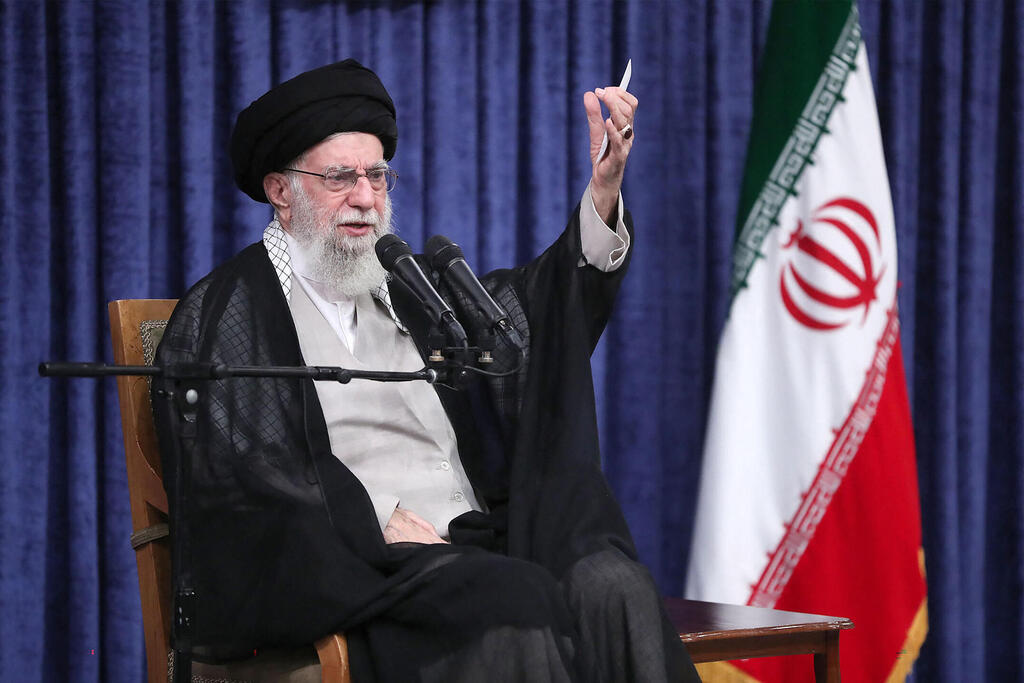
Iranian Supreme Leader Ayatollah Ali Khamenei
(Photo: AFP PHOTO / HO / KHAMENEI.IR)
In Germany, the Foreign Ministry advised its citizens to leave Iran and avoid travel to the country, citing possible retaliation. "Given repeated threats from Iranian officials following the decision, we cannot rule out that German nationals and interests will be affected by countermeasures," the ministry said.
The E3’s decision to invoke the snapback follows a round of unsuccessful talks held earlier this week in Geneva between Iranian representatives and diplomats from the three European powers. An unnamed senior Iranian official told Reuters that the activation of the snapback mechanism was “regrettable and illegal.” He added that Tehran had done all it could to prevent this outcome but would now consider its next steps while continuing diplomatic contacts.
The nuclear agreement, known as the Joint Comprehensive Plan of Action or JCPOA, was signed between Iran and three European powers, along with China, Russia and the United States. In 2018, U.S. President Donald Trump announced that Washington was withdrawing from the deal and reinstated U.S. sanctions on Tehran, dealing a severe blow to Iran’s economy. Following the U.S. withdrawal and the return of sanctions—despite the other signatories remaining committed to the deal—Iran began breaching more and more of its terms, claiming the European countries had failed to compensate for the American exit and that the deal no longer held value.
This year, Iran has already amassed more than 400 kilograms (880 pounds) of uranium enriched to 60 percent purity—a short technical step from the 90 percent level needed for weapons-grade.
In light of Iran’s violations, the European powers announced earlier this month that they would move to reinstate all sanctions unless a nuclear arrangement is reached by the end of August. They have left the door open for Iran to make concessions that could lead to a short extension of that deadline. These include a return to direct negotiations with Washington—something Tehran firmly rejects—and the restoration of oversight by the International Atomic Energy Agency (IAEA), including verification of the location of Iran’s stockpile of 60 percent–enriched uranium, which the Islamic Republic concealed ahead of the joint Israeli-American strike on its facilities in June.