

A total of 154 of the 250 Palestinian prisoners serving life sentences or lengthy terms who were freed in the first stage of the hostage deal and the end of the war were transferred through the Rafah Crossing to Cairo. They are currently under Egyptian supervision in a hotel, in coordination with Israeli security officials. These prisoners, classified as deportees, are undergoing medical checks and receiving humanitarian support under the oversight of Red Cross representatives.
Meanwhile, Israeli intelligence continues to monitor those who have returned to their homes in the West Bank. “The terrorists understand that the situation has changed, but no one is under any illusion—they are not lovers of Zion,” a senior security official said.
Palestinian prisoners welcomed in Gaza


Exile in Cairo and new destinations
Palestinian sources estimate that some of the released prisoners may eventually settle in Turkey, Qatar, or other Arab states, while others are expected to remain in Egypt and rebuild their lives there. The 154 exiles are staying in a Cairo hotel under Egyptian security supervision, undergoing medical checks and humanitarian processing.
Turkey and Qatar have both expressed willingness to receive some of the released prisoners, though no official announcements have been made. Each prisoner's destination was preapproved by Israel and included in the release agreement, and permission to remain in Cairo depends on the Egyptian authorities.
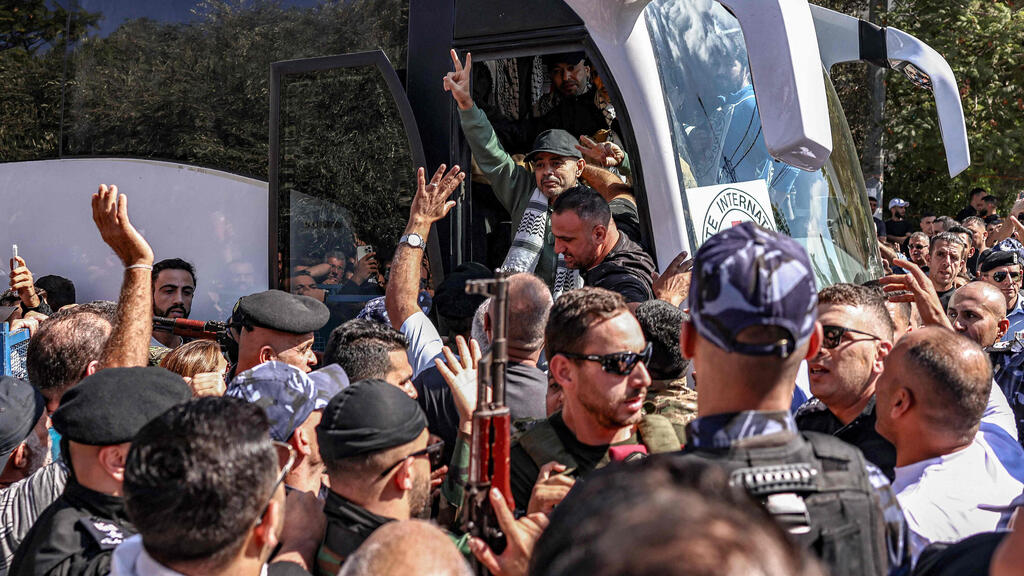
The Palestinian Prisoners’ Club predicts that many of the deportees will gradually integrate into life in Cairo, marry, and remain in Egypt—similar to previous exchanges. Among those released were also four Jordanian citizens, two of whom were transferred to Egypt and two to the West Bank.
According to the Palestinian Prisoners’ Authority, some exiles may later move to other countries, including Tunisia, Algeria, and Pakistan, though no official confirmations have been issued. In a previous January deal, several prisoners asked to remain in Gaza but were refused, as they were originally West Bank residents deported under Israeli orders.
In Cairo, Islamic Jihad leader Ziad al-Nakhalah, along with Hamas representatives, met with the released prisoners and officials from various Palestinian factions. Al-Nakhalah praised the prisoners for their “steadfastness throughout years of imprisonment” and thanked Egypt and Qatar for their mediation efforts. Islamic Jihad officials said there is close coordination between Cairo, Doha, and the Palestinian factions to advance further stages of the agreement.
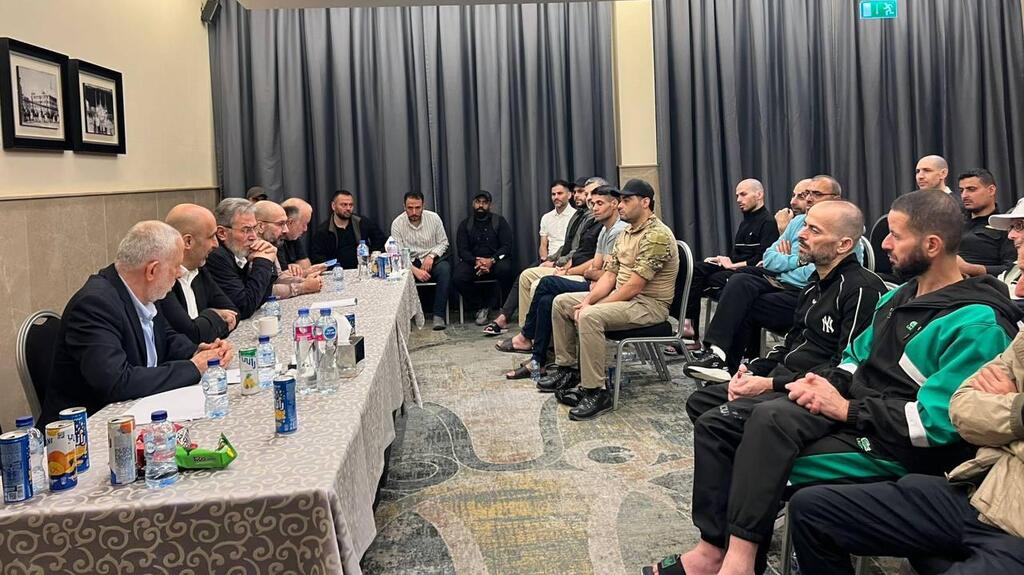
Islamic Jihad leadership meets prisoners in Egypt
Tight surveillance in the West Bank
While diplomatic efforts continue, Israel’s security focus has shifted to the West Bank. Forty-eight hours after the release, about 70 of the 80 prisoners who returned to the West Bank had reached their homes, while others remain hospitalized.
Unlike in previous exchanges, there have been no public celebrations, gunfire, or incitement. IDF and Shin Bet forces are stationed near the released prisoners’ homes, using surveillance drones and observation systems to track their movements.
“We’re doing everything possible to make it clear that public celebrations won’t be tolerated. If any occur, they’ll be dispersed immediately,” a security source said.
The tight deployment and ongoing patrols in towns and villages are intended to deter mass gatherings and prevent terrorist groups from regaining influence. Central Command officials said they aim to maintain a new level of deterrence, warning that the coming weeks will be especially sensitive.
“The terrorists understand that the situation has changed—it’s not what they expected or remember,” a senior defense official said. “But no one is fooling themselves. These are people with blood on their hands, not Zionist sympathizers.”
Intelligence and field presence
Alongside the operational deployment, the IDF continues real-time intelligence collection and sensitive outreach to the families of released prisoners to prevent potential friction or violent incidents. Monitoring of the prisoners and their relatives will continue closely, with increased military presence in certain areas.
The IDF cited Operation Iron Wall in northern Samaria, where military forces remain stationed in the Jenin, Tulkarem, and Nur Shams refugee camps. It remains unclear how long the deployment will continue. The army is now drafting plans for reconstruction and stabilization in the area but stresses that any move restricting operational freedom will not be allowed.
Security officials described these steps as part of a broader effort to stabilize the region following a series of deadly attacks in recent weeks at the Git junction, Beit El checkpoint, and Jerusalem’s Ramot neighborhood.