

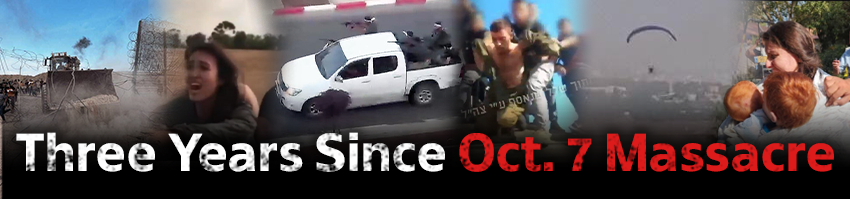

Nearly three years after the October 7 massacre, Israel’s security establishment acknowledges that the Gaza campaign remains far from a decisive outcome. Despite major military gains and a large permanent IDF presence, the basic reality remains unchanged: Hamas still governs the territory.
The IDF currently controls about 64% of the Gaza Strip, deploying two divisions across roughly 30 outposts. Security officials say Israel’s defensive posture has been completely transformed since October 7. "If Hamas tries anything, it will encounter IDF forces at the front," a senior security official told Ynet and Yedioth Ahronoth. "Our defense no longer begins at the border fence, but inside Gaza. We have stable and very strong control here."
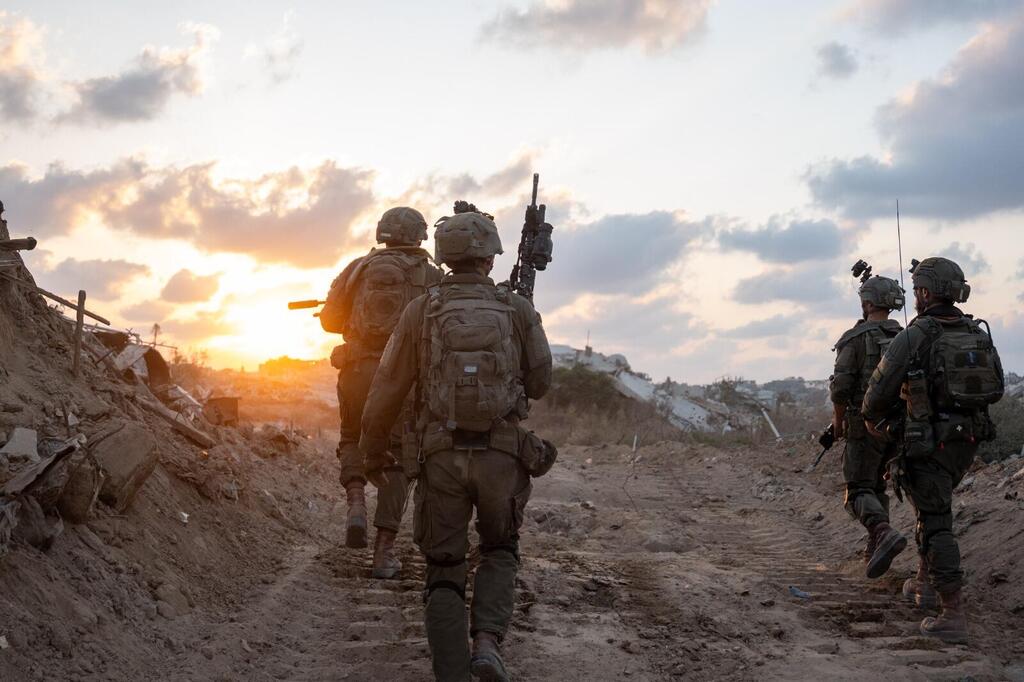
Israeli forces are completing an anti-vehicle barrier consisting of a wide trench and an earthen embankment, while drilling into the ground at regular intervals to ensure no cross-border tunnels into Israel have been missed. The work is taking place east of the Yellow Line, which divides areas under IDF control from those controlled by Hamas.
Alongside its territorial presence, the IDF continues targeted strikes against Hamas personnel. Security officials said about 70 terrorists, including three brigade commanders, were killed over the past month.
"We will act against operatives and kill them one by one," officials said. "We wait patiently for the right moment to strike with very low collateral damage. There were opportunities when we did not strike immediately because of those considerations."
No political plan
The central unresolved problem is Hamas’ continued grip over Gaza’s population. Security officials say the absence of a clear political plan for who will govern the territory after the war has allowed the terrorist organization to remain in place despite the severe damage to its military capabilities.
"Everything entering Gaza today passes through Kerem Shalom, where we have some of the best scanners in the world for detecting prohibited items," one security official said. "Food, fuel and gas enter, but then Hamas takes control of it."
About 600 trucks enter Gaza each day with Israeli approval. Officials acknowledge that there is currently no effective way to prevent Hamas from profiting from the goods after they cross into the territory.
"The trucks enter, Hamas takes control of them and transfers the goods to merchants," officials familiar with the issue said. "It collects taxes and receives money. That is how it keeps its people going, and that is how it has weapons."
Military officials stress, however, that the money Hamas extracts from aid does not translate into significant military rebuilding and primarily helps it maintain governing control.
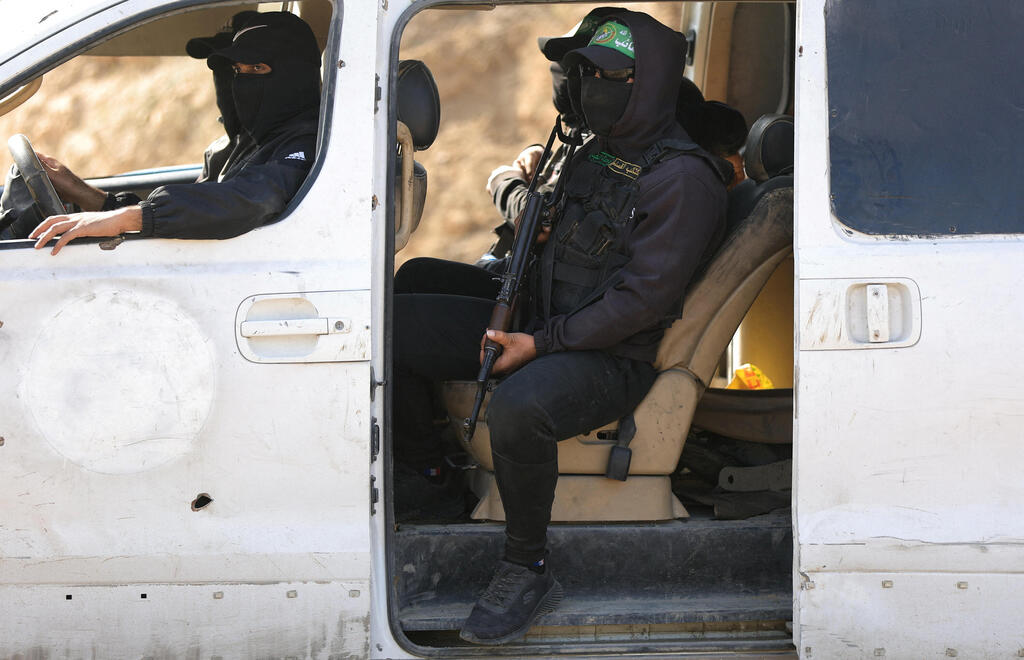
Hamas terrorists
(Photo: REUTERS/Dawoud Abu Alkas)
A senior security official said Hamas faces severe ammunition shortages and can no longer import raw materials as it did before the war. The group still commands tens of thousands of operatives, but many are young recruits who replaced experienced fighters killed or wounded during the fighting.
"It cannot recruit everyone it wants simply because it does not have weapons to give them," the official said. Hamas also has far less ability to train its forces, he added, because any identifiable training activity or visible weapons can trigger an Israeli strike.
"They do a lot of theoretical lessons, but there is no real training, so their operational capability has been damaged," the official said. "Hamas is mainly on the defensive."
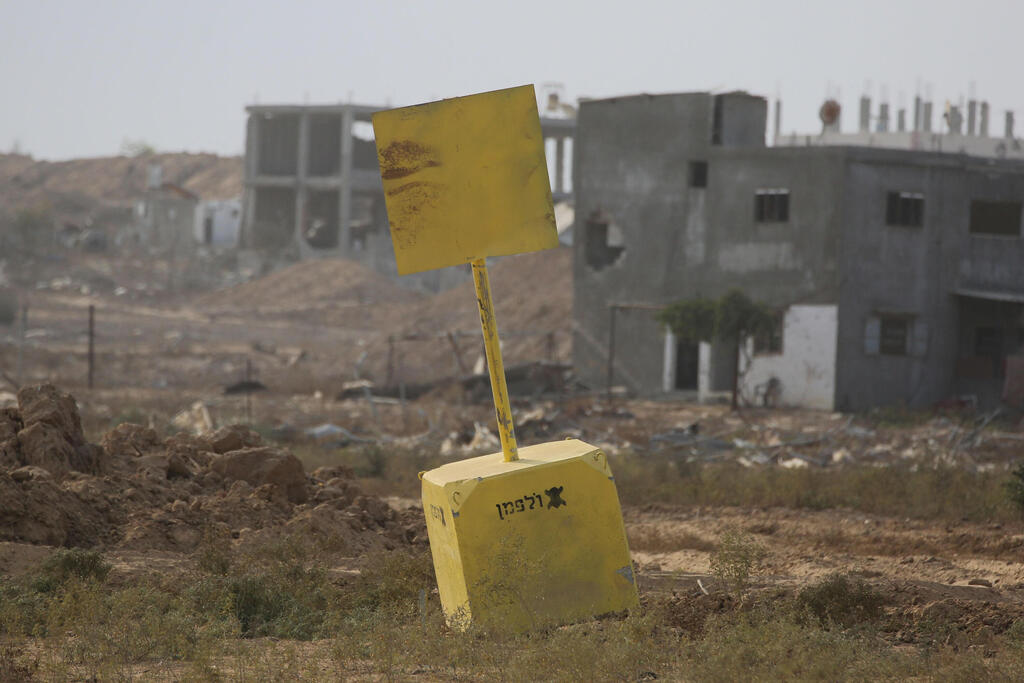
The Yellow Line
(Photo: Bashar Taleb / AFP)
The goal: demilitarization
The IDF says it is implementing government policy rather than determining Gaza’s political future. But three years after the war began, security officials say the lack of a long-term political framework remains a central factor behind Hamas’ continued rule.
Officials are deeply skeptical that negotiations under the Board of Peace plan could persuade Hamas to voluntarily disarm. "Everything depends on Hamas being demilitarized," a senior security official said. "I am skeptical that the organization will truly give up its weapons. It will put on shows, but we are not going to give up."
"We have a rough idea of how many weapons it has, and in Gaza you have no chance without weapons," he added. "For Hamas, giving up its weapons means ceasing to exist."
The continuing Gaza deployment also comes amid mounting pressure on Israel’s reserve forces, which have carried much of the burden across Gaza, Lebanon, Syria and the West Bank for three years. "There is no doubt we could not have done this without the reservists," the security official said. "Today you are simultaneously maintaining forces on the Syrian, Lebanese and Gaza borders and in the West Bank."
According to the official, most combat reservists have now served more than 500 days since October 7, equivalent to roughly half of the period since the war began. "Next year we will have to reduce reserve duty somewhat and thin out forces because there will be no choice," he said. "Wherever we can reduce the deployment, we need to. These are civilians with families."
First published: 05:47, 10.05.26