

Iranian President Masoud Pezeshkian warned Tuesday that the country’s water crisis remains “critical,” saying all 31 provinces face problems with water supply and cautioning that failure to address the issue could lead to consequences difficult to resolve. Speaking in parliament, Pezeshkian said water management is an urgent national priority. “If we do not succeed in controlling it, there is a danger that problems will arise that we will struggle to solve,” he said.
His remarks came despite several recent days of rain across Iran, including snowfall in some areas. Even so, the water crisis, particularly in Tehran, remains severe following the country’s worst drought in decades.
In November, before the first rainfall of the season reached the capital, Pezeshkian warned of possible restrictions on water consumption in Tehran and even raised the prospect of mass evacuations.
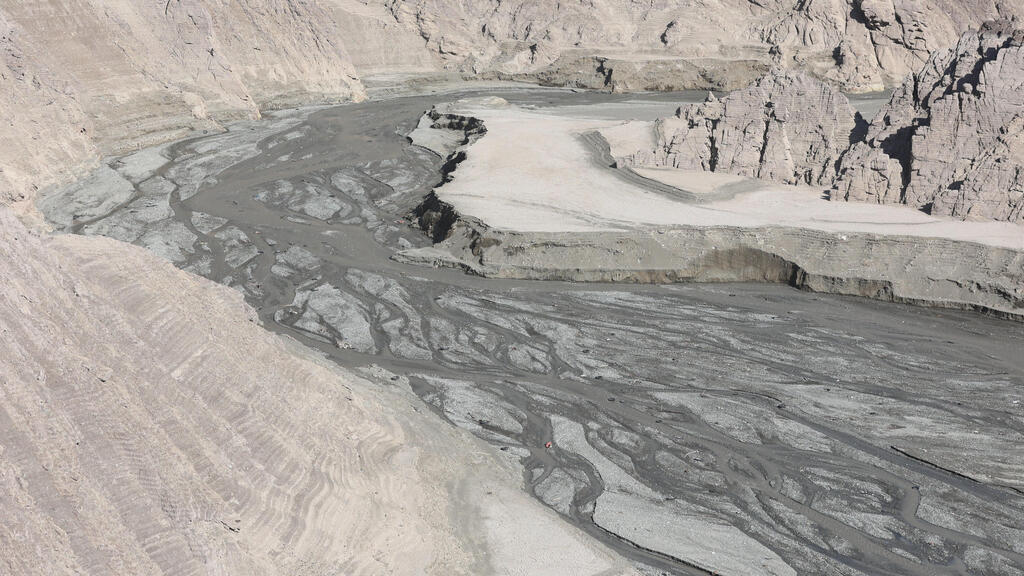
State media reported Tuesday that the reservoir at the Amir Kabir Dam, also known as the Karaj Dam and one of Tehran’s main water sources, remains largely depleted despite sporadic rainfall since the start of winter. Rain has fallen intermittently in Tehran since early December after months of dry conditions. Some of the city’s reservoirs have partially refilled, but water levels remain critically low.
Iran, largely an arid country, has endured years of heat waves and drought, a trend expected to worsen with climate change.
The Tasnim news agency reported that the Amir Kabir Dam currently holds about 6 million cubic meters of water out of a capacity of 205 million cubic meters, roughly 3% of its capacity. Hamshahri, a newspaper published by the Tehran municipality, said it is not possible to extract additional water from the dam’s current reserves.
The official IRNA news agency reported Tuesday that water levels at the Karaj Dam are down 88% compared with the same period last year. Water volumes at other dams around Tehran are also down by tens of percentage points compared with 2024 levels. According to IRNA, rainfall in Tehran and the neighboring Alborz province has fallen to a historic low.
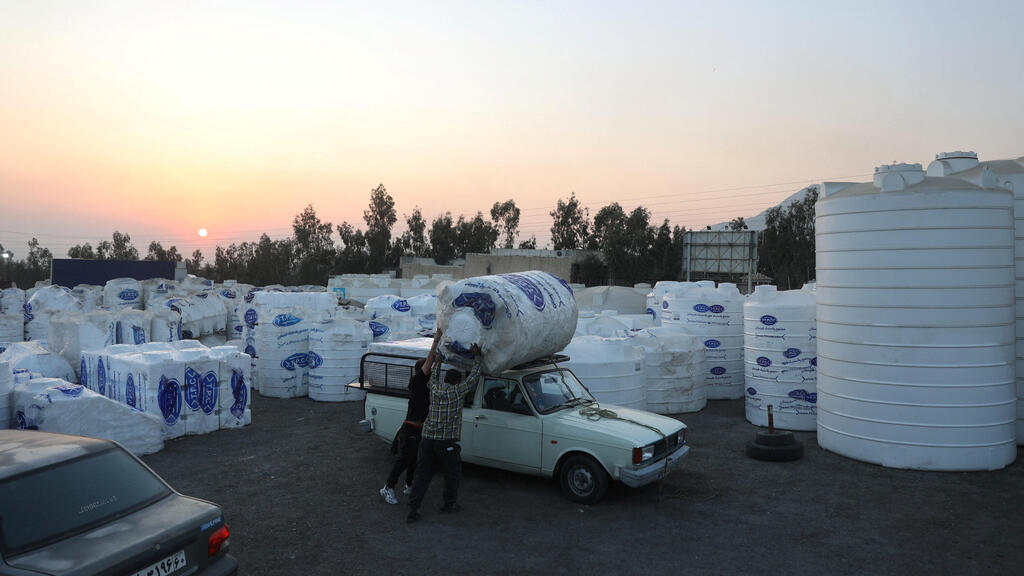
Iranians are purchasing water storage tanks to cope with the shortage
(Photo: Majid Asgaripour/WANA via Reuters)
In response to the crisis, authorities in the Islamic Republic have turned to cloud seeding operations and have periodically cut off water supplies to residents to curb consumption. Officials said cloud seeding will continue through the end of spring in three regions: northwestern Iran, northeastern Iran and the central plateau, including the city of Isfahan.
Amid the rare rainfall and snowfall over the weekend, Iran’s ambassador to Lebanon, Mojtaba Amani, mocked Israeli Prime Minister Benjamin Netanyahu in a post on X. Referring to remarks Netanyahu made months earlier about water management, Amani wrote that while Netanyahu had accused Iran of water shortages and praised Israel as a model, “today, thanks to the prayers of the Iranian people, rivers have overflowed and mountains are covered with snow,” while Israel, he claimed, covets neighboring countries’ water resources.

Iran’s ambassador to Lebanon, Mojtaba Amani, mocked Israeli Prime Minister Benjamin Netanyahu in a post on X
Iranian state broadcaster PressTV also took aim at Netanyahu on Tuesday. Its Hebrew-language Telegram channel posted a message reading, “Benjamin Netanyahu lectures Iran on water management!” alongside videos of recent flooding in Israel captioned, “Meanwhile, in Israel.”