

The entry of an Egyptian team into the Gaza Strip marks a significant moment in Cairo’s role as mediator of the ceasefire and reveals the wider Egyptian interest driving its recent moves. Beyond the humanitarian mission of locating the bodies of Israeli hostages, Egypt is signaling that it intends to take the lead in the postwar process, push Qatar and Turkey to the sidelines, and restore its traditional status as the Arab world’s main diplomatic power.
According to reports Saturday, an Egyptian team equipped with special tools to locate bodies entered Gaza after Israel provided Cairo with coordinates of sites where it believes remains may be found. Egypt’s state-run Al-Qahera el-Ekhbariya channel cited officials saying that “Egypt will provide logistical support and equipment to help locate the bodies of Israeli hostages, given the scale of destruction in the Strip.”
Egyptian search teams enter Gaza


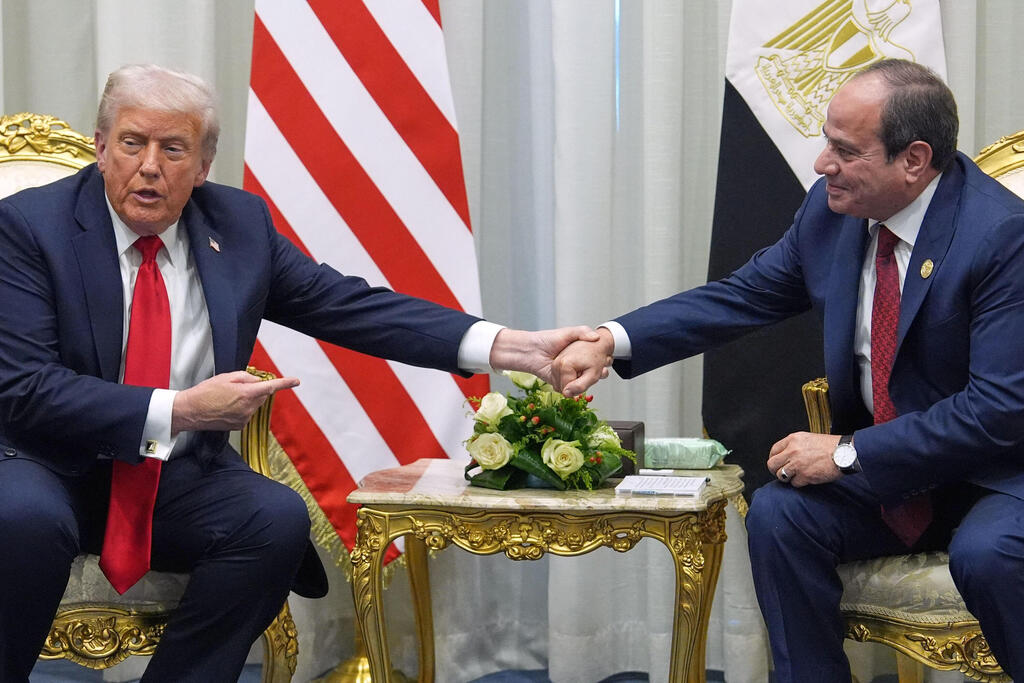
The decision to send an Egyptian team into Gaza, despite no such requirement under the ceasefire terms, underscores Cairo’s commitment to seeing the agreement through and maintaining its centrality in regional diplomacy. President Abdel Fattah el-Sissi, who sat alongside U.S. President Donald Trump, Qatari Emir Tamim bin Hamad Al Thani, and Turkish President Recep Tayyip Erdogan at the “Peace Summit” in Sharm el-Sheikh on Oct. 13, has been directly involved in mediation efforts throughout the war.
While the ceasefire agreement did not envision Egyptian forces on the ground, Cairo chose to act amid concerns that delays in recovering the bodies could undermine the deal’s implementation and provide terrorist groups in Gaza with an excuse to stall further progress. Israel approved the team’s entry but had earlier denied a similar request from Turkey — a signal of both trust in Egypt and limits on Ankara’s involvement.
For Egypt, the ceasefire’s signing in Sharm el-Sheikh was a diplomatic achievement, and Cairo now moves along two central tracks. The first is its continuing role as mediator, hosting and participating in discussions on implementing the ceasefire and advancing the delayed second phase. Egyptian officials, in statements from both the presidency and the Foreign Ministry, have repeatedly stressed “the importance of consolidating the ceasefire, which will contribute to achieving security and stability in the region.” The second track focuses on preparing for “the day after” in Gaza, including internal Palestinian understandings that will shape governance once the war ends.
On Thursday, Al-Qahera el-Ekhbariya reported that Cairo was hosting talks among Palestinian factions to promote the next stage of the peace process. Sources told the channel the aim was to achieve Palestinian agreement on the coming phase, formulated under the framework outlined by Trump. Later reports from the same channel described a meeting in Cairo between a Hamas delegation led by Khalil al-Hayya and a Fatah delegation headed by Palestinian Authority Vice President Hussein al-Sheikh, whom President Mahmoud Abbas has named as his successor, along with Majed Faraj, the head of the Palestinian General Intelligence Service.
According to the report, the talks focused on Gaza’s postwar arrangements, even though the Hamas terrorist organization is not expected to play a governing role after the fighting ends. Egyptian intelligence chief Hassan Rashad also met separately with al-Sheikh and with Jamil Mezher of the Popular Front for the Liberation of Palestine, as part of Egypt’s effort to achieve Palestinian consensus on implementing the Trump plan. Saudi-owned Al-Arabiya reported that the Hamas and Fatah delegations in Cairo agreed to “put the Palestinian house in order” and to continue their discussions. The following day, Palestinian factions released a joint statement summarizing the understandings reached in the Egyptian capital.
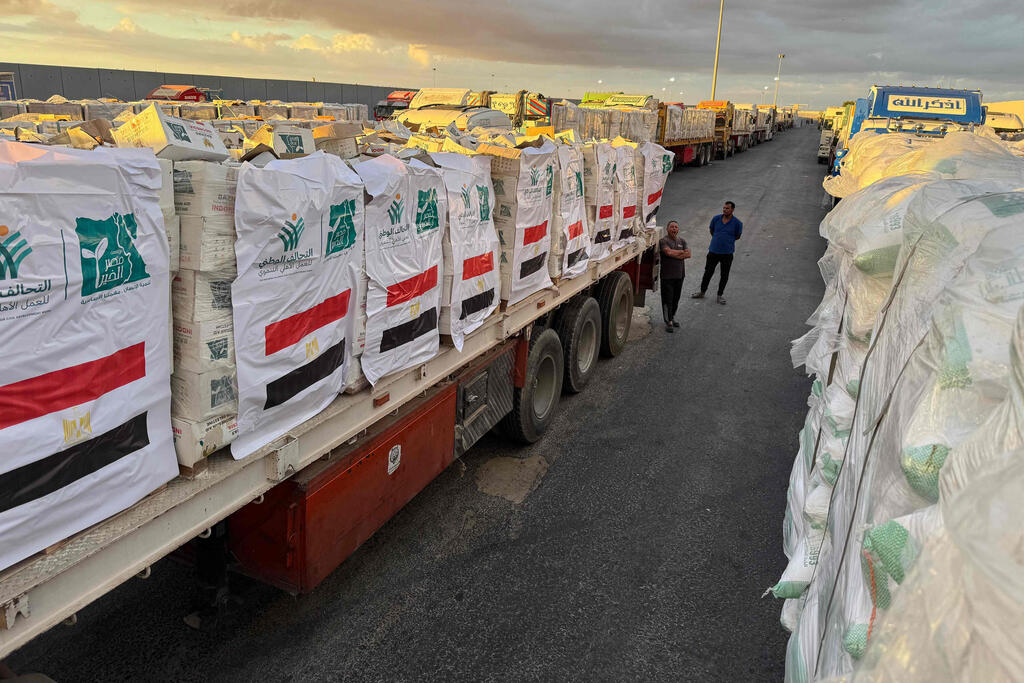
Egypt’s increased involvement comes as criticism mounts over the flow of humanitarian aid through the Rafah crossing. Aid trucks have been waiting on the Egyptian side, but Cairo insists that coordination with Israel and international agencies is necessary to prevent Hamas from seizing supplies. The Lebanese newspaper Al-Akhbar, affiliated with Hezbollah, quoted Egyptian sources saying that the understandings reached so far include an agreement to call for a UN resolution establishing a temporary international force in Gaza, a proposal Cairo supports. The force would allow a limited foreign presence in the Strip under Egyptian oversight, provided it remains temporary.
(Photo: AFP)
The same sources added that despite the lack of progress on mechanisms for reviving the PLO’s activity, Egypt intends to invest considerable effort in that direction in the coming period, hoping to enable the organization to lead international negotiations on behalf of the Palestinians. Cairo’s strategy reflects both diplomatic calculation and self-interest. Egypt has no desire to see renewed fighting, having itself faced repeated security and economic challenges in recent years. It has opposed what it viewed as attempts to promote the displacement of Palestinians from Gaza, while absorbing wounded Palestinians for medical care and suffering major financial losses, particularly from declining Suez Canal revenues estimated to exceed $9 billion annually.
Still, Egypt continues to facilitate humanitarian assistance into Gaza, even as it faces criticism over the limited operation of the Rafah crossing. The government views strict control of the crossing as essential for national security. Even before the ceasefire took effect, Egypt had begun preparing to host a reconstruction conference for Gaza. In recent days, el-Sissi confirmed that the conference will take place next month and urged Egyptians to contribute to rebuilding efforts. He instructed the prime minister to consider establishing a national mechanism to collect donations from citizens.
Egypt is now working to secure broad international participation. On Saturday, Foreign Minister Badr Abdelatty spoke with his Turkish counterpart Hakan Fidan, saying Cairo expects active Turkish involvement, though it remains clear that Egypt seeks to contain Ankara’s political influence in the process. Through its entry into Gaza, its leadership in Palestinian reconciliation, and its management of the ceasefire’s next stages, Egypt is positioning itself as the indispensable broker in any regional arrangement that follows the war. For Cairo, the search for the bodies of Israeli hostages is both a humanitarian act and a statement of intent: Egypt, not Qatar or Turkey, aims to define Gaza’s future and reassert its role as the key Arab power shaping what comes next.