


A Kornet anti-tank missile was still sitting inside the Humvee when Lt. Col. S., a reserve deputy commander in the IDF’s 401st Armored Brigade, crossed the border into Lebanon near the northern Israeli community of Avivim.
“We found it before dawn inside a civilian home, aimed toward Israel,” he said. “I have not even had time to hand it over yet.”
He pointed to an assault rifle and a hunting rifle recovered from the same luxury villa in a Shiite village. Israeli forces blew up the house overnight after identifying it as Hezbollah military infrastructure.
The scene offered a glimpse of the campaign now unfolding around Bint Jbeil, a southern Lebanese town long regarded as one of Hezbollah’s most important symbolic and operational strongholds.
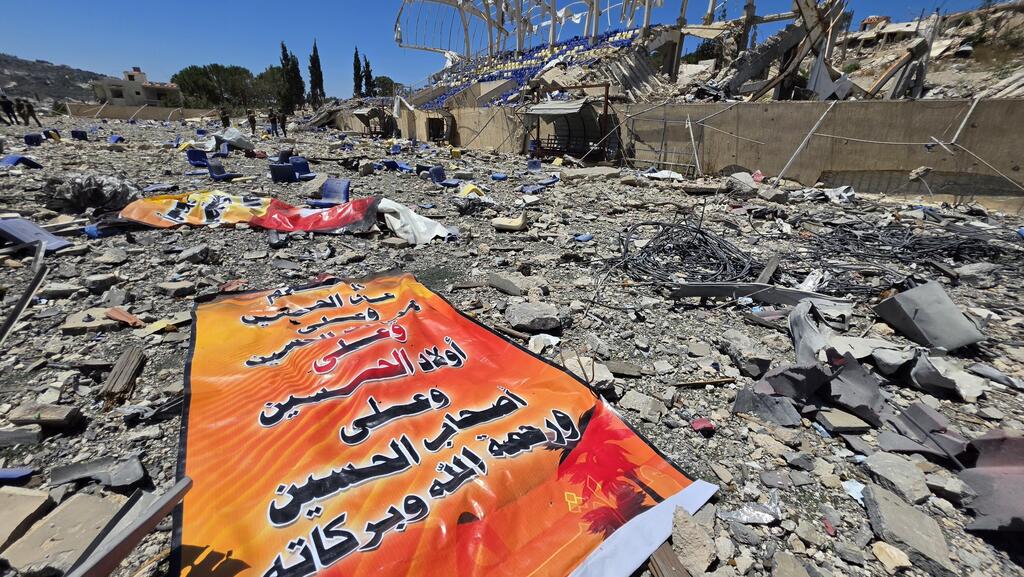
Shortly before reporters entered the area, IDF troops cleared the access route to their destination, Bint Jbeil’s so-called Spider Web Stadium. They found and detonated two buried roadside bombs believed to have been planted before the town was captured.
(Photo: Yair Kraus)
“When you reach a villa in a landscape like this and destroy it because it serves as enemy infrastructure, it hurts,” S. said. “This is such a beautiful country, and it has been turned into military infrastructure. But we have no choice.”
A third war in the same town
For S., this is his third period of combat in Bint Jbeil.
He first served in the area during the 1990s, before Israel’s withdrawal from southern Lebanon in 2000, and returned during the Second Lebanon War in 2006.
During that war, he said, his unit tried to reach the scene of the battle in which Maj. Roi Klein was killed after jumping on a grenade to save his soldiers.
The difference this time, he said, lies in the mission.
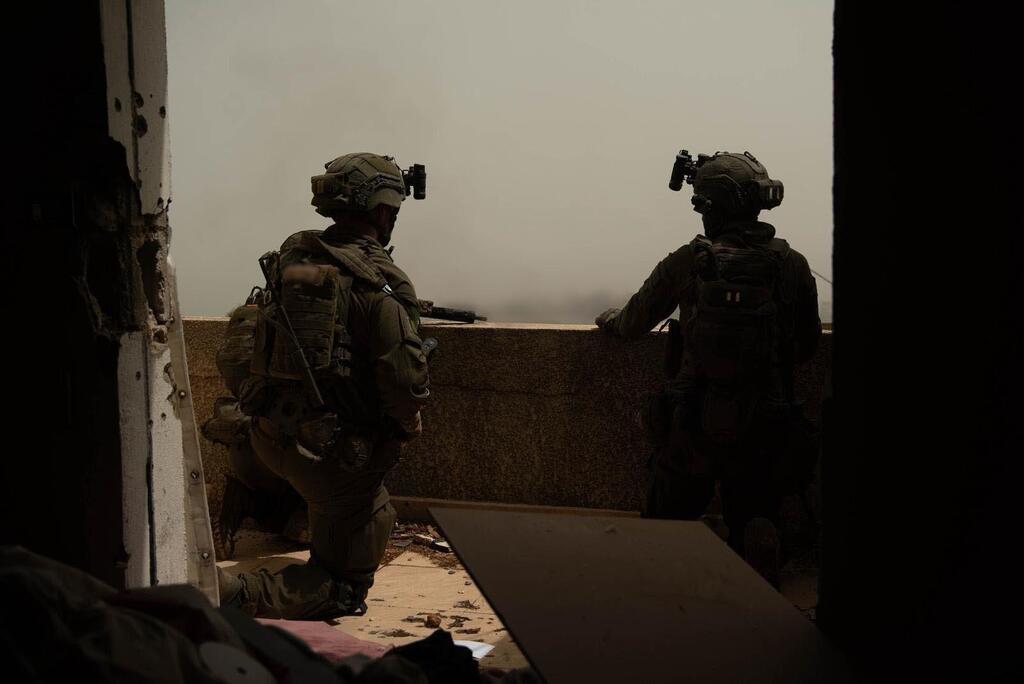
(Photo: IDF)
“In the 1990s, we were here only on the defensive, operating with restraint,” he said. “This time, I feel there has been a different decision: to push the threat away from the communities.”
Residents evacuated from northern Israel began returning home in March 2025. Their renewed daily life, Israeli officials say, depends on preventing Hezbollah from rebuilding military capabilities south of the Litani River.
The ceasefire declared by the UN Security Council in November 2024 ended far short of the conditions Israel’s government and security establishment had promised.
During the earlier ground operation, Israeli forces advanced only about four kilometers into Lebanon and did not enter Bint Jbeil.
When the IDF withdrew to five agreed positions in the buffer zone in February 2025, the military began preparing to resume the campaign if Hezbollah violated the ceasefire and returned to combat.
That moment came a year later, in February 2026, when the United States and Israel launched Operation Roaring Lion against Iran.
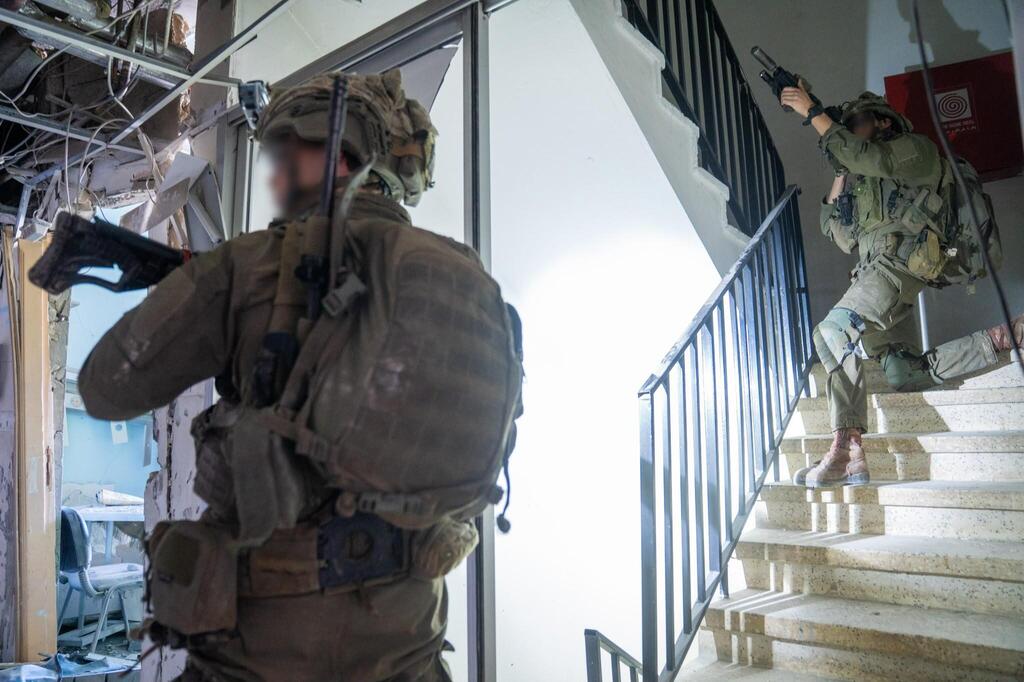
(Photo: IDF)
According to the IDF, Hezbollah ordered roughly 1,200 members of its elite Radwan Force to move south and retake positions abandoned during Israel’s previous Northern Arrows offensive.
The renewed fighting began with Israeli artillery and mortar fire, without immediate air support because the Israeli Air Force was focused on Iran. It later developed into a deeper ground offensive under a plan called Galilee Fists.
The destruction in Bint Jbeil is extensive. Israeli officers say about 40% of the town has already been demolished and that the figure is expected to reach 70% in the coming weeks.
The IDF says the targeted structures constitute all of the Hezbollah military infrastructure identified in the area. New Israeli military positions are also being established.
Hundreds of Hezbollah terrorists encircled
The assault on the town was led by Lt. Col. R., commander of the Paratroopers Brigade’s 101st Battalion, whose soldiers reached Bint Jbeil after a 10-kilometer march.
He estimated that around 400 Hezbollah terrorists had been concentrated in the town.
“There is a tendency to think that when an entire division advances in force, surprise is impossible,” he said. “But the enemy does not always understand where you are coming from.”
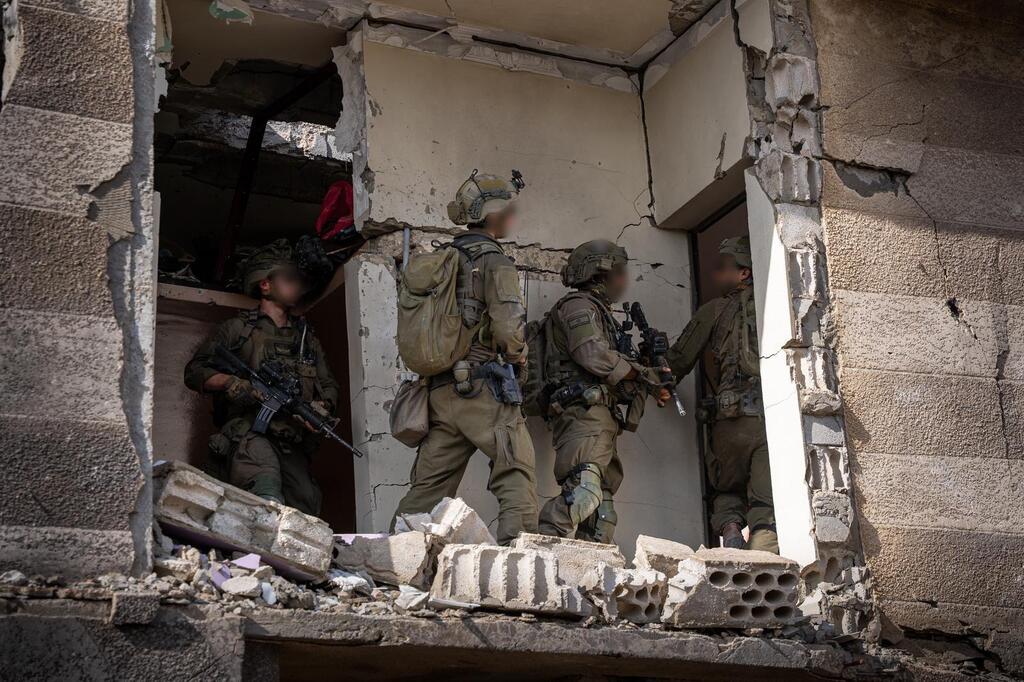
According to R., his battalion approached from the west while the Givati Brigade advanced from the east, completing an encirclement of Hezbollah forces.
(Photo: IDF)
Around 150 terrorists remained inside the town, he said.
“We encountered terrorists here in face-to-face battles and struck them,” he added.
The fighting carries deep historical weight for the soldiers.
It was in this area in 2006 that Klein and seven other troops were killed. Klein became a national symbol after jumping on a grenade and reciting the Shema prayer as he died.
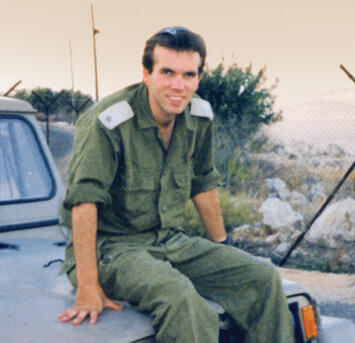
Maj. Roi Klein
(Photo: Shaul Golan)
R., who grew up in the northern community of Mitzpe Netofa, said he experienced the current operation as the closing of a circle.
“We grew up on the battles that happened here,” he said. “This was a center of enemy evil. Standing here on the ruins of the stadium and seeing the destruction around us, this is a place every Israeli wanted to settle an account with.”
The stadium where Nasrallah mocked Israel
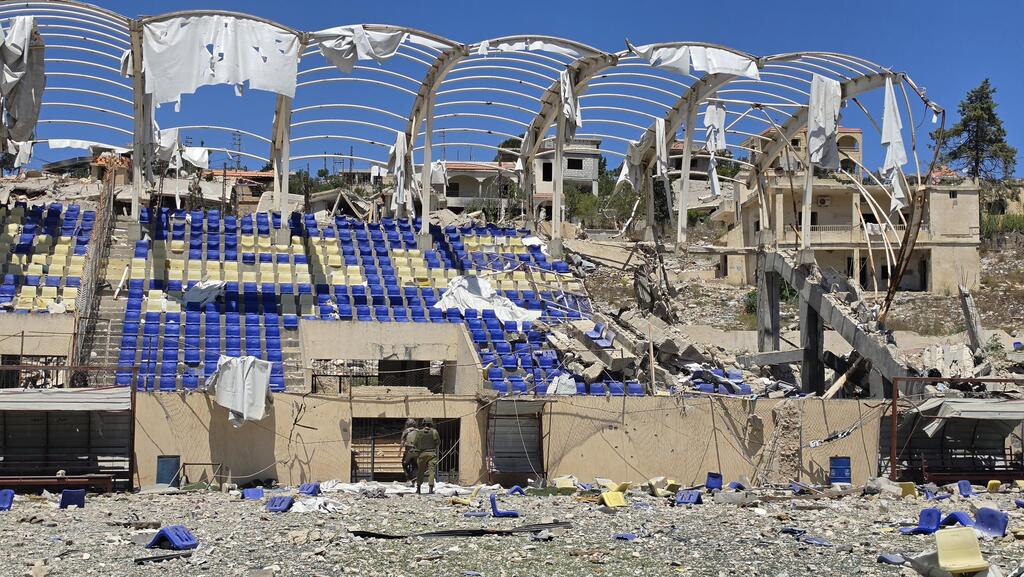
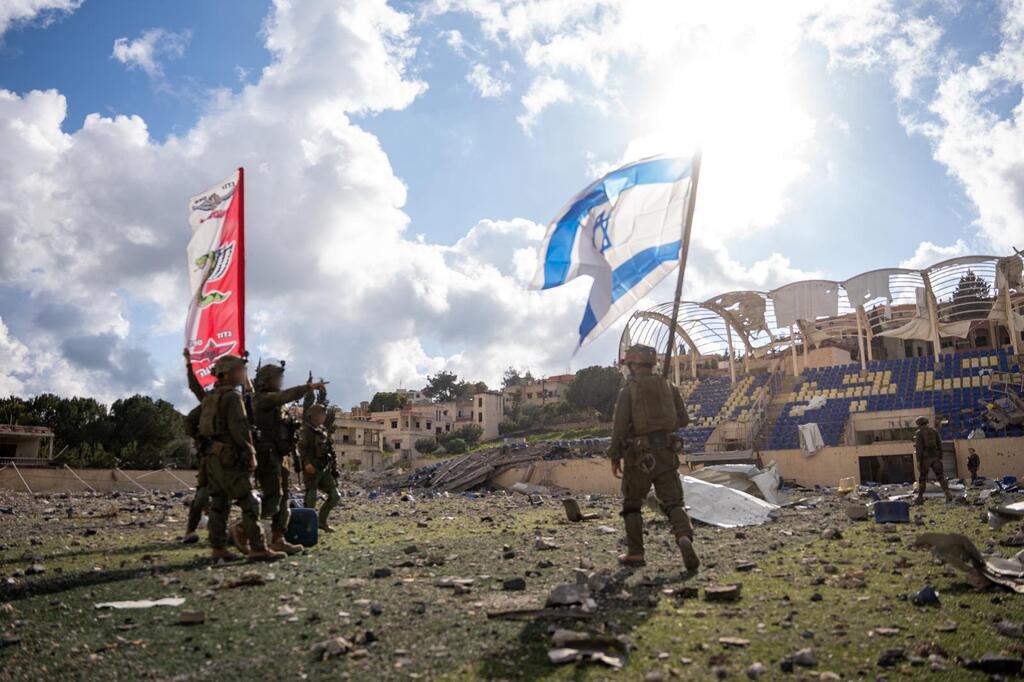
The shattered stands of Bint Jbeil’s stadium have become a symbol of Hezbollah’s collapse in the town.
It was here in 2000 that former Hezbollah leader Hassan Nasrallah delivered his famous “spider web” speech.
Nasrallah argued that although Israel possessed nuclear weapons and the region’s strongest air force, Israeli society itself was weak, exhausted and divided.
He claimed Israelis had lost their ability to absorb casualties and that their society was easier to tear apart than a spider web.
Shortly before Israeli forces entered the town, Hezbollah’s current leader, Naim Qassem, attempted to revive the same symbolism.
“If Bint Jbeil falls, Hezbollah will fall,” he declared, insisting that the organization would not allow the IDF to operate there.
(Photo: IDF)
Maj. D., an operations officer in the IDF’s 91st Division, looked across the destroyed stadium and recalled being asked where the field was.
“I told the reporter, ‘Do not worry, when we get there, you will not recognize it,’” he said.
D. was in seventh grade when Nasrallah gave his speech in 2000.
“To come here is ultimately to put a finger in their eye,” he said. “You thought our society and army were unraveling like spider webs. In practice, even this stadium could not hold together. It now looks like a torn spider web itself.”
Despite Israeli operational control, shafts, explosives and small pockets of Hezbollah fighters remain.
A week earlier, two clashes took place in the same area. Three terrorists were killed and a Hezbollah operative was captured, according to the IDF.
“It would be a mistake to say there are no terrorists here,” R. said. “There are still individuals.”
Three years of reserve duty
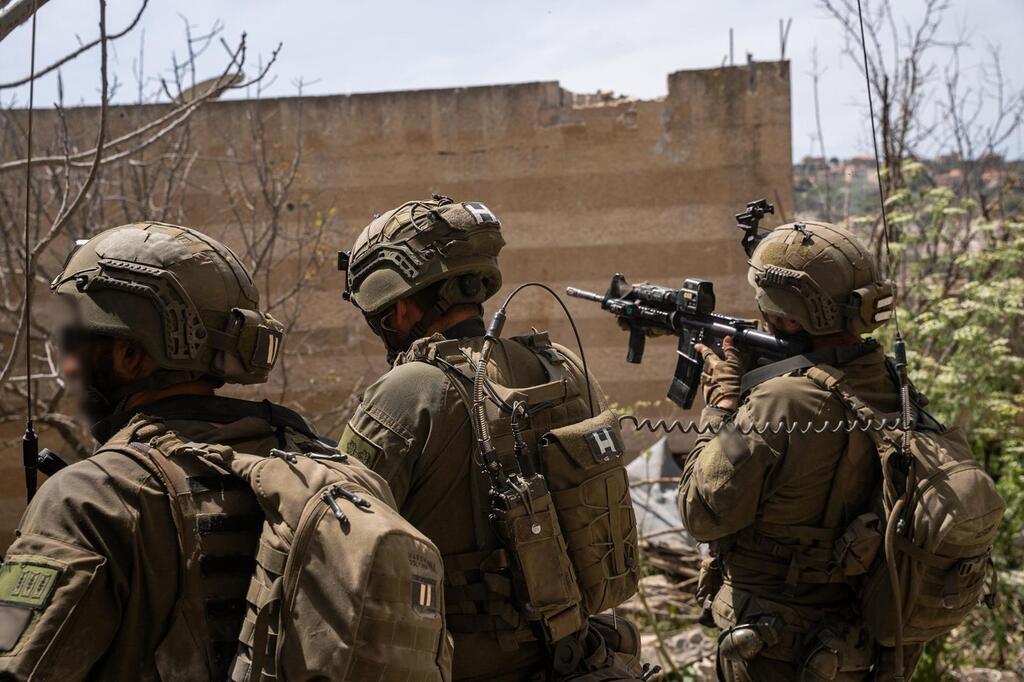
The strain of repeated reserve service is clearly visible among the soldiers tasked with destroying Hezbollah infrastructure after nearly three consecutive years of war.
S. made no attempt to disguise the burden.
“It is hard,” he said. “It is hard as a reservist, hard for the family, and there are difficult personal moments.”
He said he allows soldiers facing personal difficulties to spend more time at home and has adjusted leave arrangements to ease the strain.
“The army has become more flexible in ways we never imagined before,” he said. “I personally do not go home, but I let my soldiers leave more often. After three years, obviously it is challenging.”
(Photo: IDF)
The debate over unequal military service in Israel also follows the troops into Lebanon.
“I believe being here is a privilege, a commandment and a duty,” said S., who is religious. “As someone who has served in the army for years, the fact that an entire sector does not share the burden bothers me and hurts me.”
He added that low participation rates also exist in other parts of Israeli society and said there was no simple solution.
When doubts arise, he said, his answer is to look south from the heights of Maroun al-Ras.
From there, Israeli troops can see Avivim, Yiron, Bar’am, Rehaniya, Safed and even Haifa Bay.
“Sometimes, instead of looking north at what we are doing, you have to look south to understand why we are doing it,” he said. “You see the communities below you and understand the reason. You understand there is no choice, and you continue.”
‘It does not matter whether Hezbollah wants to attack’
The campaign in northern Israel is now being conducted without relying on assessments of Hezbollah’s intentions, commanders said.
For two decades, Israel’s working assumption was that although Hezbollah had developed the ability to invade the Galilee, it did not necessarily intend to do so.
That belief has been discarded.
“Sometimes there is a gap between reality and our perception of reality,” S. said. “I do not care whether Hezbollah wants to attack us today. I want to know whether it can, and I want us to make sure it cannot.”
Israel cannot control Hezbollah’s intentions, he said, but it can reduce its capabilities.
“The other side thinks differently, and we cannot analyze its thoughts using our own concepts,” he said. “We are here to deny capabilities. They will not be able to conquer our communities. We cannot control their desire, but we can reduce their ability.”