


The city home to Harvard University and the Massachusetts Institute of Technology (MIT) moved Wednesday to promote divestment from companies supplying weapons and technology to the Israel Defense Forces.
The City Council of Cambridge, a university city of approximately 123,000 residents near Boston, narrowly approved a resolution calling on municipal employee pension funds to stop investing in companies involved in what the measure described as the "genocide, apartheid and occupation of Palestinians."
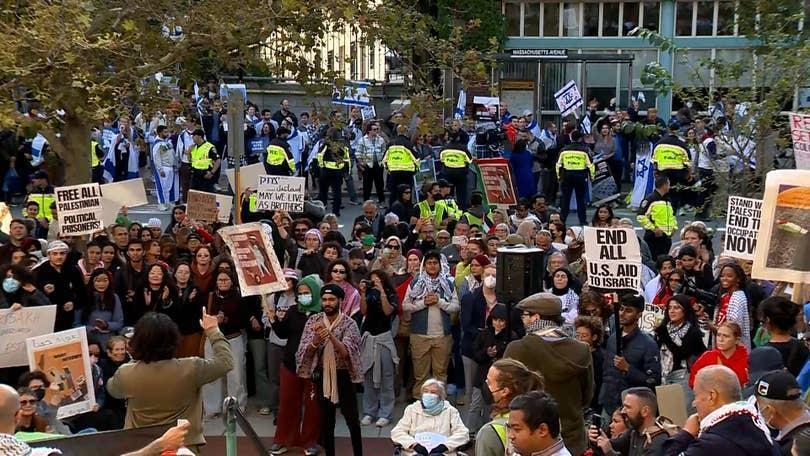
Among the companies identified were Israeli defense contractor Elbit Systems, U.S. technology company Palantir and aerospace giants Boeing, Lockheed Martin and GE Aerospace.
The vote followed a heated debate, after council members spent six hours at an earlier meeting hearing testimony from residents. When the vote was postponed at that meeting, audience members shouted, "You are all complicit in genocide" and "From the river to the sea, Palestine will be free."
The approved resolution calls on the city to develop its own list of companies that municipal pension funds could use when considering divestment. A separate proposal to extend the boycott to companies involved with the IDF through municipal procurement contracts, rather than investments alone, was also narrowly defeated.
A compromise over the BDS movement
The original proposal was introduced by City Council member Ayah Al-Zubi, a Harvard graduate. "This is the worst atrocity of our lifetimes, and we are invested in it," she said during the discussions. "I don't want blood on my hands, and none of us should."
Al-Zubi argued that while the United States imposes sanctions on countries such as China, Iran, Russia and Syria, it gives Israel a "blank check." Asked why she was singling out Israel, she replied, "I'm not making Israel look bad. I'm telling the truth."
Al-Zubi initially sought to adopt a list of approximately 100 companies compiled by the American Friends Service Committee (AFSC), a Quaker organization, which had gained support among activists affiliated with the Boycott, Divestment and Sanctions (BDS) movement against Israel.

The original proposal was introduced by City Council member Ayah Al-Zubi
(Photo: City of Cambridge)
Deputy Mayor Burhan Azeem, however, proposed a compromise: Cambridge would develop an independent list without formally adopting the BDS movement's platform. That version ultimately secured council approval.
According to Cambridge for Palestine, the activist group behind the initiative, the city's employee pension and benefits funds held approximately $24 million in investments in companies included on the original boycott list during fiscal year 2025. The group also claimed that Cambridge had spent about $4 million on contracts with companies supplying technology to the IDF and Israel Police.
The activists' list included three Israeli financial institutions, Bank Hapoalim, Bank Leumi and Israel Discount Bank, in which they estimated the municipal funds held approximately $660,000. The activists accused the banks of financing Israeli settlements.
One of the first companies on the list was Elbit Systems, which previously maintained offices in the area before leaving in 2024 following repeated pro-Palestinian demonstrations.
During one protest in 2023, nine demonstrators were arrested following clashes with police, even though the offices housed an Elbit subsidiary specializing in medical equipment development. Boycott activists portrayed the company's departure as a victory, while Elbit said the relocation was driven by business considerations.
The list also includes Palantir, the American software company that develops data analytics and artificial intelligence systems and works with security agencies, alongside major U.S. weapons manufacturers.
Broader boycott rejected over concerns for city services
The proposal to prohibit municipal procurement contracts with the targeted companies failed after Azeem, despite supporting investment divestment, voted against the broader measure.
He explained that such a restriction could undermine essential services and the city's ability to purchase equipment. During the debate, council members raised concerns that the proposed boycott could make it difficult for Cambridge to buy body cameras for its police officers.
Following the vote, pro-Palestinian activists shouted "Shame" at council members, while some left the chamber in anger.
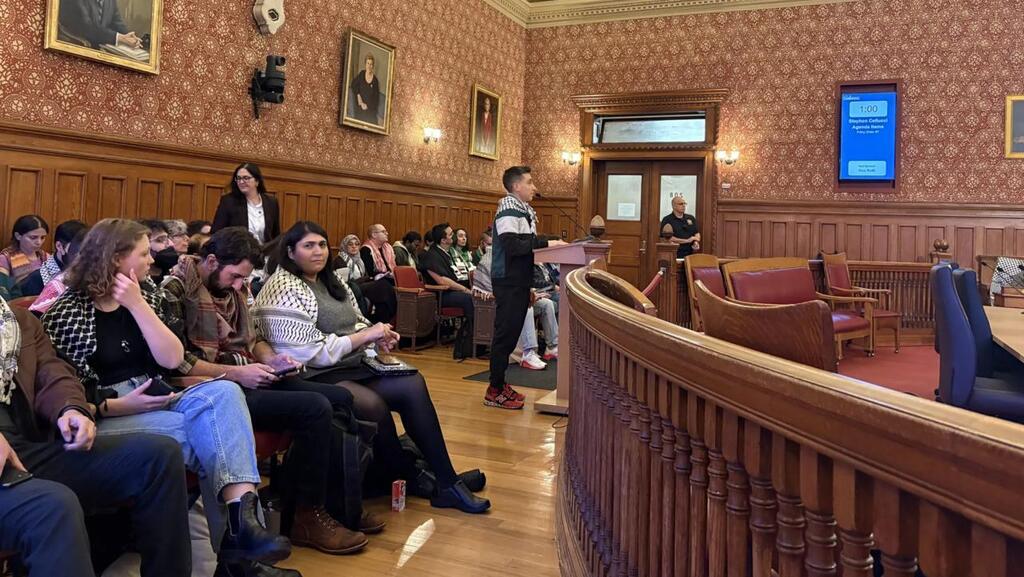
Public comment in Cambridge City Couuncil meeting
(Photo: From social media)
The debate also divided the local Jewish community. Opponents warned that the resolution could fuel antisemitism and unfairly single out Israel. Jewish residents described fears about displaying their religious identity in public and incidents of harassment involving Jewish children at local schools.
Council members Denise Simmons and Patty Nolan also cited an incident in which an Israeli-owned business was vandalized with antisemitic graffiti while neighboring businesses were left untouched.
Simmons proposed applying a similar policy to companies implicated in war crimes around the world, rather than focusing on a single country.
Nolan warned that the measure was dividing the city and could attract unwanted attention from the Trump administration, which has already clashed with Harvard over allegations of discrimination and antisemitism.
Mayor Sumbul Siddiqui, however, defended the initiative, saying it was about "corporate accountability and how Cambridge invests public funds," rather than religion or identity.
Jeremy Burton, executive director of the Jewish Community Relations Council of Greater Boston, criticized the resolution's use of the term "genocide." He nevertheless welcomed the council's decision to reject the broader commercial boycott and avoid formally adopting the BDS platform.
Pro-Palestinian activists celebrated the passage of the divestment resolution but expressed disappointment over the failure of the separate procurement proposal.
Harvard and MIT not covered by the decision
The controversy also reached Harvard's student newspaper, The Harvard Crimson, where an editorial supported divestment. Three members of the editorial board dissented, arguing that the City Council should focus on residents' needs rather than risk pension funds to make a political statement.
Despite the debate's proximity to two of the world's most prominent universities, neither Harvard nor MIT is a party to the decision. Both are independent institutions, and the Cambridge resolution does not apply to their investments or their relationships with Israel.
Cambridge is not the first municipality in the Boston area to consider such a move. In neighboring Somerville, residents supported a nonbinding referendum calling for divestment from companies linked to Israel.
But the Cambridge resolution carries additional symbolic significance because of the city's global reputation as a center of academia, innovation and the technology industry.