

An oil tanker was struck by explosives attached to its hull in the Strait of Hormuz, setting its engine room ablaze and temporarily disabling the vessel, Reuters reported, as Iran's Revolutionary Guard claimed Friday that two tankers attempting to cross the strategic waterway without Tehran's authorization had been forced to stop.
The latest incidents underscore the growing threat to commercial shipping in one of the world's most important oil transit routes, where Iran has intensified attacks on vessels in an apparent effort to frustrate a U.S.-led operation to reopen the strait without a negotiated agreement.
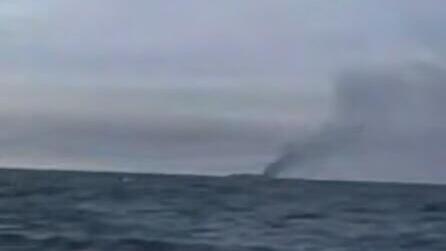
According to Reuters, citing shipping industry sources, a small boat approached the Panama-flagged tanker Louise 1 on Thursday and attached two limpet mines, explosive devices designed to adhere to the hull of a vessel. The mines detonated, igniting a fire in the ship's engine room and temporarily putting it out of operation.
No crew members were injured, the fire was extinguished and no environmental damage was reported. The tanker has since resumed its voyage.
The attack occurred approximately 46 kilometers (29 miles) northeast of Khasab, Oman, on the southern side of the Strait of Hormuz.
Reuters said it was not immediately clear who was responsible for the attack.
The incident marks the first reported successful use of such explosives in the strait since the outbreak of the war with Iran in late February, according to Reuters. A similar attempt to disable a vessel last month failed when the explosives did not detonate, two sources told the news agency.
The apparent ability of attackers aboard a small vessel to approach a moving tanker, attach explosives and escape has raised serious concerns about the vulnerability of commercial shipping in the narrow and heavily trafficked waterway.
Marisks, a Greece-based maritime risk management company, warned that the method could pose a particularly difficult challenge for shipping operators because of its simplicity and low cost.
"The apparent ability of a small craft to approach a transiting tanker, deploy explosive devices and withdraw presents a significant security concern, particularly in the Strait's congested shipping lanes," the company said.
Marisks noted that limpet mines are relatively inexpensive and readily available, describing their deployment against moving ships from small boats as a technologically simple but highly effective method of attack.
Iran claims two tankers stopped in Hormuz
The Islamic Revolutionary Guard Corps' navy said Friday that two oil tankers had been stopped off the strait's southern coast after attempting to cross without coordinating their movements with Iranian authorities.
In a statement, the Guard claimed the vessels had disabled their navigation and positioning systems and attempted to leave the strait through an unauthorized route with assistance from the U.S. military.
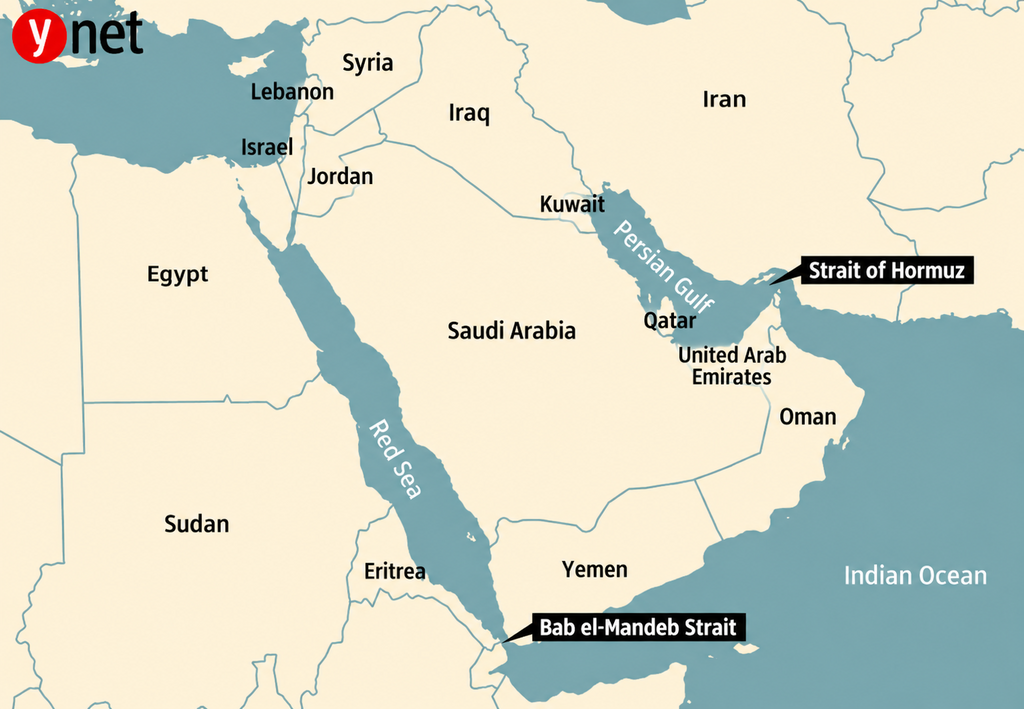
"After several unanswered radio warnings, the two tankers entered an unsafe area, became involved in incidents and were stopped off the southern coast of the Strait of Hormuz," the statement said.
The Guard did not identify the vessels or explain what it meant by the incidents that caused them to stop.
It was not immediately clear whether the Louise 1 was one of the two tankers mentioned in the Iranian statement. The Guard's account could not be independently verified.
The reported location of the vessels, near the southern shore of the strait, is notable because Iran's coastline lies along the northern side of the waterway, while Oman occupies much of its southern shore.
In recent weeks, Iranian authorities have repeatedly claimed that tankers crossing the strait were damaged after striking mines.
The incidents come amid reports that Tehran has stepped up deliberate attacks on commercial vessels in an effort to disrupt Washington's campaign to restore maritime traffic and the flow of oil to international markets.
The United States has sought to reopen the waterway without reaching an agreement with Iran while maintaining a naval blockade of Iranian ports.
Washington has so far refrained from directly responding to the latest reported Iranian attacks, potentially to avoid an escalation that could drive fuel prices higher just days before Tuesday's U.S. midterm elections.
President Donald Trump has recently dismissed some Iranian claims of damage to vessels as "fake hits."
The continued disruption of shipping through the strait has become a central point of contention between Washington and Tehran, with both sides seeking to use maritime access as leverage in negotiations over ending the conflict.
Trump says Iran deal possible as Qatari mediators arrive
Despite the continued attacks, diplomatic efforts to prevent a renewed American military offensive against Iran appeared to be gaining momentum Friday.
Speaking to a local radio station in Kansas, Trump was asked about his ultimate objective in Iran and whether military action could resume after Tuesday's midterm elections.
US President Donald Trump
(Photo: AP Photo/Julia Demaree Nikhinson)
"It will be over soon," Trump said, while suggesting that a negotiated settlement remained possible.
"They want to make a deal, they have to make a deal with a guarantee. We have to have a guarantee that they will never have a nuclear weapon," he said.
Earlier Friday, Reuters reported, citing a source familiar with the discussions, that Qatari mediators had arrived in Tehran in an effort to advance negotiations and prevent further escalation.
Qatar presented Iran with a draft agreement Sunday, according to an earlier Reuters report, but a senior Iranian official rejected the proposals Wednesday as "unacceptable" and said Tehran would maintain its position on the nuclear issue.
The central dispute concerns the sequence of concessions each side is prepared to make.
Washington wants Iran's nuclear program included in negotiations from the outset, while Tehran insists that the United States must first lift its naval blockade of Iranian ports, remove sanctions on Iranian oil exports and meet additional conditions included in an Iranian proposal Trump rejected last month.
CBS News also reported Friday that a Qatari delegation had arrived in Tehran, citing a source familiar with the negotiations who said the mediators were carrying revisions to the proposed agreement to end the war.
The source said there were signs of progress and that an Iranian response was expected by the end of the week.
"The goal of the proposal is to prevent a return to U.S. military action against Iran, which Trump has repeatedly threatened to resume in recent weeks," CBS reported.
Meanwhile, The Washington Post reported that Vice President JD Vance recently sent a letter to senior Iranian official Mohsen Rezaei offering to meet him personally to advance the negotiations.
Rezaei, secretary of Iran's Supreme National Security Council, is a close associate of Supreme Leader Mojtaba Khamenei and is widely regarded as a hard-liner.
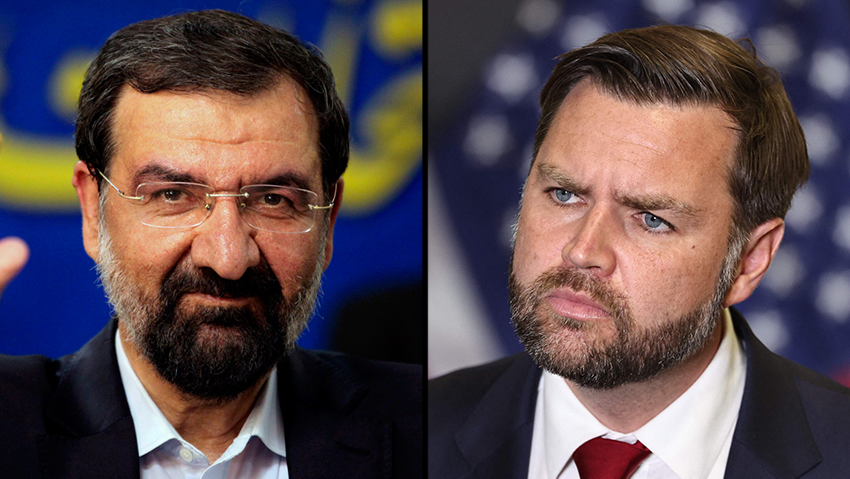
Mohsen Rezaei, JD Vance
(Photo: AP, Fadel SENNA /AFP)
Despite his hawkish positions, the Trump administration reportedly views Rezaei as its "best hope for peace."
The diplomatic contacts come as Washington weighs whether to resume military operations against Iran, with a decision widely expected to come only after the U.S. midterm elections.
Air defenses deployed around Trump's Florida estate
Amid the heightened tensions with Iran, U.S. media reported that security around Trump's private Mar-a-Lago estate in Palm Beach, Florida, has been significantly reinforced at the direction of the Secret Service.
Photographs circulated in American media show two Avenger air defense systems equipped with Stinger missiles positioned on a floating platform in a lake adjoining the presidential estate.
The systems were first spotted near Mar-a-Lago on Oct. 23, shortly before Trump arrived at the property that day, according to the reports.
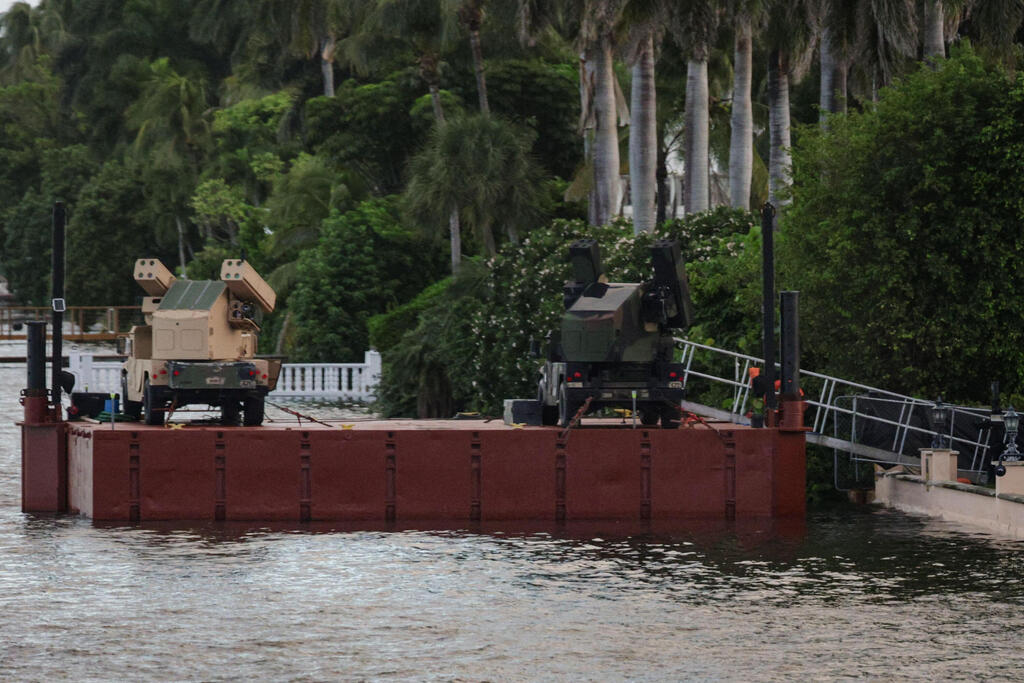
Two Avenger air defense systems equipped with Stinger missiles positioned on a floating platform in a lake adjoining the Trump's private Mar-a-Lago estate in Palm Beach, Florida
(Photo: ALEX WONG / GETTY IMAGES NORTH AMERICA / AFP)
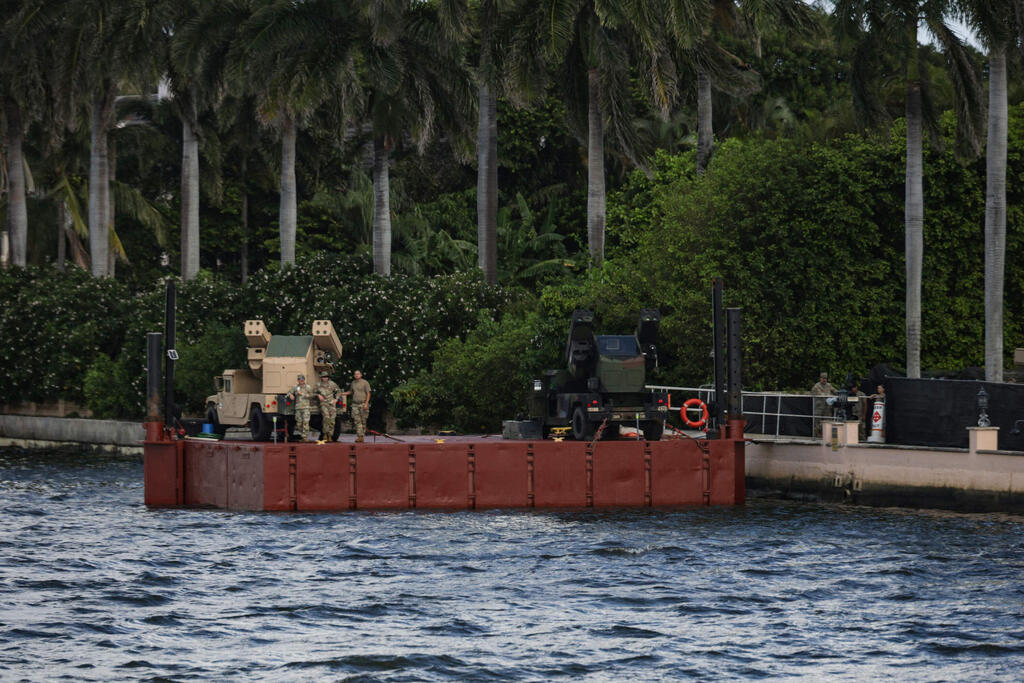
Two Avenger air defense systems equipped with Stinger missiles positioned on a floating platform in a lake adjoining the Trump's private Mar-a-Lago estate in Palm Beach, Florida
(Photo: ALEX WONG / GETTY IMAGES NORTH AMERICA / AFP)
The Palm Beach Daily News reported that an additional Avenger system had been deployed in the southern section of Palm Beach's international airport, which was renamed after Trump earlier this year.
That system was reportedly positioned near the area where Air Force One typically parks during presidential visits.
In a statement to the local newspaper, the Secret Service said it continued to operate in an elevated threat environment.
"The U.S. Secret Service continues to operate in a heightened threat environment, and the agency continually adapts its protective operations to incorporate the most advanced tools, technologies and methods to protect those in its care," the agency said.
The Avenger system, manufactured by Boeing, consists of a modified Humvee equipped with a rotating turret carrying two missile launchers, each holding four Stinger missiles.
The short-range surface-to-air missiles use infrared guidance to track the heat signatures of their targets. The system also carries a heavy machine gun.
According to the U.S. military, the Avenger is designed to counter aerial threats including cruise missiles, drones, helicopters and low-flying aircraft.
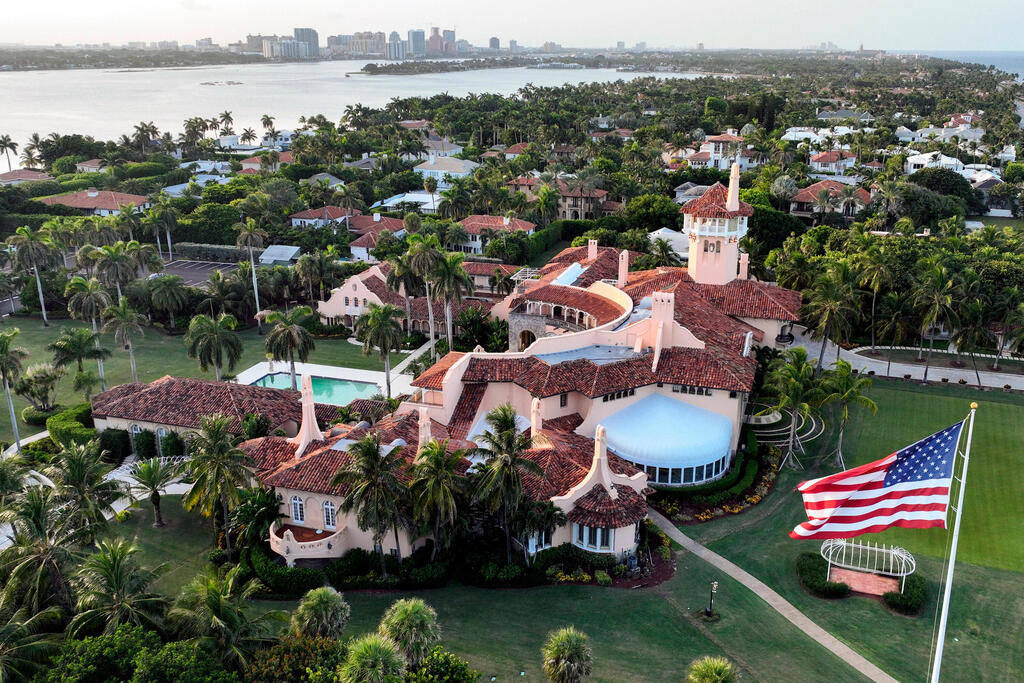
Trump's private Mar-a-Lago estate
(Photo: AP Photo/Steve Helber)
Neither the Secret Service nor the U.S. military has publicly explained why the additional defenses were deployed.
Local media noted that placing such conspicuous air defense systems in a civilian area, where they are clearly visible to people passing the estate, is highly unusual.
Retired Lt. Col. Octavio Perez, a security intelligence expert, told NBC's Miami affiliate that the deployment could reflect concerns about a drone attack on the property or even an attempt to strike it using a larger aircraft, such as a helicopter or small plane.
Perez also pointed to the upcoming Group of 20 summit, scheduled to take place at Trump's golf resort in Miami in December, as a possible factor behind the heightened security.
He suggested that the deployment could also be connected to threats from Iran, whose leadership has previously threatened to assassinate Trump or members of his family.
With Washington considering renewed military operations against Tehran, Perez warned that an escalation could create incentives for an attack on the president's Florida residence.
If the war resumes, "a sleeper cell or a lone actor in the United States could try to do something at Mar-a-Lago," Perez said. "That's essentially what's behind this preparation."
The deployment highlights the broader security concerns accompanying the standoff with Iran, even as negotiators attempt to reach an agreement that would end the war, reopen the Strait of Hormuz and avert another round of military confrontation.