

The Lebanese newspaper Al-Akhbar, which is affiliated with Hezbollah, reported Monday that Khalil al-Hayya will continue as Hamas’ leader in Gaza, Zaher Jabarin will remain the head of the group in the West Bank and Khaled Meshaal will continue to serve as Hamas’ leader abroad. The report cited sources within the militant organization.
The internal elections are viewed as a preliminary step toward selecting the head of Hamas’ political bureau, a position currently expected to be contested between al-Hayya and Meshaal, according to the report.
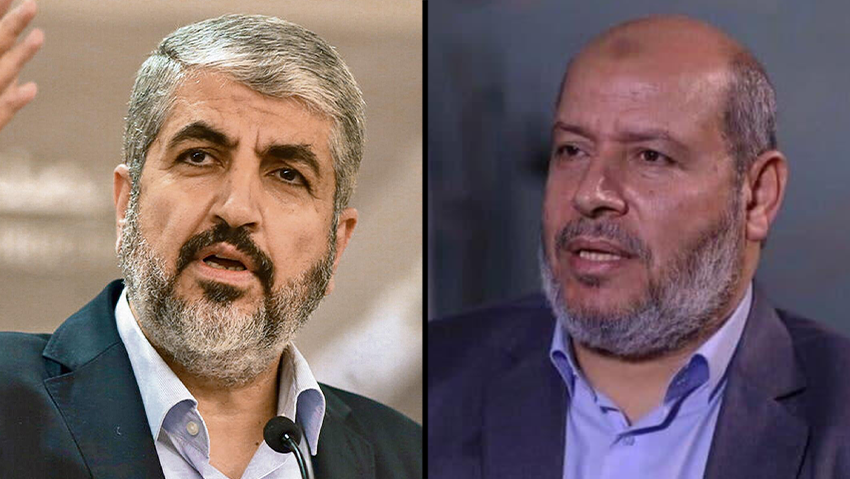
Qatar’s Al-Araby television reported two days earlier that voting for Gaza-based positions had been completed, while elections in the West Bank and abroad were still ongoing. It said an announcement on the new political bureau chief was expected this week. The report also said a parallel vote was held to select a Gaza leader in case al-Hayya is chosen to head the political bureau.
Hamas has been undergoing a restructuring of its leadership during the war, which has included major losses among its top ranks. Former political bureau chief Ismail Haniyeh was killed in Tehran in July 2024. He was later succeeded by Yahya Sinwar, Hamas’ Gaza leader and a key architect of the October 7 attacks on Israel, who was killed three months later.
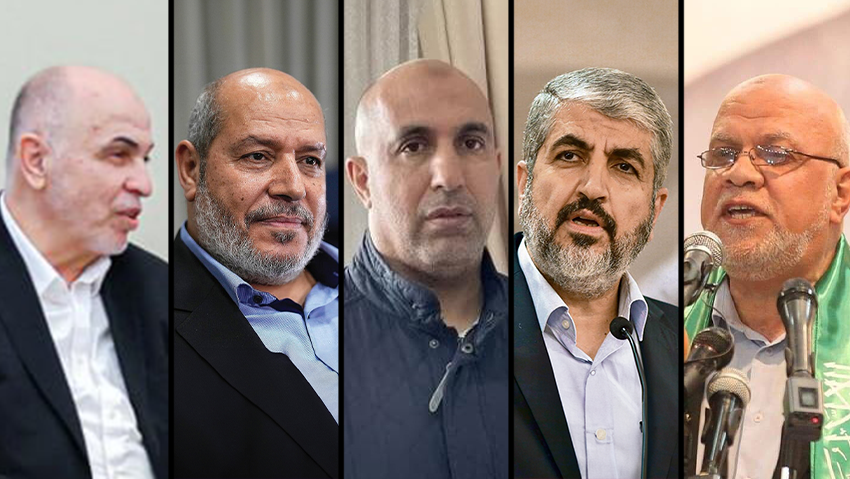
Nizar Awadalla, Khaled Meshaal, Zaher Jabarin, Khalil al-Hayya, Mohammed Darwish
(Photo: Osama Faisal, Khalil Hamra, AP / Iran's Presidential website/WANA (West Asia News Agency)/Handout via REUTERS)
Following those killings, Hamas began operating under a five-member leadership council that has temporarily overseen the group’s affairs. The council includes al-Hayya, Meshaal, Jabarin, Mohammed Darwish and Nizar Awadallah.
Earlier reporting by the French news agency AFP said voting for the political bureau chief was held in the weeks prior and included participation from Palestinian security prisoners held in Israeli prisons. A Hamas source told AFP the elected leader would serve a one-year term as part of a transitional phase.
The restructuring comes after elections were previously delayed due to the war. Hamas officials have described the process as part of broader organizational changes prompted by battlefield losses and internal disputes over strategy, governance in Gaza and regional alliances.