


Lt. Col. (res.) Idan Sharon-Kettler stands at the northern collection site for seized weapons, looking over piles of metal that arrived only hours earlier from southern Lebanon.
Kettler, married and father of two, has served for more than 20 years in the IDF reserve unit responsible for clearing captured equipment within the Technology and Logistics Directorate. He knows every Hezbollah weapon system and can assess from here the group’s recovery and buildup efforts over a year and a half of ceasefire.
IDF displays weapons seized from Hezbollah in southern Lebanon


During that period, Lebanese officials stated that southern Lebanon had been cleared of weapons in accordance with agreements signed with the United States. But it is clear the Lebanese army did not complete its mission.
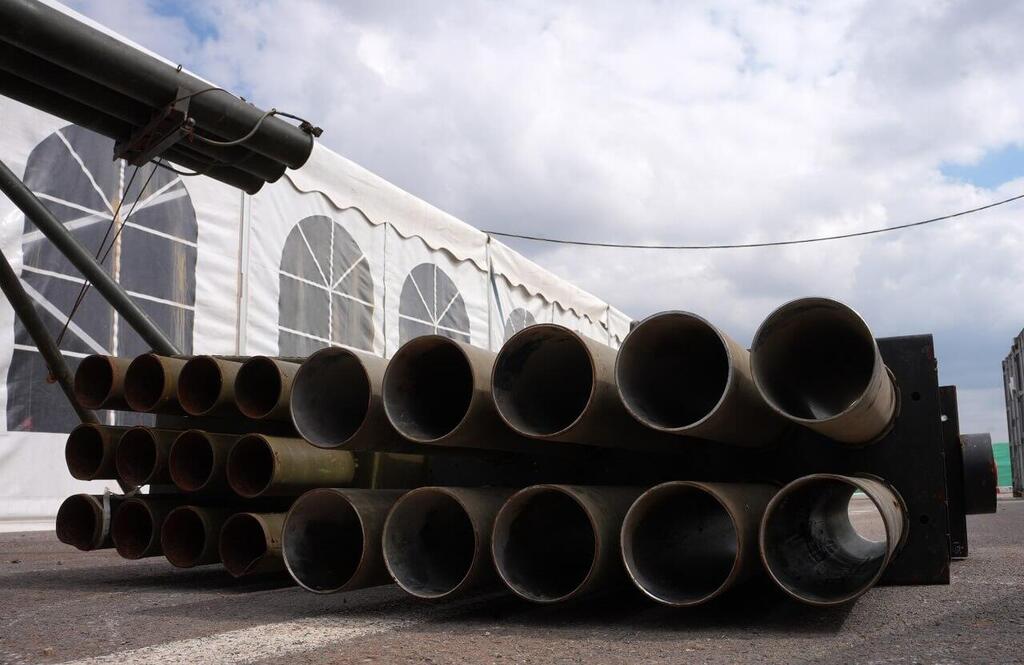
In the months leading up to the Operation Roaring Lion, Hezbollah continued to acquire equipment, including body armor, knee pads and new combat gear, apparently items it lacked in the previous operation, Northern Arrows, which ended by decision of the Biden administration and the UN Security Council without achieving the goals set by the Israeli government.
A gun from World War II
Among the piles of equipment are more than 1,000 enemy weapons items discovered just yesterday by the Givati Brigade in the Bint Jbeil area, about four kilometers from the Israeli border. “We centralize all captured items brought in by combat units and carry out explosive ordnance clearance here to ensure the items are not dangerous,” Kettler said.
He lifted an old but well-preserved machine gun. “This is a Nazi machine gun. You can clearly see the year of manufacture and the Nazi emblem. It was seized in southern Lebanon. It says something about consciousness and the desire to commemorate the memory of World War II and its outcome.”
The weapon, an MG 34, carries a long and violent history before reaching Hezbollah’s hands. “There is an X marking over the number, which indicates it was taken as spoils by the Russian army. That means this weapon was captured twice, first by the Russians from the Germans, and then by us,” Kettler explained.
The volume of weapons and military equipment collected in southern Lebanon since late February, with the launch of Operation Roaring Lion, leaves little room for doubt: more than 7,500 items have already been transferred for further intelligence exploitation and investigation. The list is partial but extensive, including more than 1,000 ammunition crates, 750 small arms, 140 mortar shells, 60 explosive belts, advanced anti-tank missiles such as Kornet and Fagot, as well as explosive drones, a growing threat to troops.
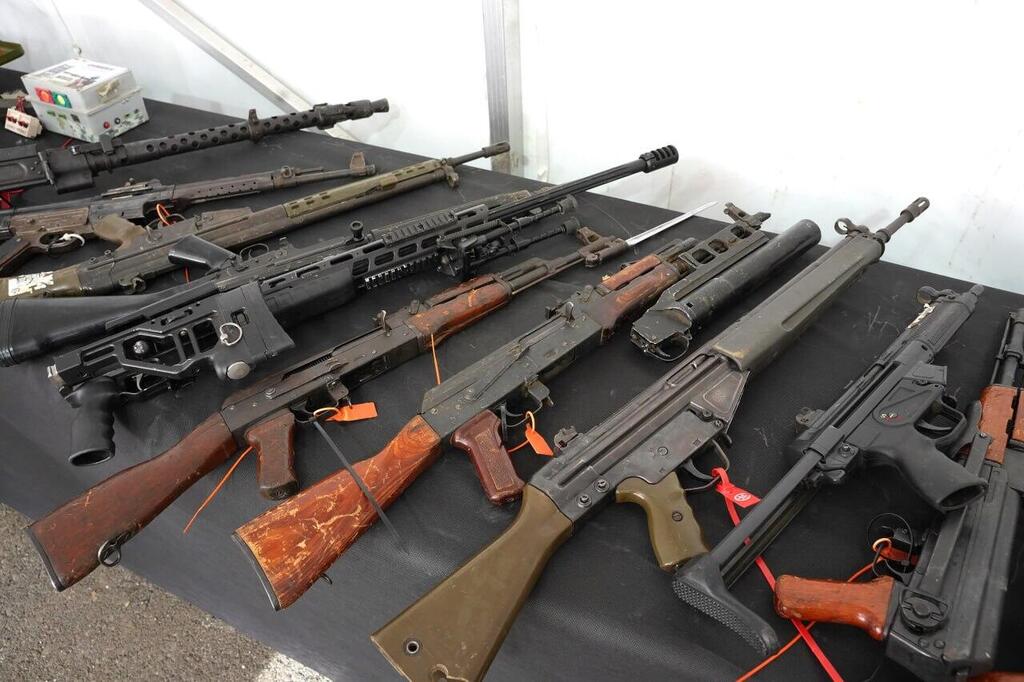
Weapons used by the terrorist organization Hezbollah
(Photo: Efi Sharir)
Alongside these, more than 3,300 technical items were collected and transferred to the IDF intelligence directorate, while additional items were destroyed in enemy territory and never brought in. The IDF says it is making major efforts to capture advanced equipment of Iranian, Chinese and Russian origin held by Hezbollah.
Kettler said most of the items collected are put to use. He could not specify how, but added: “Everything you can imagine happens with them.”
Inside the compound, the weapons are organized by type and model. “There are Iranian weapons here, Kalashnikov variants, sniper rifles, machine guns, RPG launchers, uniforms, body armor, helmets and relatively advanced combat support equipment,” he said.
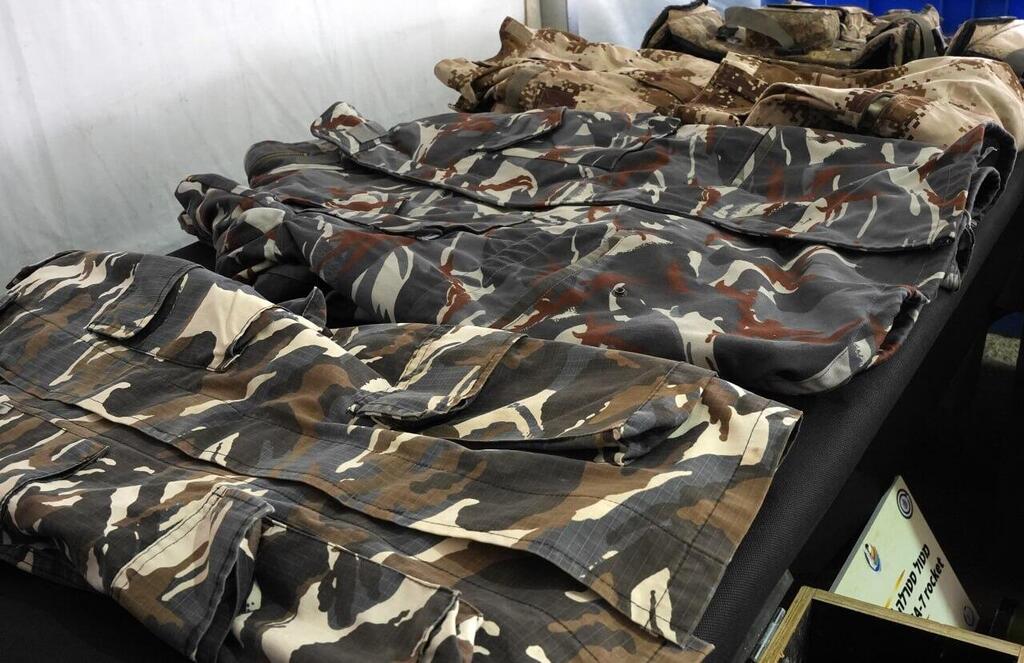
Weapons used by the terrorist organization Hezbollah
(Photo: Efi Sharir)
He pointed to what he called a political paradox. “Part of the agreement was that Hezbollah would not hold weapons in southern Lebanon. What we see here are items taken from southern Lebanon. If we don’t remove them, no one does.”
Responsible for the technical clearance of advanced missiles, powerful explosives and firing systems is Chief Warrant Officer (res.) Ziv, a technical intelligence officer in the Yahalom unit. “The equipment goes through checks for booby traps, functionality checks, making sure nothing is loaded or ready to fire,” he said.
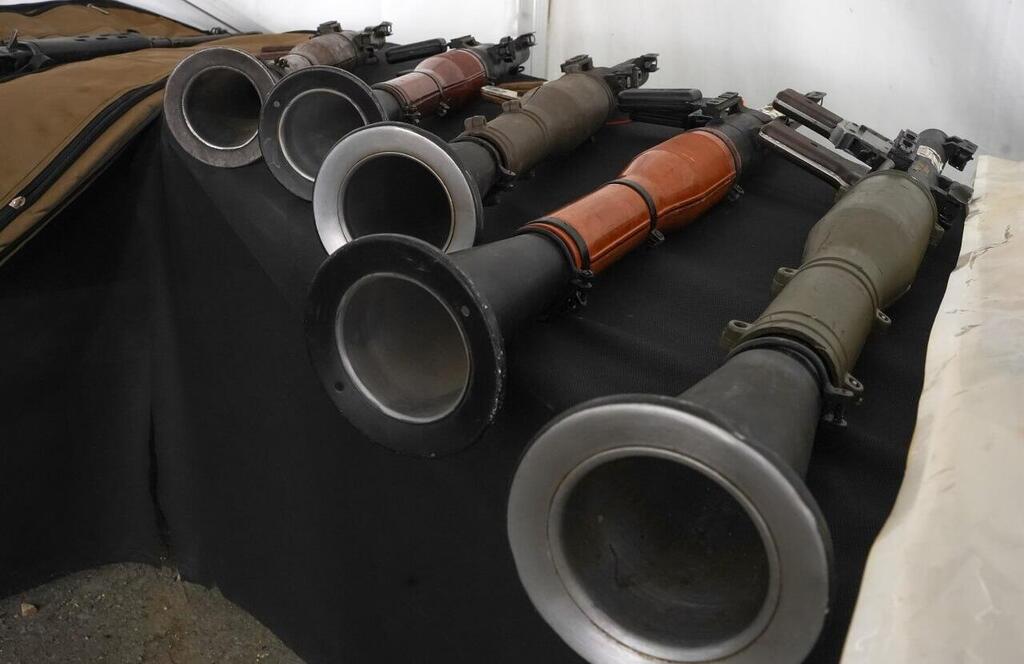
Weapons used by the terrorist organization Hezbollah
(Photo: Efi Sharir)
Some of the weapons, he added, he had only seen in photographs before. “There are things you only read about or see in reports, and suddenly you hold them in your hands. For example, this side charge,” he said, lifting an Iranian-made explosive device. “Seeing it and holding it is completely different from seeing it in an Iranian industry brochure.”
“There is always new weaponry”
The weapons were not hidden only in isolated military depots. Lt. Col. C., deputy commander of the Givati Brigade, described a reality in which terror infrastructure is embedded within civilian life in Lebanon. “Most of the weapons you see here were concealed inside civilian structures,” he said.
“In houses, in hospitals. A significant portion of what you see here was found during a raid on a hospital in southern Lebanon. You arrive at a building and find a rocket inside a side room. There is a concrete wall, and all that remains is to break it with a hammer and everything is ready to launch. You can even identify the direction. You draw a line and see exactly which settlement it is aimed at.”
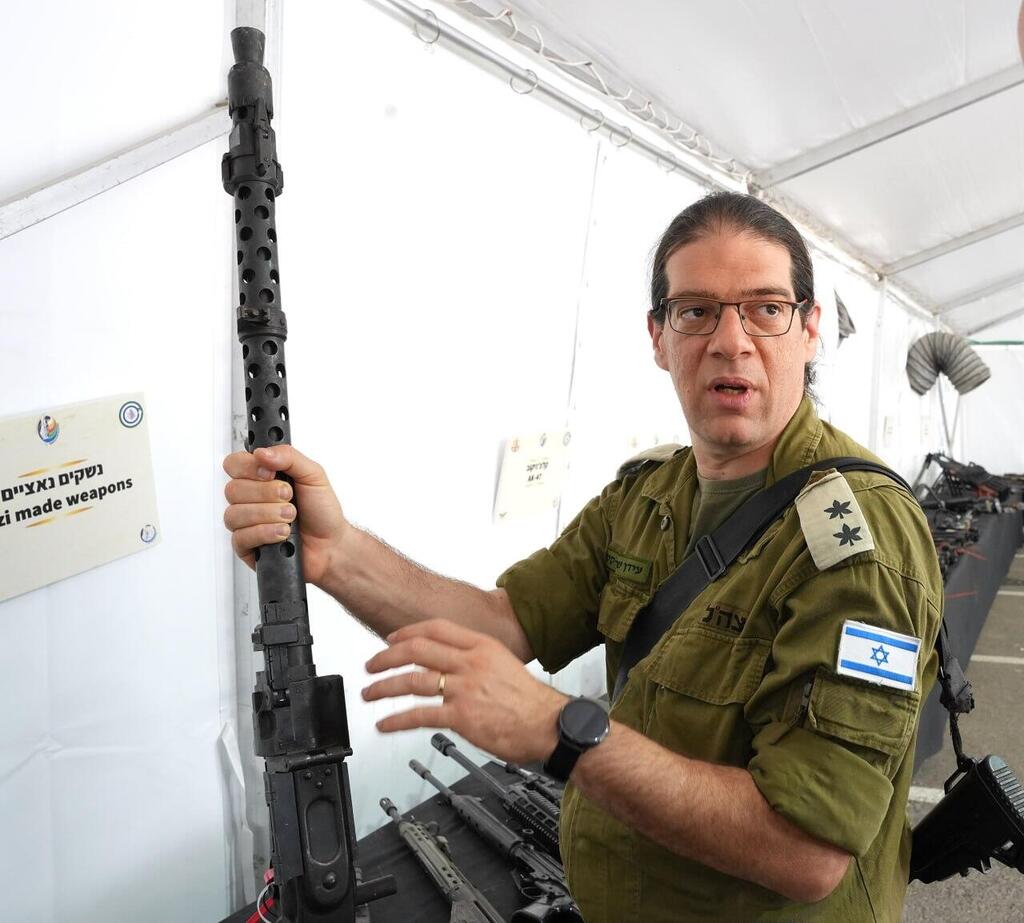
Lt. Col. (res.) Kettler holding Nazi-era weapons
(Photo: Efi Sharir)
For Lt. Col. Y., commander of the 146th Division's 7056th Battalion and a resident of Kiryat Shmona, the scenes provide professional satisfaction but no personal peace. Y. has already completed his fifth reserve rotation and is familiar with the gap between battlefield success and real security for families on the border.
“To achieve full operational success you need months of work. It is frustrating that the Lebanese government is not doing what it is supposed to do,” he said. “In the sector where I operated, I feel we did the job. Does it solve the problem? No. There is always new weaponry. We see it with drones. You replace one weapon with another and each time a new threat appears.”
Y. and his soldiers will soon complete their reserve deployment and return to civilian life, knowing they will likely be called up again. “We in the reserve forces are already at the limit. We will keep showing up, but this concept of buffer zones with large numbers of troops does not work in terms of reserves. We have done 70 days of service, fifth rotation.”
He also expressed hope tied to efforts led by President Trump to halt IDF advancement in Lebanon and promote dialogue between Israel and Lebanon aimed at dismantling Hezbollah through agreement. “The achievement against Hezbollah will be completed through a diplomatic move, which I think is important and should be exhausted. If it does not work, military pressure must continue. We cannot live permanently by the sword. We want prosperity and life on the border, not war.”