

Swiss voters on Sunday rejected a proposal backed by the right-wing Swiss People's Party to cap the country's population at 10 million people, a move that would have required Switzerland to impose sweeping restrictions on immigration and end the free movement of people with neighboring European Union countries.
Although vote counting was still underway, an exit poll by public broadcaster SRF released after polls closed showed opponents leading by 55% to 45%, a wider margin than pre-vote surveys had suggested.
Gallery
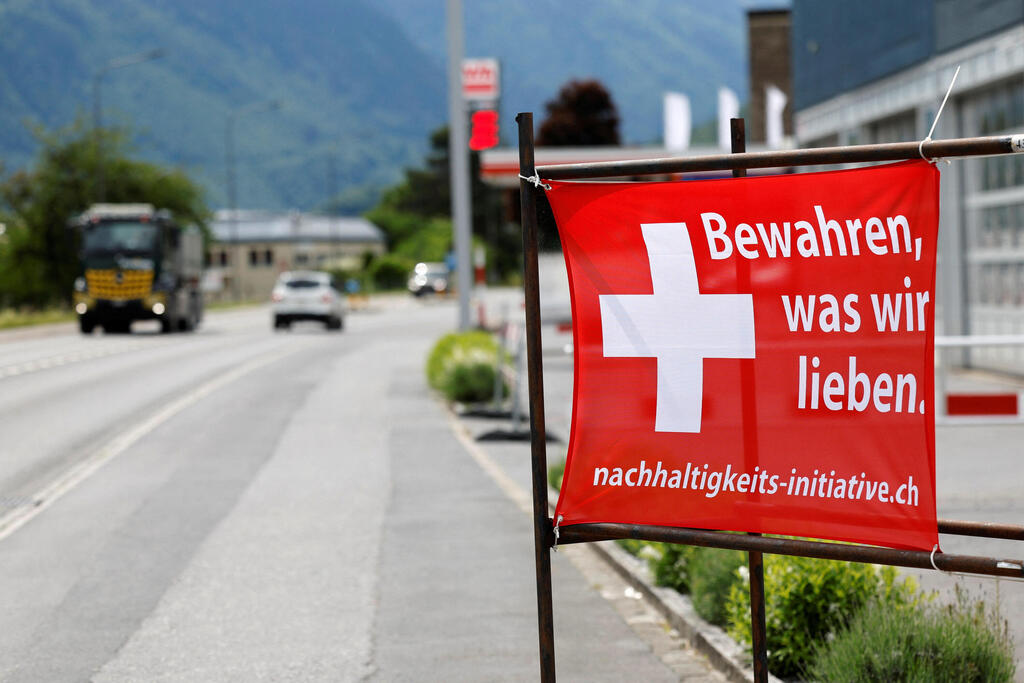
A campaign poster supporting a proposal to limit Switzerland's population growth is displayed along a road ahead of Sunday's referendum
(Photo: REUTERS/Stefan Wermuth)
The referendum was held under Switzerland's system of direct democracy, which allows any proposal supported by at least 100,000 signatures to be put before voters.
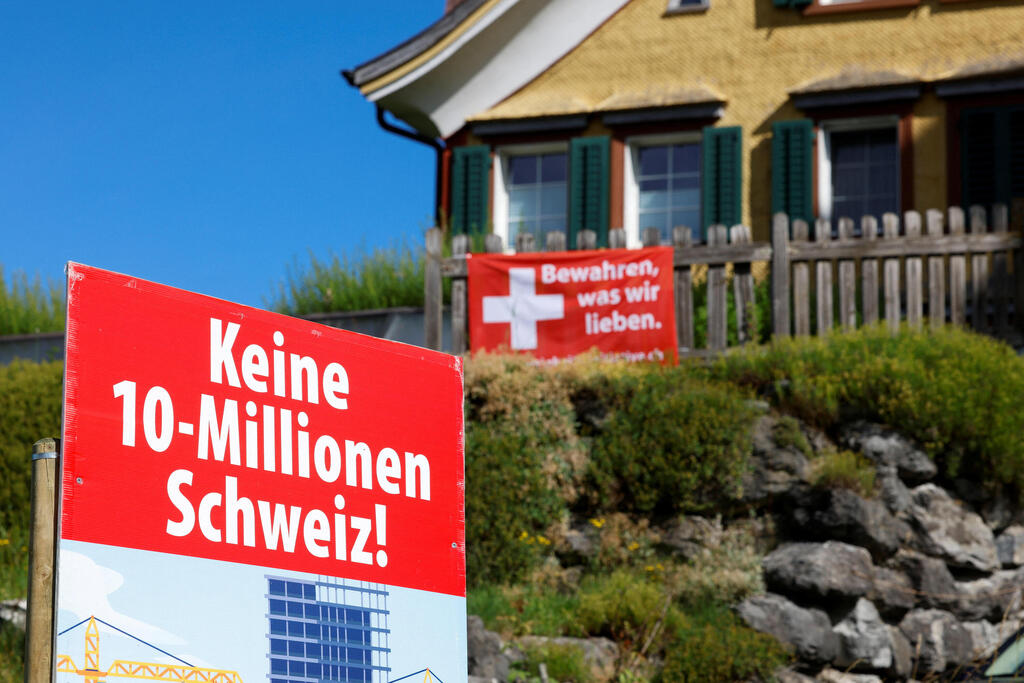
The initiative, promoted by the Swiss People's Party under the slogan "No to a Switzerland of 10 Million," sought to prevent the country's population from exceeding that threshold by 2050. Switzerland currently has about 9.1 million residents. Had the proposal passed, it was expected to take effect within five years, when the population is projected to reach about 9.5 million.
At that point, authorities would have been required to begin sharply limiting immigration and family reunification for migrants, and to withdraw from bilateral agreements with the European Union and other international arrangements that allow foreigners to work and settle in Switzerland. Existing free-movement arrangements with neighboring EU countries would also have ended.
(Photo: REUTERS/Michaela Stache)
Supporters argued that Switzerland's infrastructure, economy and housing market would struggle to cope with continued population growth. The country's population has risen sharply over the past two decades, from 7.3 million in 2002 to 9.1 million today. More than 30% of Switzerland's residents are foreign nationals, while an even larger share of the population has roots abroad.
But the proposal's far-reaching restrictions, particularly the prospect of ending free movement with neighboring countries, raised concerns about the economic consequences. Critics compared the measure to Brexit, Britain's 2016 vote to leave the European Union.
Opponents warned that the proposal would disproportionately affect highly skilled migrant workers, including many who have moved from neighboring Germany in recent years to earn higher wages. Such workers are employed across the economy, including in banking and health care. Approval of the initiative would have forced many of them to leave or would have severely limited their entry.

A voter casts a ballot at a polling station in Bern during a nationwide referendum in Switzerland on Sunday
(Photo: STEFAN WERMUTH / AFP)
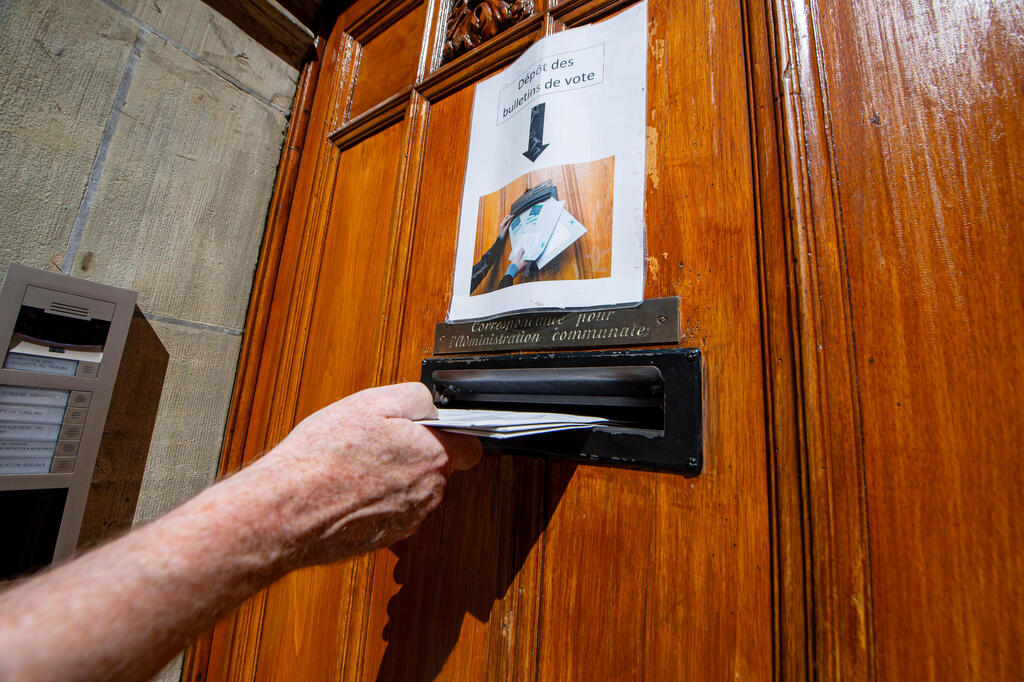
A voter submits a ballot at a polling station in Lausanne, Switzerland during Sunday's nationwide referendum
(Photo: Robert Hradil/Getty Images)
Urs Bieri of polling firm GFS Bern said voters rejected the proposal because, despite concerns about population growth, they feared its consequences.
"From the very beginning it has been presented as the chaos initiative," Bieri said. "Voters were worried about negative consequences for Switzerland’s relationship with the EU and for the labor market. People are also worried about things like having enough care and health workers. Also there’s a feeling that in the current international environment it’s not sensible for a small country to do this."
The Swiss People's Party has long championed controversial referendums calling for tougher immigration policies and the deportation of violent foreign offenders. Previous campaigns were often highly aggressive and accused by critics of using racist imagery and fearmongering about immigrants. This time, however, the party adopted a different approach, avoiding traditional anti-immigration slogans and instead focusing on what it described as the risks and challenges posed by continued population growth.
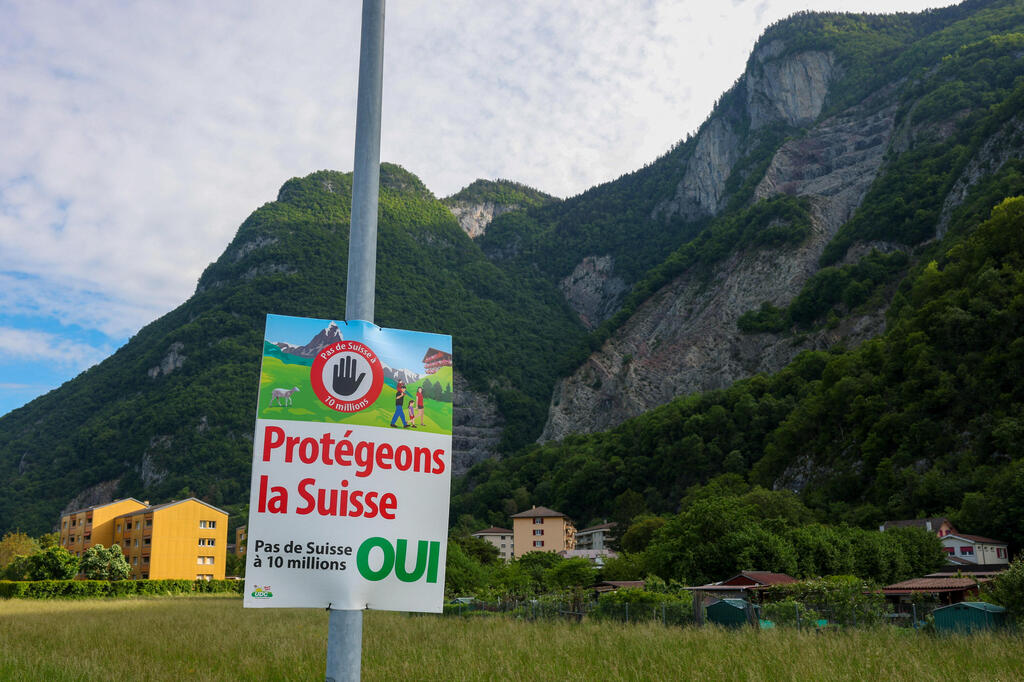
A campaign poster urging voters to reject a proposal to cap Switzerland's population at 10 million stands in the canton of Ticino ahead of Sunday's referendum
(Photo: REUTERS/Denis Balibouse)
Campaigners warned that Swiss residents would suffer from "anxiety caused by increasing overcrowding," citing competition for seats on commuter trains and longer waits to see doctors. Posters depicted Switzerland as an overloaded boat sinking into a sea representing the European Union. Supporters also argued that restricting immigration would help combat violence and crime.
The proposal faced strong opposition from all other political parties. Switzerland's 26 cantons, manufacturers and much of the business community also urged voters to reject it.
"We need stability, and the European Union remains our main economic and political partner," Swiss Federal Council member Beat Jans said last week. "We must not allow bridges to Europe to collapse, and that is exactly what this initiative would do."