


Some six months after Iranian missile strikes severely damaged laboratories and research buildings, the Weizmann Institute of Science has recorded a historic drop in global research rankings. In the 2025 Nature Index, the institute — traditionally Israel’s top‑ranked academic institution — has fallen outside the top 100 worldwide for the first time.
According to the Nature Index’s updated “Research Leaders” list for academic institutions, Weizmann dropped to 111th place, a steep decline from 75th last year. In the overall global ranking, which includes non‑university research bodies, it slid to 122nd, down more than 25 % from 82nd previously. This marks the lowest standing for the institute since the index was launched in 2014. At its peak in 2017, Weizmann ranked 54th overall and 47th among academic institutions. Since then, it has generally trended downward.
Weizmann Institute after being hit by an Iranian missile attack
(Video: Lior Sharon)


The data also show declines among other leading Israeli research institutions. The Hebrew University of Jerusalem fell from 119th to 144th, the Technion dropped from 178th to 194th, and Ben‑Gurion University of the Negev slid from 296th to 301st. A relative bright spot was Tel Aviv University, which remained stable and climbed slightly from 154th to 152nd.
The Nature Index, published by the prestigious scientific journal Nature, is regarded as a key global scientific barometer. It does not measure teaching quality but focuses on research output, tallying contributions to articles published in 145 leading scientific journals. Because the ranking is sensitive to publication volume, a decline in research output results in an immediate fall in position. Like last year, Harvard University holds the top spot.
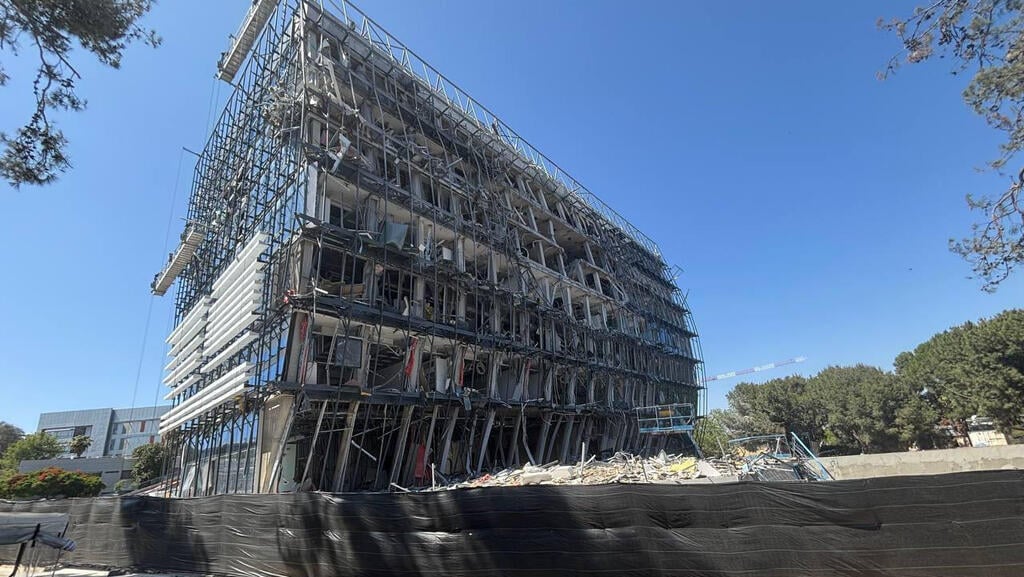
It is difficult to separate these rankings from the security and physical impacts Israel’s academic sector faced over the past year. During the war with Iran, the Weizmann campus in Rehovot was directly hit. In a June finance committee hearing, the scale of the destruction was disclosed: two research buildings were completely destroyed and 112 structures were damaged, including 60 laboratories and 52 residential units for staff and students.
At the time, Weizmann president Professor Alon Chen reported that about 52 research labs and 6 service labs were taken out of operation, effectively shutting down 20%–25 % of the institute’s research activity. The direct cost to buildings and equipment was estimated at 1.5–2 billion shekels. Chen warned that property tax compensation — calculated on depreciation rather than actual replacement cost — would make rebuilding difficult.
“If we bought a microscope for a scientist five years ago for $1 million, the real compensation value is only $200,000, while a new one now costs around $1.5 million,” Chen explained.

Harvard University was ranked first
(Photo: Shutterstock)
Now, the “scientific price” of that damage is reflected in the dramatic fall in international rankings, underscoring the deep impact on research and Israel’s global scientific standing.
Despite the significant drop, Weizmann’s presence in the Nature Index alongside institutions such as Harvard, MIT and Oxford remains notable. Still, policymakers and research leaders view the results as a worrying sign of a continued weakening of Israel’s scientific status, especially amid budgetary pressures, brain drain and physical damage to academic infrastructure.