


A district court in Be’er Sheva on Monday sentenced crime figure Yaniv (Nivi) Zaguri to three life terms plus an additional 33½ years in prison, bringing to a close one of the longest, most complex and violent criminal cases ever tried in southern Israel.
The sentencing follows a landmark verdict delivered last week after more than seven years of legal proceedings, in which the Be’er Sheva District Court convicted Zaguri of orchestrating a calculated revenge campaign that included the murders of Tal Korkos, Korkos’ former wife Dvora Hirsch and state witness Elisha Sabach. Prosecutors said the killings were designed to intimidate witnesses, deter cooperation with police and undermine the justice system.
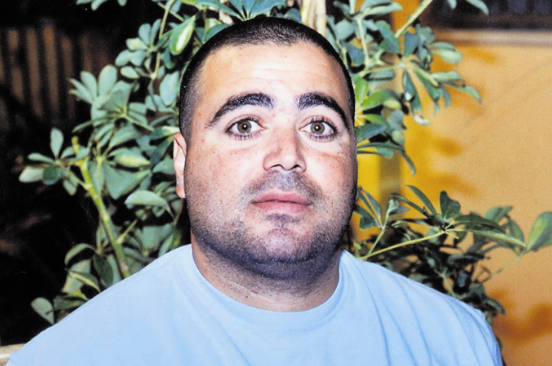
The court also ordered Zaguri to pay 774,000 shekels ($210,000) in compensation to the victims’ families.
The verdict capped a marathon case built on years of investigation by the Israel Police’s Negev Unit for the Investigation of Serious Crimes, the recruitment of multiple state witnesses and an exhaustive presentation of evidence. Judges heard testimony over 218 evidentiary hearings — 192 for the prosecution and 26 for the defense. Zaguri himself testified over 10 sessions, and 117 prosecution witnesses took the stand.
At times, the proceedings were moved to a larger adjacent hall because of courtroom crowding and coronavirus restrictions. During the 2023 war, judges temporarily relocated hearings to Tel Aviv after defense lawyers said they feared traveling to Be’er Sheva.
Presiding Judge Natan Zlotsover opened the verdict hearing last week with a dry remark that drew silence in the packed courtroom: “Everything good eventually ends — and everything not so good does too.”

Tal Korkos
(Photo: Israel Yosef)
In an 841-page ruling, the three-judge panel described Zaguri as a “master criminal” who led a ruthless, long-running campaign of revenge. Judges found that he recruited and directed others to carry out murders while making clear that refusal would also result in death.
Zaguri was convicted of three counts of murder, conspiracy to commit a crime, three counts of attempted murder, obstruction of justice, witness tampering, weapons offenses and arms trafficking.
According to court findings, one of the killings involved an explosive device planted under Korkos’ car as he walked toward a gambling hall in Ashkelon. The bomb detonated, and Korkos was burned alive, crying out “Mama, mama,” testimony said. Hirsch was murdered in Be’er Sheva in front of her children, and Sabach was shot at point-blank range in the city center in front of bystanders.
Prosecutors said the crimes left lasting scars on families and communities. “Three people were murdered solely because they chose to cooperate with law enforcement,” the prosecution said in a statement.

Dvora Hirsch
Prosecutor Rachel Elmakayes told the court the case exposed an extreme criminal reality that operated for years beneath the surface of everyday life. “The court described this file as a bad crime movie, difficult to watch,” she said. “But this was not fiction. It was a brutal reality written in blood, driven by rage and revenge.”
Three additional defendants were also sentenced. Arik Eitel received two consecutive life sentences and was ordered to pay 516,000 shekels in compensation after being convicted of two counts of premeditated murder, three attempted murders, multiple weapons offenses and destruction of evidence. Moshe Rubin and Amir Ben Shimol were each sentenced to life imprisonment for premeditated murder, along with obstruction of justice and witness harassment in Rubin’s case. Both were ordered to pay maximum compensation to the victims’ families.
Following intelligence received after the conviction, police raised the threat level against Judge Zlotsover to the highest category and assigned him enhanced security.
Before sentencing, Zlotsover invited the defendants to make final statements. Zaguri accused prosecutors of corruption, telling the court, “If there is a criminal organization, it is you.” Other defendants dismissed the proceedings as lies.

Elisha Sabach
(Photo: Herzel Yosef)
During the hearing, Zaguri’s wife, Michal, shouted from the courtroom, accusing judges of lying. She mocked the victims as the sentence was read. The judge responded by emphasizing the harm done to the victims’ children.
“They were deeply harmed,” Zlotsover said. “We heard them clearly, and their voices will be reflected in this sentence.”
In announcing the verdict last week, Zlotsover compared the case to a grim crime series, describing Zaguri as the mastermind, director and producer of a “nightmare script.”
“Unfortunately, this was not a movie,” the judge said. “It was a harsh and shocking reality. Three people were murdered in horrific ways simply because they dared to testify.”
The convictions are being viewed by law enforcement officials as a major milestone in the fight against organized crime, demonstrating the state’s ability to dismantle entrenched criminal networks after years of painstaking investigation.