

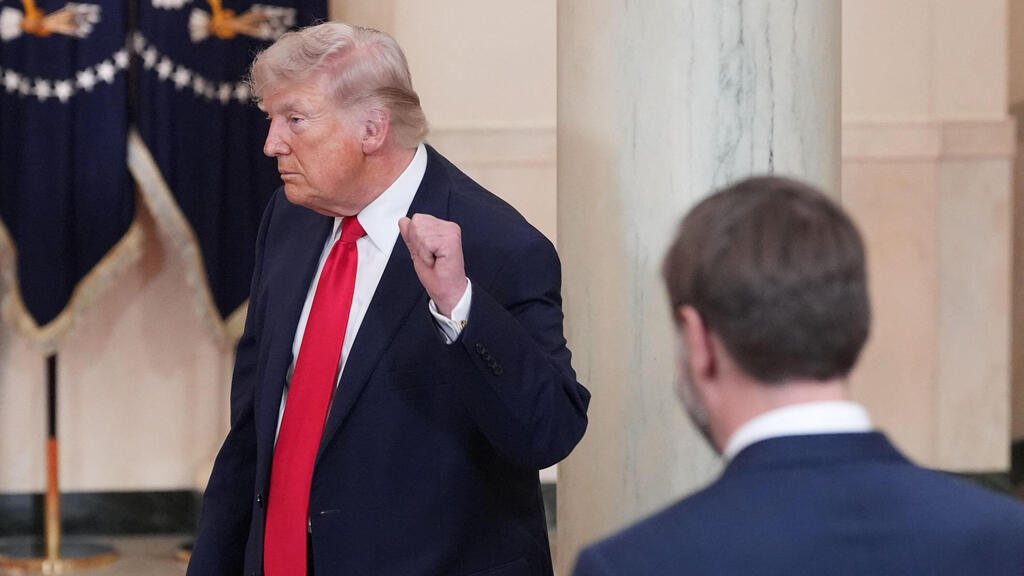
Criticism of U.S. President Donald Trump is intensifying after, instead of outlining a clear path overnight (between Wednesday and Thursday) to end the war with Iran, he left many confused and disappointed in his speech, both in the United States and internationally.
For some time, Trump has said the war is nearing its end, and it was even reported that he intended to use a speech from the Oval Office to declare that the campaign’s objectives had been achieved. In practice, he settled for saying that “the goals are nearing completion,” without detailing how the fighting would end.
Trump's address to the nation
(Video: The White House )


International media outlets did not hold back in their criticism. Britain’s Telegraph wrote that the president “no longer has anything new to say about Iran,” repeating the same messages without a clear exit strategy. According to the newspaper, the speech was largely a collection of his previous remarks. “The U.S. president once again presents a worn collection of posts from Truth Social,” it wrote, referring to Trump’s social media platform, “and appears to have no exit path from the increasingly complicated war.”
The paper added that “what was particularly lacking in the roughly 18-minute speech was any indication that the war — with no end in sight — had advanced in any way. Trump appeared trapped behind the podium. He has no clear path to escalation, beyond risking American lives by sending ground troops, nor to de-escalation. Europe has ignored his threats and requests to join the war, while Iran continues fighting instead of coming to the negotiating table.”
Summing up its criticism, the newspaper wrote: “He appeared exactly at 9 p.m., looked somewhat tired and sounded slightly out of breath. His characteristic improvisations were brief and lifeless. Unless he finds something new to say, Trump may deliver the same speech next month.”
Ignoring economic realities
The New York Times also highlighted the gap between Trump’s statements and reality: despite damage to Iran’s military capabilities, it continues to launch missiles, and the threat has not been removed. The paper noted that Trump did not present a clear path to ending the fighting, shifting between talk of negotiations and threats of further escalation.
“Nevertheless, Trump described the military action as a major success and urged Americans, who are concerned about its costs, to keep things in perspective,” the analysis said. “He did not express empathy for the economic pain Americans are experiencing, but argued that the war is justified to remove the threat from Iran.”
The Times also noted that enriched uranium remains deep underground but still accessible to Iran, “raising questions about the war’s achievements in this area.”
Gallery
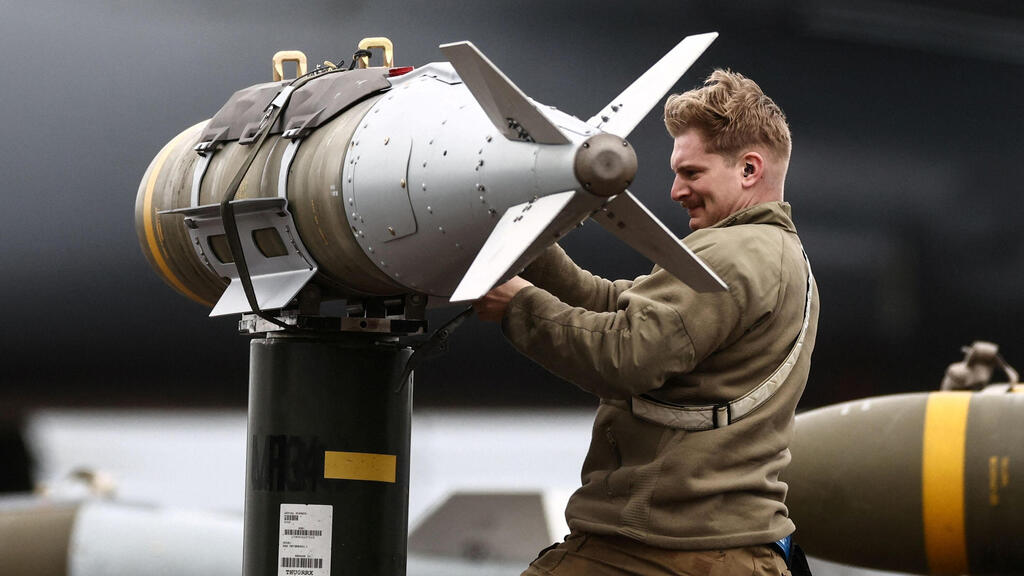
A US Air Force B-1 Lancer bomber is armed at RAF Fairford, an air base in the United Kingdom
(Photo: AFP, Henry Nicholls)
Much of the criticism focused on the economic dimension. Trump sought to reassure the public, saying the rise in oil prices is temporary, but avoided directly addressing economic difficulties. Newspapers emphasized that his position — that the United States does not need oil from the Gulf — ignores the fact that oil prices are set on a global market, and disruptions in the region directly affect the U.S. economy. “Trump’s position ignores economic reality,” the Times wrote.
The paper also criticized his comparison between the current war and the situation in Venezuela, noting that in Iran “the war has so far left a hostile regime in place, with more than 12 American soldiers killed and hundreds wounded.”
The Wall Street Journal wrote that the decision to deliver a prime-time speech was intended to ease concerns about another “forever war,” a term commonly used in U.S. political discourse to describe prolonged, open-ended military conflicts, which Trump had campaigned against. Alongside the achievements he listed, the paper noted that “the conflict has also led to strategic setbacks: Iran has tightened its grip on the Strait of Hormuz, the already hardline regime in Tehran is responding more forcefully against Washington, and its nuclear ambitions have not been fully suppressed.”
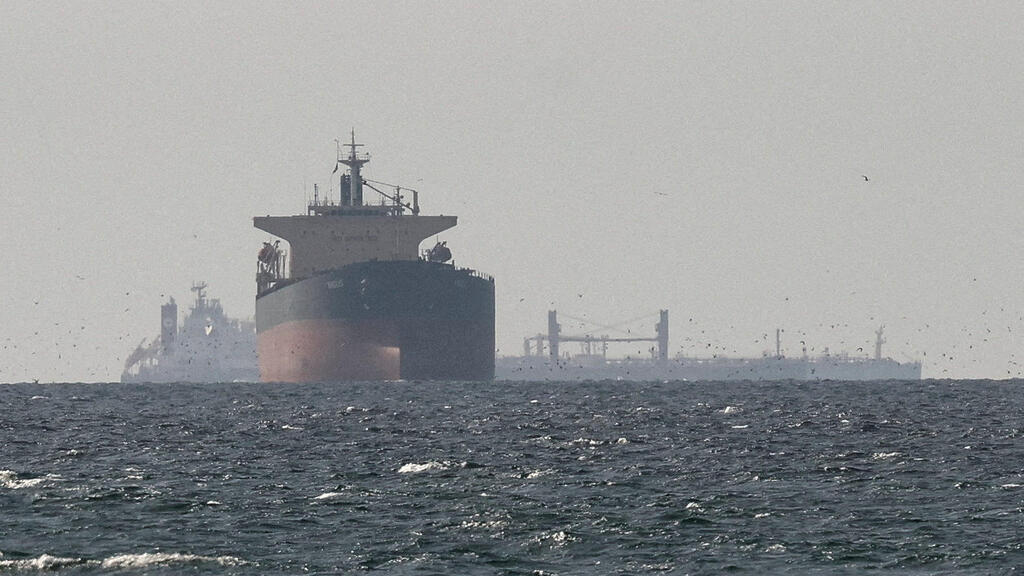
Strait of Hormuz
(Photo: REUTERS/Stringer)
(Photo: Alex Brandon / POOL / AFP)
The Washington Post pointed to a lack of detail in both the economic and military plans, noting that Trump did not explain how he would address public concerns. It also highlighted contradictions in his remarks, between claims of major success and statements about continuing and expanding military operations. While Trump says Iran’s military capabilities have been destroyed and the objectives are nearly complete, he also promises that operations will continue and even expand.
Britain’s Guardian addressed similar points, concluding: “Key U.S. objectives remain unclear. Trump downplayed concerns about Iran’s enriched uranium, saying it is buried too deep underground to be significant. In the past, he argued that preventing Iran from obtaining nuclear weapons was the main justification for the war. Meanwhile, thousands of American troops are deployed in the region, enabling a broader ground operation after weeks of airstrikes against Iran.”
Criticism also came from the Democratic Party. Sen. Mark Warner said Trump must provide clearer answers about the war and its economic consequences, “which will continue to have an impact for a long time,” while Sen. Chris Murphy said that after the speech, “no one knows whether we are heading toward escalation or de-escalation.”
Marjorie Taylor Greene, a Republican congresswoman, also criticized the speech, saying that everything she heard was “war,” and “nothing” that would lower the cost of living.