


The IDF said Wednesday it is completing construction of two new food and aid distribution centers in southern Gaza, part of what it called ongoing efforts to expand humanitarian access in the enclave as fighting intensifies around Gaza City.
A military spokesperson said that once the sites are finished in the coming days, the total number of distribution centers in the territory will rise to five. The army said a facility in Rafah’s Tel al-Sultan neighborhood would be replaced by the two new centers, a move intended to “improve service and ensure safer distribution.”

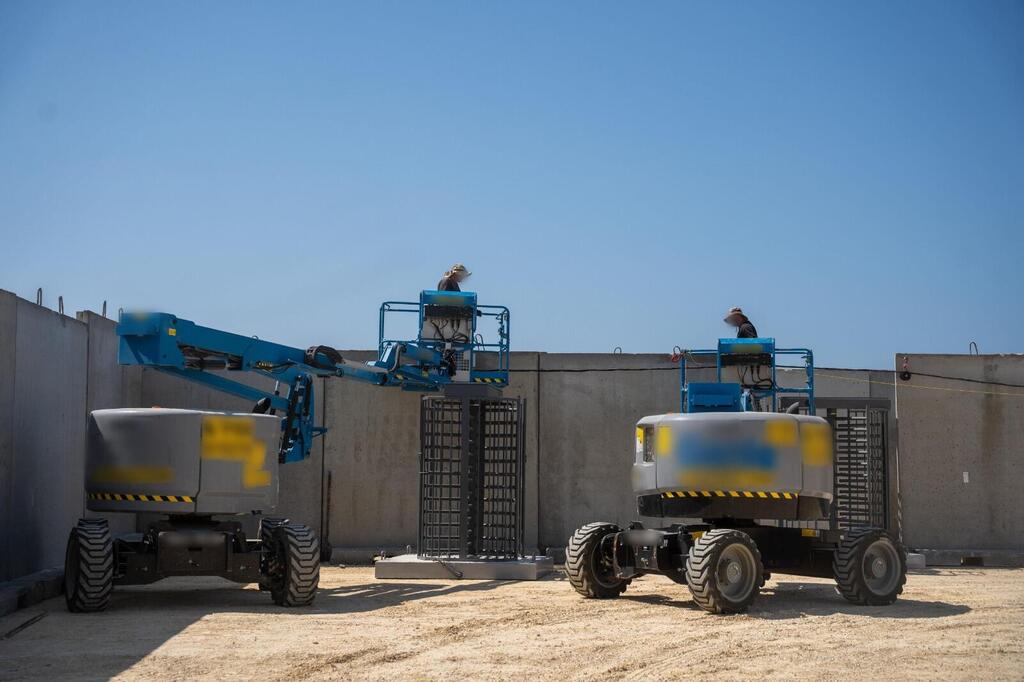
(Photo: IDF)
The military described the project as coordinated in recent months between Israel’s political leadership, the U.S. administration, the army’s Southern Command and COGAT, the unit that oversees Israeli policy in the Palestinian territories. According to the army, since late May, more than 2.3 million weekly food packages have been distributed to families through the four centers already operating.
“IDF, through COGAT and under the direction of the political echelon, will continue to enable humanitarian aid in Gaza while making every effort to ensure food is delivered in an orderly manner to residents and does not fall into the hands of Hamas,” the army statement said.
The announcement came as Israel continues preparations for an expected ground push into Gaza City. In a separate message earlier Wednesday, the army’s Arabic-language spokesperson, Lt. Col. Avichay Adraee, urged residents of northern Gaza to move south, rejecting what he called “false rumors” that there is no space available.
“Before transitioning to the next phase in the war, I wish to confirm that there are vast empty areas in the southern Strip, just as is the case in the central camps and in Al-Mawasi,” Adraee said. “These areas are free of tents. Evacuating Gaza City is inevitable, and every family that moves south will receive the maximum humanitarian assistance, which is now being prepared. The IDF has begun bringing in tents and preparing areas for humanitarian distribution centers.”
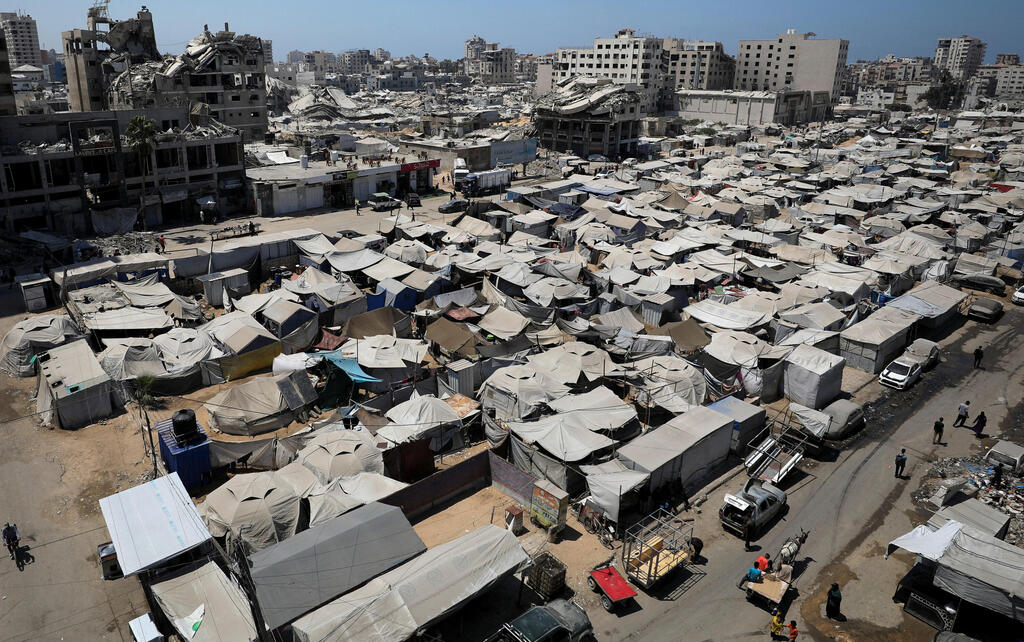
Displaced encampment in Gaza City
(Photo: REUTERS/Dawoud Abu Alkas)
Palestinian and United Nations officials said the Gaza Strip was in need of around 1.5 million new tents.
Israeli tanks retreated from the edge of Gaza City later on Wednesday to the Jabaliya area, where they have been operating for months, although bombardments on three of the city's eastern suburbs - Shijaiyah, Zeitoun and Sabra - continued. Hamas-controlled Gaza health authorities said Israeli fire had killed at least 20 people across the enclave.
As negotiations remain stalled, Hamas has launched a campaign urging residents of Gaza City not to evacuate, telling them to leave “only to paradise.” Officials in Gaza’s Hamas-run Ministry of Communications said that more than 900,000 residents have left the city following new evacuation orders but insisted “the south cannot absorb them.” Local authorities, also controlled by Hamas, claimed shelters and tent camps are now filled beyond 96% capacity, warning that “any attempt to move south endangers the lives of those fleeing.”
Hamas is seeking to prevent the mass displacement of civilians, who serve as a human shield for the terrorist group’s fighters operating in the city. The IDF, for its part, continues preparatory operations in Gaza City, dropping leaflets calling on residents to leave their homes or the makeshift tents where many have relocated.
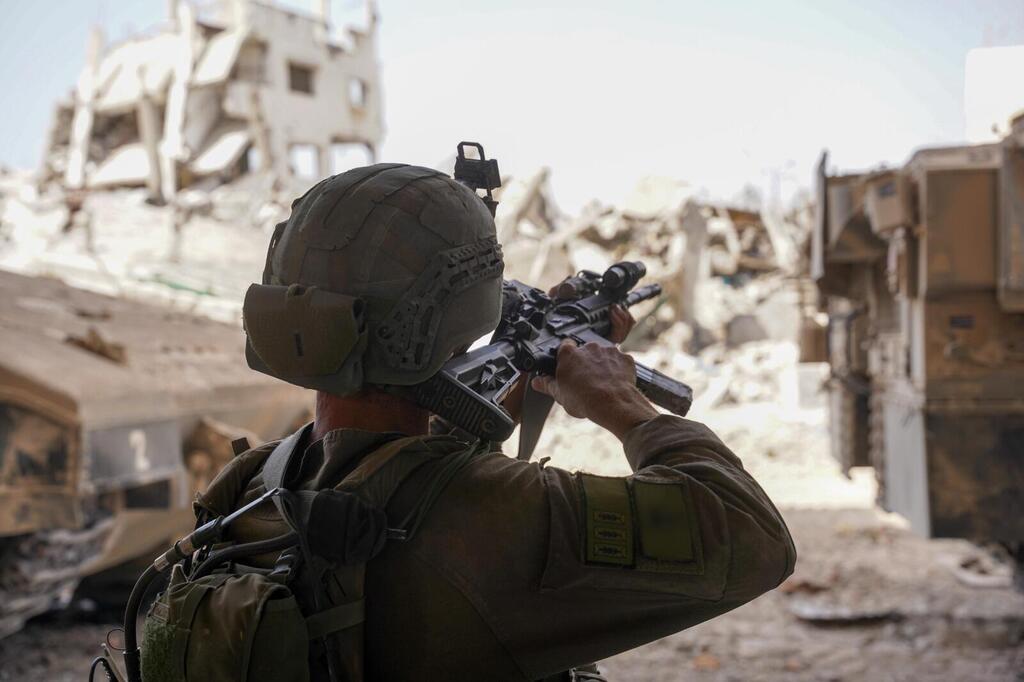
IDF forces operating in the Gaza
(Photo: IDF)
Last week, Prime Minister Benjamin Netanyahu announced that Israel would reenter negotiations to end the war and secure the release of all hostages "under conditions acceptable to Israel.” However, an Israeli delegation has yet to be dispatched to Doha or Cairo.
Publicly, Netanyahu has insisted that Israel will pursue only a comprehensive deal, while Hamas has signaled readiness to accept a framework advanced by U.S. envoy Steve Witkoff—at least according to Witkoff himself. After months in which Israel pressed for that very framework, officials have shifted course.
In an interview late Tuesday, Witkoff said Hamas had accepted the proposal but argued the group did so only after deliberate delays, which he blamed for the collapse of the talks. Under the proposal, 10 hostages would return alive along with the bodies of 18 others during a 60-day ceasefire, during which negotiations for the broader agreement Netanyahu now demands would continue.
Netanyahu now supports holding negotiations alongside ongoing military operations. The proposed deal, which includes U.S. guarantees that Israel would not resume fighting after a 60-day truce, remains stalled. Rather than debating the substance of the agreement, the sides are locked in disputes over the terms for launching talks and where they would take place. Still, Witkoff expressed optimism, saying he expects a deal to be reached before the end of the year, though uncertainty hangs over how many hostages might survive until then.
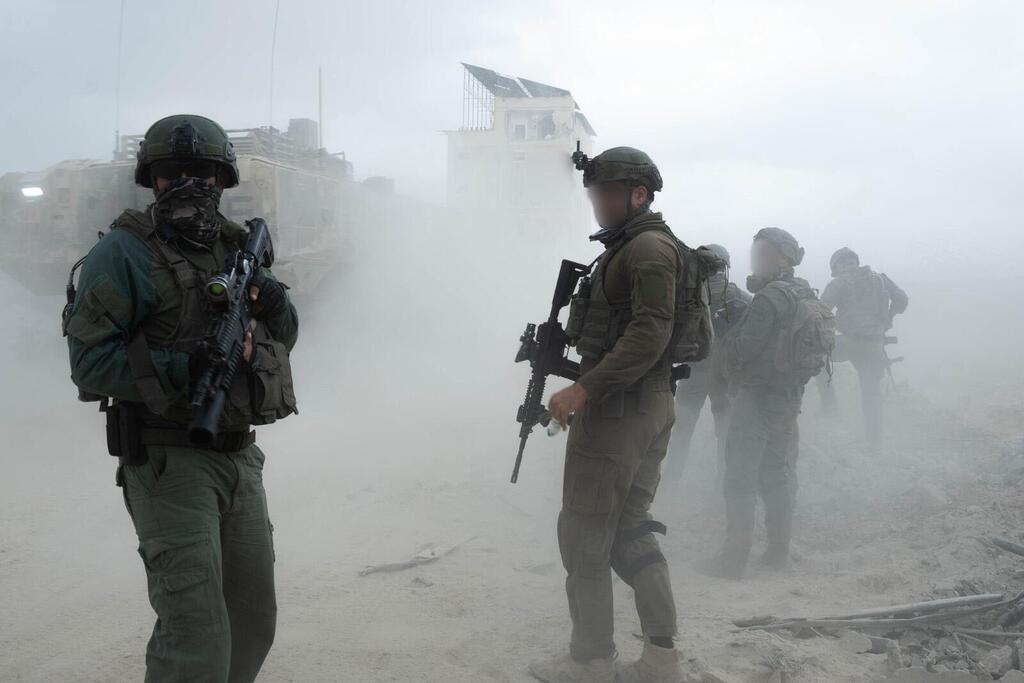
(Photo: IDF)
The Cabinet is scheduled to meet on Sunday to discuss operational plans for Gaza, which have already been approved by the smaller Security Cabinet. Meanwhile, at Tuesday’s Cabinet meeting—devoted solely to an annual National Security Council briefing required by law—Netanyahu briefly addressed the issue, saying, “I have instructed that we deal only with negotiations for the return of all hostages and the end of the war, according to Israel’s five conditions.”
At a press conference earlier this month, Netanyahu laid out those five principles for ending the war: dismantling Hamas’ military capabilities; returning all hostages, living and dead; demilitarizing the Gaza Strip; maintaining Israeli security control over the territory; and establishing a civilian administration that is neither Hamas nor the Palestinian Authority.