

While negotiations with Iran continue and Israel’s election campaign stirs political turbulence, leaders of communities in Judea and Samaria, or the West Bank, are pressing forward with new settlement plans.
ynet has learned that the first families are expected to move onto the land as early as this summer to establish two new communities in strategic locations in Samaria: Bezek and Tamun.
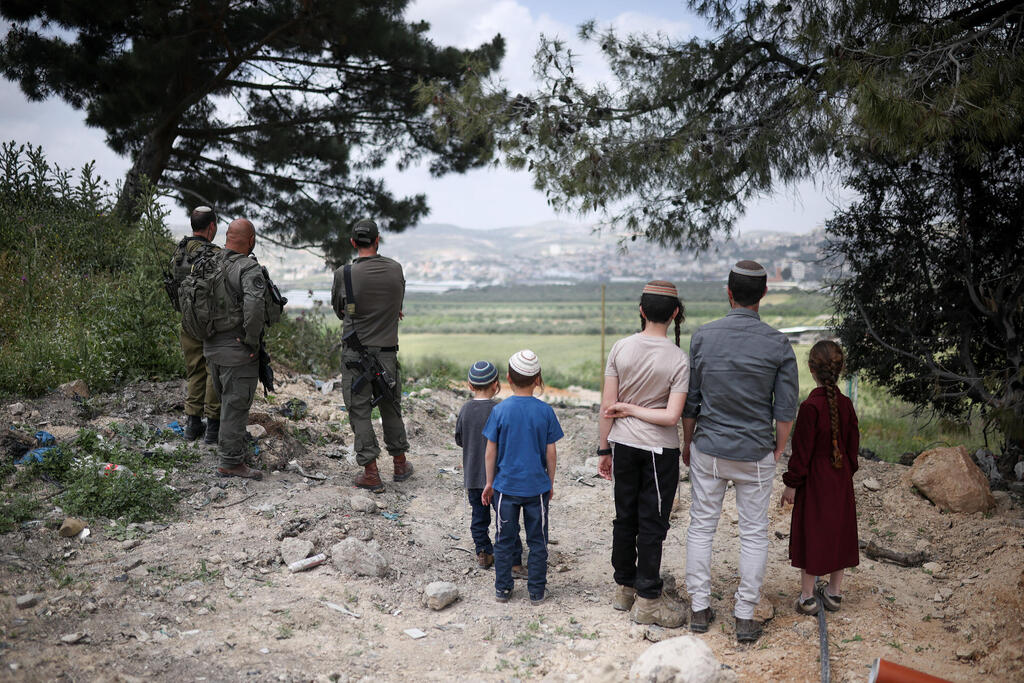
The West Bank settlement of Sa-Nur
(Photo: REUTERS/Shir Torem)
The new communities are located on high ground overlooking the Jordan Valley and near what the IDF calls the “five-village cluster.” The move marks the first practical step toward implementing a Cabinet decision from last December, when the government approved the establishment of new communities as part of what settlement leaders have described as a race against time.
The timing is not accidental. Leaders of the Yesha Council, the umbrella organization representing Jewish communities in Judea, Samaria and the Gaza area, and senior political officials understand that they must create facts on the ground before the next election. Supporters of the move are concerned that a government with a different composition could freeze the plans and leave the current Cabinet’s decisions unimplemented.
Bezek and Tamun are only the opening stage in a much broader plan by the Samaria Regional Council, which aims to establish 18 new communities in the area. The council has already begun calling on the public to register and join the new settlement groups.
Samaria Regional Council head Yossi Dagan welcomed the planned establishment of the communities, saying the move would strengthen Israel’s security and deepen its presence in the area.
“Reality proves that security comes only from holding the land. We are determined to fill the settlement vacuum created by the expulsion,” Dagan said, referring to the 2005 Disengagement Plan, which saw Israel root out Jewish communities in the Gaza Strip and northern parts of the West Bank, both areas that subsequently became hotbeds of Palestinian terrorist activity.
“The new communities, together with the strengthening of northern Samaria, will turn the region into one of the strongest areas in the country. We are not only talking; we are giving practical meaning to the repeal of the Disengagement Law through construction, infrastructure and a permanent presence.”
The year 2026 is shaping up as a turning point for settlement leaders. Since the current government was formed, more than 100 new communities and outposts have been approved in Judea and Samaria. During the war, the Cabinet approved the establishment of 34 additional communities in a secret meeting whose details were kept under tight restrictions because of concerns that U.S. pressure could halt the move.
The decision also drew a warning from IDF Chief of Staff Lt. Gen. Eyal Zamir, who said the move would require additional manpower at a time when the government was not acting to expand the army or draft ultra-Orthodox men.
“The IDF is going to collapse in on itself. The reserves will not hold. I am raising 10 red flags,” Zamir said at the time.
For Finance Minister Bezalel Smotrich and Defense Minister Israel Katz, the effort is being carried out in coordination with local council leaders as they seek to turn the coming summer into a show of strength for the settlement movement. The move to establish Bezek and Tamun, alongside developments in Ganim, Kadim, Homesh and Sa-Nur, is expected to become a key platform for the coalition’s election campaign, allowing it to point to major achievements on the ground before voters go to the polls.