


Nader Sadaqa, a member of a well-known Samaritan family also known as “Nader the Samaritan,” served 22 years in an Israeli prison after being sentenced to six life terms for his role in deadly terror attacks. This week, he was released as part of the ceasefire deal in Gaza, but found himself exiled to Egypt instead of returning home to Nablus.
The Samaritan community, which today numbers fewer than 900 people, is split between Mount Gerizim and Holon and has long tried to maintain a careful balance between Israel and the Palestinians. Sadaqa, however, chose a different path. In the early 2000s, he joined the Popular Front for the Liberation of Palestine and quickly rose to become one of the commanders of its military wing in the Nablus area, the Abu Ali Mustafa Brigades.

According to the 2004 indictment filed against him in the Samaria Military Court, Sadaqa was directly involved in a series of deadly attacks, including the December 2003 Geha Junction bombing, which killed four Israeli civilians and wounded 26 others; the February 2003 attack on Mount Gerizim, which left two soldiers dead; and the April 2003 assault at the Beqaot base, where two soldiers were killed and eight wounded.
At the time, security officials described him as “the Samaritan terrorist mastermind,” saying he operated suicide squads, supplied explosives and planned additional attacks that were ultimately thwarted. His arrest stunned not only the security establishment but also members of his small community.
Actress and television host Sofi Tsedaka, who grew up in the same community, said in an interview at the time: “We all know each other in the Samaritan community. It’s hard to believe that Nader, the boy who played with us during the holidays on Mount Gerizim, became a terrorist. Samaritans are usually neutral, they try to maintain good relations with everyone. It’s sad and shameful to hear.”
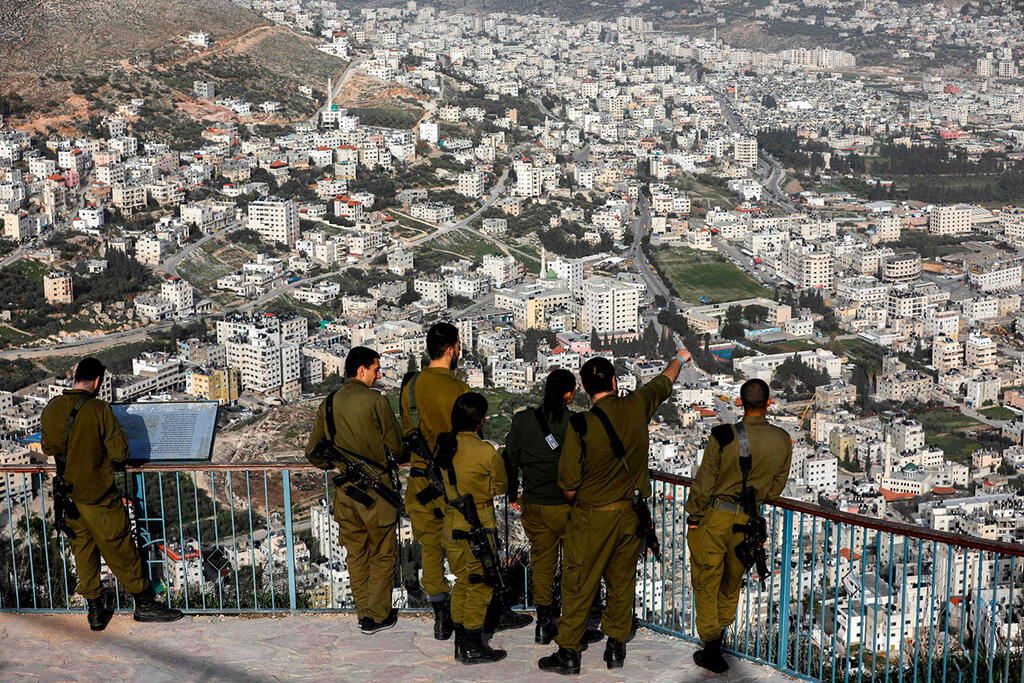
View of Nablus from Mount Gerizim
(Photo: AFP)
After 22 years behind bars, Sadaqa was released in the deal. Included among prisoners serving life sentences, he became a symbol among supporters of the Popular Front. But unlike most Palestinian inmates who returned home to Gaza or the West Bank, Sadaqa was shocked to learn he had been deported to Egypt.
Upon his arrival in Egypt, he issued a statement declaring his continued commitment to his cause: “I have been in prison for 22 years, sentenced to six life terms. The resistance speaks, prays, creates and brings benefit. There is no voice above or beyond its voice, no word besides its word, no shadow but its shadow. We are the freest people in the world.”
Dr. Ismail al-Musalmany, an expert on Israeli affairs writing in the Palestinian newspaper Al-Quds, called the deportation a politically charged move: “The decision to send Nader to Egypt is a double punishment with symbolic meaning. Israel, which presents itself as the ‘guardian of the Children of Israel,’ did not see him as a Samaritan but as a Palestinian fighter. It exposes the contradiction between its religious slogans and its policy on the ground.”