

Questions mounted Wednesday over how Qatar, a close U.S. ally equipped with some of Washington’s most advanced air defenses, failed to stop an Israeli strike on its territory that came without warning.
Qatar fields both Patriot missile batteries and the THAAD anti-ballistic missile system, the same advanced interceptor also deployed in Israel. Yet Prime Minister Mohammed bin Abdulrahman Al Thani said Tuesday that “the Israeli enemy used a weapon that was not detected on radar.” He did not specify the type of weapon, but regional analysts believe Israeli warplanes may have fired long-range missiles from outside Qatari airspace, possibly over the Persian Gulf, similar to past strikes in the Middle East.
Aftermath of Israeli airstrike on high-profile Hamas meeting in Doha, Qatar
(Video: Reuters)


In his speech, Al Thani called the strike “an Israeli terrorist attack aimed at destabilizing security in the region,” adding: “We have reached a critical moment, and there must be a response.” He did not say what form that response might take, though Qatari officials indicated it could come diplomatically, including at a UN Security Council meeting set for later Wednesday. A military reply was seen as far less likely.
The attack has triggered a wave of high-level diplomacy in Doha. Emirati President Mohammed bin Zayed arrived Wednesday, while Jordan’s Crown Prince Hussein is expected later in the day. Saudi Crown Prince Mohammed bin Salman is due Thursday, a regional source told Reuters.
Despite its wealth and advanced weapons purchases, Qatar maintains one of the Gulf’s smallest militaries, with roughly 15,000 troops, including the Emiri Guard. Conscription for men between 18 and 35 was introduced in 2013, lasting four months to a year, depending on education and training. Women may volunteer, including in officer and pilot roles.
Analysts say manpower shortages have led Qatar, like other Gulf states, to rely heavily on foreign recruits, many from Pakistan and Jordan. The exact figures remain classified, as governments are reluctant to acknowledge the scale of reliance on mercenaries.
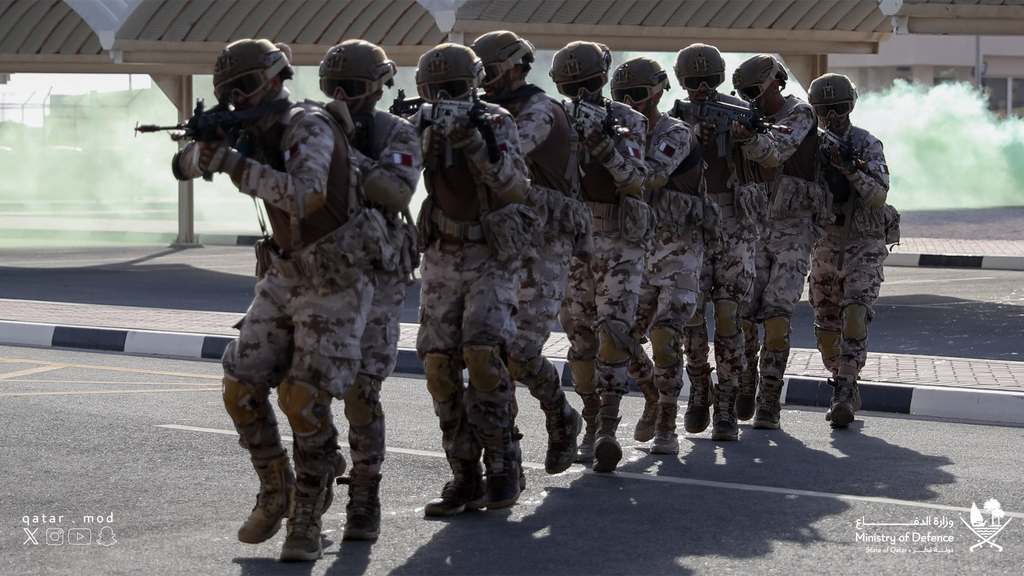

(Photo: from X)
Since a 2017 regional crisis that saw Bahrain, Egypt, Saudi Arabia and the UAE cut ties with Doha, Qatar has moved to rapidly expand its forces. The air force grew from 12 aging jets in 2017 to dozens of new fighters purchased from the United States, France and Britain, with plans to field about 100. The army has added German and Turkish armor and artillery, while the navy has acquired corvettes and patrol vessels from Italy and Turkey.
Still, Tuesday’s strike highlighted the limits of even the most advanced systems — and left Qatar’s leadership weighing how to respond to what it has branded a direct assault on its sovereignty.
Pessimism over success of operation
Israeli security and intelligence officials expressed doubts overnight about whether the strike in Doha achieved its main objectives against Hamas leaders. Two officials, speaking on condition of anonymity, said that based on information collected so far, they were pessimistic that most — or possibly any — of the senior targets were killed. They emphasized, however, that the battle damage assessment was still underway.
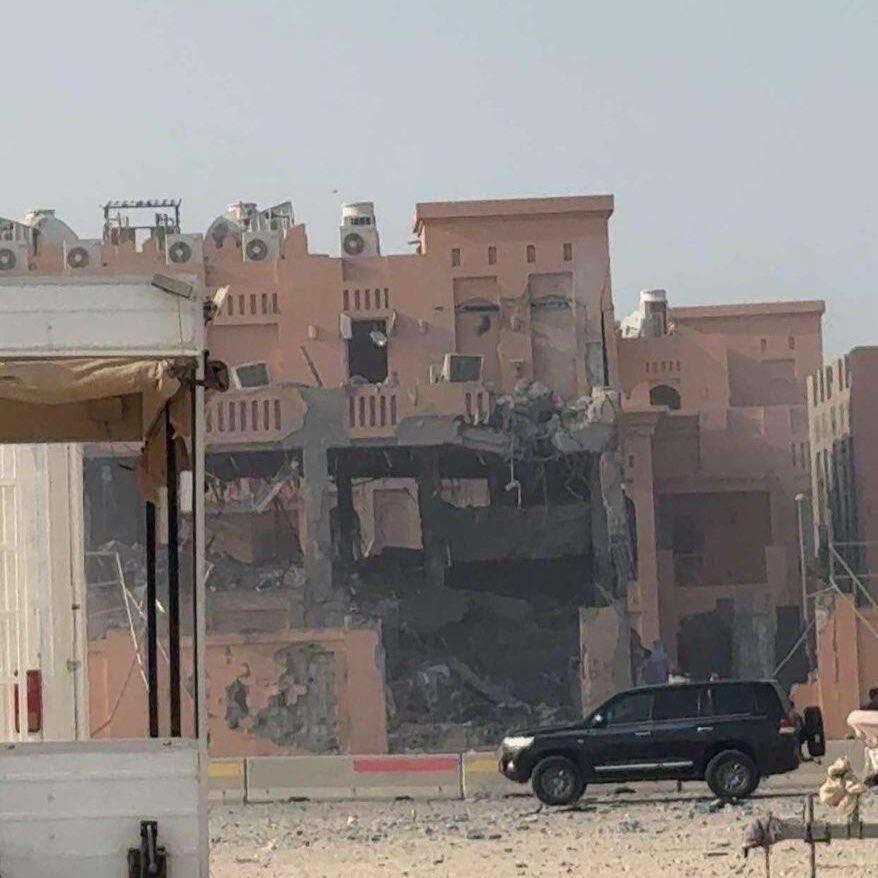
One official noted that regardless of the outcome, the strike had already achieved a key goal: instilling fear among Hamas leaders and showing them that “there is no place they can hide.” Initially, optimism ran high in Military Intelligence, the Shin Bet security agency and the air force. The attack appeared to have been launched only after the Hamas delegation entered the building, with high confidence that senior leaders were inside, and the villa sustained heavy damage.
Israeli airstrike on high-profile Hamas meeting in Doha, Qatar
But doubts grew as hours passed, and Hamas issued a statement calling the operation a “total failure.” According to the terrorist group, the dead included Khalil al-Hayya’s chief of staff Abu Bilal, al-Hayya’s son Hamam, three escorts and a Qatari police officer. Hamas later circulated a version suggesting that several leaders escaped seconds before the strike after being warned.
While Hamas is not considered fully reliable, analysts noted it was unlikely the group would release such a statement if it could be easily disproved. Claims that top leaders survived were echoed by sources in the Gulf, alongside Israel’s delay in releasing its own assessment.
The Washington Post, citing Qatari sources, reported that the strike came despite assurances from Israel and the United States last month that Hamas leaders in Doha would not be targeted. Senior columnist David Ignatius wrote that Qatari officials reacted with “shock and a sense of betrayal,” warning the episode could push Qatar to abandon its mediation role in hostage talks.
Those assurances reportedly came from the Mossad and the White House after concern in Doha over a statement by IDF Chief of Staff Lt. Gen. Eyal Zamir following the killing of Hamas military spokesman Abu Obaida. Zamir had said at the time that “most of Hamas’s leadership has been eliminated, and we are not done. Much of what remains is abroad — and we will reach them as well.”

A senior Qatari official told the newspaper the strike came as a “complete surprise.” Ignatius, appearing to rely on Hamas’s statement, argued that the operation “failed to kill senior Hamas leaders but destroyed one of the few channels for negotiating an end to the war.”
The timing of the strike has also fueled debate in Israel. Prime Minister Benjamin Netanyahu, Defense Minister Israel Katz and Strategic Affairs Minister Ron Dermer — currently in Washington — supported the operation, with Dermer arguing the Trump administration would not oppose it. But Chief of Staff Zamir, Mossad chief David Barnea, National Security Adviser Tzachi Hanegbi and Military Intelligence chief Shlomi Binder were reported to have raised concerns about the timing, urging that negotiations on a new Trump-backed framework be pursued first.
President Donald Trump distanced himself from the attack Tuesday, stressing it was Netanyahu’s decision. “This was a decision made by Prime Minister Netanyahu, it was not a decision made by me,” Trump wrote on Truth Social. Speaking to reporters later in Washington, he said he was "not at all pleased with the Israeli strike in Qatar.”