


After U.S. President Donald Trump threatened that the Americans would strike “with very great force” at "Pickaxe Mountain," the secret site where Israel believes centrifuges and uranium were transferred, U.S. Central Command announced overnight Tuesday into Wednesday that it had launched another wave of strikes in Iran and Tehran — the 11th consecutive night of attacks.
The strikes were intended "to further degrade Iran's ability to threaten commercial shipping in the Strait of Hormuz,” CENTCOM said in a statement. At the same time, Iranian reports said explosions were heard in Tabriz and Mahshahr in the south of the country. The Noor News agency reported that air defense systems were also activated in the capital, Tehran.
Later, several explosions were also reported in the southern city of Sirik, and Iran’s Tasnim news agency claimed that a “loud explosion” was heard in parts of Bushehr, on the Persian Gulf coast in southwestern Iran. “Initial assessments indicate that the U.S. struck two sites,” the report said.
Gallery
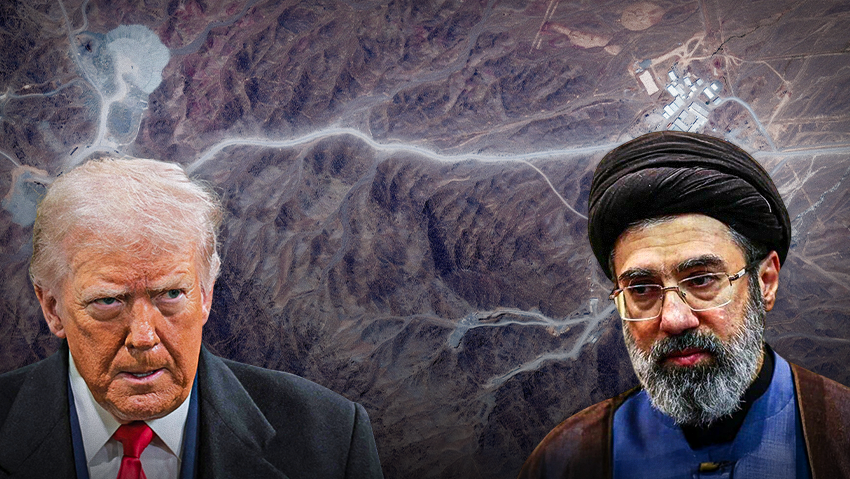
US President Donald Trump, Iranian Supreme Leader Mojtaba Khamenei
(Photo: Anna Moneymaker / AFP, CENTCOM, Vantor/Handout via REUTERS)
Iran did not leave Trump’s remarks unanswered and responded with a threat of its own.According to Iranian state television, the Khatam al-Anbiya Central Headquarters, which coordinates Iran's armed forces during wartime, warned that any U.S. attack on Iranian nuclear sites would be regarded as an expansion of the regional conflict.
It said all U.S. interests and those of Washington's regional allies would become legitimate military targets in response.
The warning came less than a day after Trump said the United States was likely to launch a major strike against Pickaxe Mountain, an underground site near Iran's Natanz nuclear complex that Israeli intelligence believes now houses thousands of uranium enrichment centrifuges relocated after U.S. and Israeli strikes on Iran's main nuclear facilities earlier this year.
Speaking Tuesday during a meeting at the White House with Lebanese President Joseph Aoun, Trump said it was "very likely" the United States would strike the area "very soon, and very hard."
Trump had publicly identified Pickaxe Mountain as a potential military target for the first time last week during an interview with conservative radio host Hugh Hewitt, describing it as "a possible target for a nice, big, fat shot right near the front door."
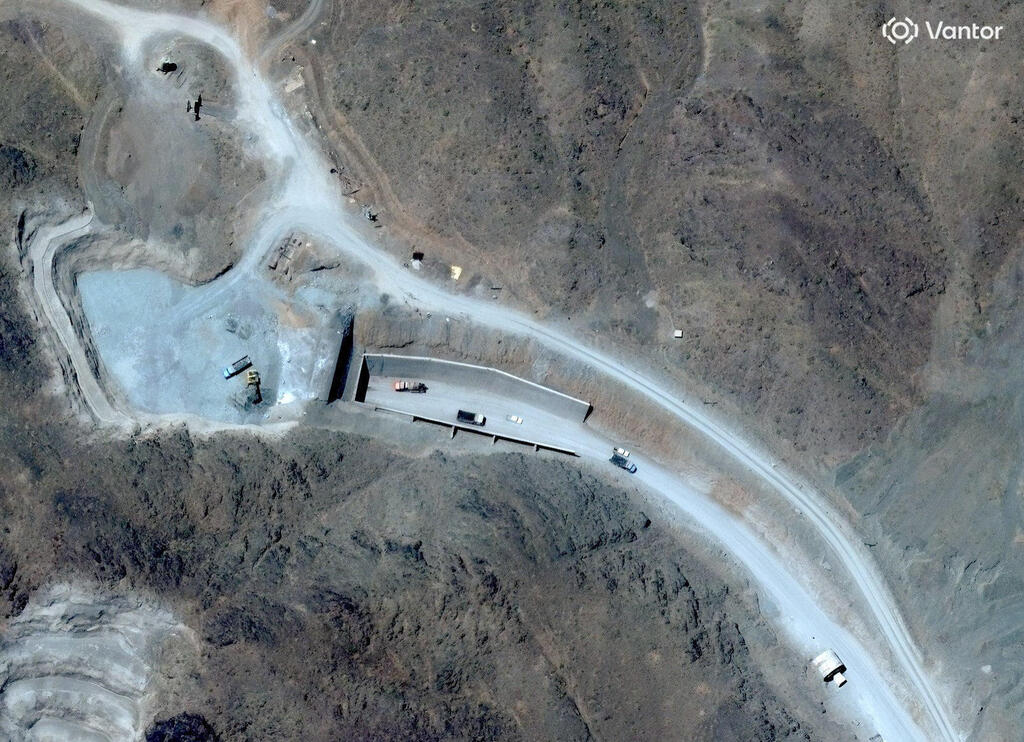
Pickaxe Mountain
(Photo: Vantor/Handout via REUTERS)
The renewed focus on the site follows a report by The Wall Street Journal that Israeli intelligence believes Iran transferred thousands of centrifuges to the deeply buried facility after the June 2025 war, during which U.S. and Israeli forces struck Iran's three principal nuclear sites.
The newspaper, citing Israeli and U.S. officials, reported that Israeli intelligence shared its findings with Washington and expressed concern that the previous air campaign did not sufficiently target facilities linked to Iran's nuclear weapons program.
An Israeli military official familiar with the operation told the newspaper that "there is more work to do," including at Pickaxe Mountain.
The underground complex lies less than 2 kilometers (1.2 miles) south of the Natanz nuclear facility and is believed to be buried deep beneath solid rock, making it one of Iran's most heavily fortified sites.
Meanwhile, U.S. Secretary of War Pete Hegseth told the Senate Appropriations Committee on Tuesday that the cost of the military campaign against Iran has now reached $37.5 billion, nearly $8 billion higher than previous estimates. Hegseth said the figure includes projected costs through the end of September.
In Britain, newly appointed Prime Minister Andy Burnham approved continued U.S. use of British military bases for what London describes as "defensive operations" against Iran, maintaining the policy of his predecessor, Keir Starmer.
According to officials familiar with the discussions, cited by Bloomberg, Starmer convened senior ministers last Friday after the renewed U.S. military operations began. The government decided to continue allowing U.S. forces to operate from Diego Garcia in the Indian Ocean and RAF Fairford in England for missions aimed at countering Iranian missile threats and protecting shipping routes near the Strait of Hormuz.
Burnham, who took office Monday, was briefed on the decision and agreed to maintain the existing policy, the officials said, making it likely British facilities will continue supporting elements of the current U.S. military campaign.
First published: 00:40, 07.22.26