


German lawmaker Maximilian Krah, one of the most controversial figures in the right-wing Alternative for Germany (AfD), expressed regret during a visit to Israel over remarks he made about members of the Nazi SS, while seeking to convince Israelis that his party should not be viewed as antisemitic.
Krah, now a member of the Bundestag, sparked an international controversy in 2024 when he told Italy's La Repubblica that he would “never say that anyone who wore an SS uniform was automatically a criminal.” Asked whether members of the SS were war criminals, he said there had been a high proportion of criminals among them, but that not all were criminals.
Studio interview with Maximilian Krah
(Credit: Yaron Brener)


Speaking to ynet Global in Israel, Krah described the episode as a “communication disaster” and said he regretted making the statement.
“Of course. It was a complete disaster,” he said when asked whether he regretted the remarks.
Krah maintained that his original response had come during a longer discussion about individual responsibility for crimes committed during World War II. He said his intention had not been to defend the SS, arguing that some young Germans had been conscripted toward the end of the war. Still, he acknowledged that the way he handled the exchange had been a serious mistake.
The remarks had major political consequences. At the time, Krah was the AfD's lead candidate in the European Parliament elections. The party barred him from further campaign appearances and he resigned from its federal executive board amid the fallout. The controversy also deepened tensions between the AfD and other European nationalist parties.
Gallery
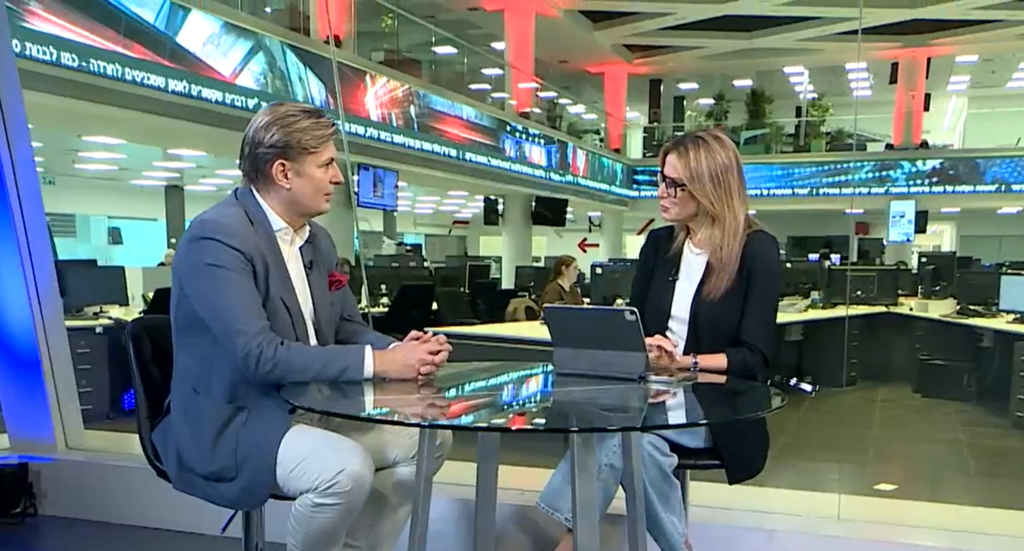
Krah's visit is also part of a broader effort to challenge the political isolation the AfD has faced in Israel
(Photo: Screenshot)
His visit to Israel comes as the AfD continues to face deep suspicion in the country over statements by some of its politicians concerning Germany's Nazi past and Holocaust remembrance. Krah acknowledged that such concerns exist but argued that the party and the broader European right have changed.
He presented the contemporary AfD as fundamentally different from the antisemitic movements historically associated with Europe's far right. Instead, he argued that hostility toward Israel and Jews is now increasingly found on the political left and linked his party's opposition to mass migration with what he described as the protection of Jewish communities.
Krah acknowledged, however, that the AfD has struggled to convince Jews and Israelis of that position and said the party needs to communicate its views more effectively.
He also addressed remarks by senior AfD politician Björn Höcke, who has faced repeated criticism over his rhetoric about Germany's Nazi past and once described Berlin's Holocaust memorial as a “monument of shame.” Krah said the AfD was formed by people from different political backgrounds and argued that rhetoric of that kind was now understood to be unacceptable.
Despite his effort to shift the focus toward future German-Israeli cooperation, Krah rejected the idea that Germany should free itself from responsibility for the Holocaust.
Asked whether Germany still needed to carry the guilt and burden of the Holocaust, he answered unequivocally: “We do.”
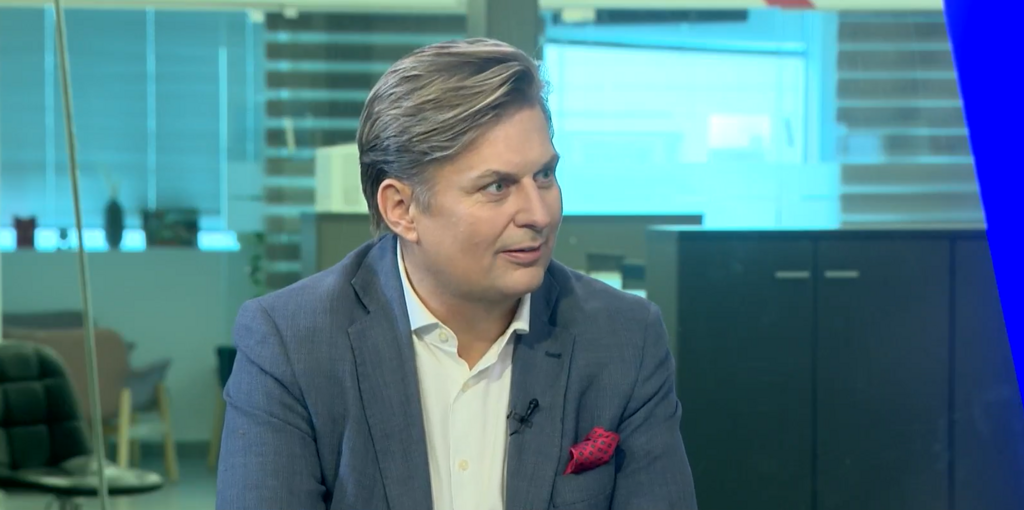
Maximilian Krah, one of the most controversial figures in the right-wing Alternative for Germany (AfD)
(Photo: Screenshot)
Krah argued, however, that remembrance alone could not sustain relations between younger generations of Germans and Jews. He called for greater emphasis on shared cultural, artistic and other projects that could give the relationship a positive dimension alongside Germany's responsibility for its past.
The German lawmaker said he was visiting Israel for the first time in about 14 years, partly because his son is spending a month in the country as an intern. He described the trip as an opportunity to reconnect with friends and revisit a country where he said he had long felt welcome.
Krah said he had not met Israeli government officials during the visit and had no direct contact with Knesset members. He said he preferred to wait until after Israel's election before pursuing political meetings, when the country's political landscape would be clearer.
He also suggested that the ideological gap between the AfD and Israeli society may appear larger from Germany than it does on the ground in Israel. German mainstream politics, he argued, is considerably further to the left than Israeli politics, leading him to characterize himself as a center-right politician by Israeli standards.
Krah said his reception in Israel had been positive, as had his son's experience in the country, despite the controversy surrounding his political affiliation.
His visit is also part of a broader effort to challenge the political isolation the AfD has faced in Israel. Krah said he intends to return and make his case directly to Israelis, arguing that German Jews in particular could serve as a bridge between the two countries.
For Krah, that means attempting to reconcile two messages that have often sat uneasily alongside each other in the AfD: acknowledging Germany's enduring responsibility for the Holocaust while arguing that today's nationalist right should no longer be judged through the lens of Europe's antisemitic past.