



They acknowledged the tension between military objectives and humanitarian needs, saying this contradiction is reflected in the ongoing Operation Gideon’s Chariots, which they described as yielding “significant operational achievements.”
Tons of aid waiting to be distributed in Gaza
(Video: COGAT)


According to the officials, the IDF has struck Hamas’s underground infrastructure, governance capabilities, key personnel and assets. These military gains, they said, come at a humanitarian cost—particularly extreme overcrowding—due to IDF control over approximately 75 percent of Gaza's territory. “This forces large populations into limited areas,” one official said, “in part to prevent Hamas from controlling humanitarian aid flows.” An estimated 2 million Gazans are now concentrated in roughly 25 percent of the territory.
Israel has also taken measures to reduce Hamas’s influence over aid distribution, including the temporary closure of the Egyptian aid corridor, which was later reopened. Aid is now funneled through a single unified system, with tighter oversight of supplies and a shift away from international organizations previously managing distribution. Instead, U.S.-funded aid centers have been established, a move Israeli officials claim has put Hamas in a difficult position.
As part of ongoing negotiations for a potential ceasefire or prisoner exchange, Hamas reportedly demanded a return to the previous model of mass truck deliveries—an arrangement Israel says allowed the terrorist group to seize a large portion of the aid. Israeli officials say this demand was later dropped, at least publicly.
Gallery
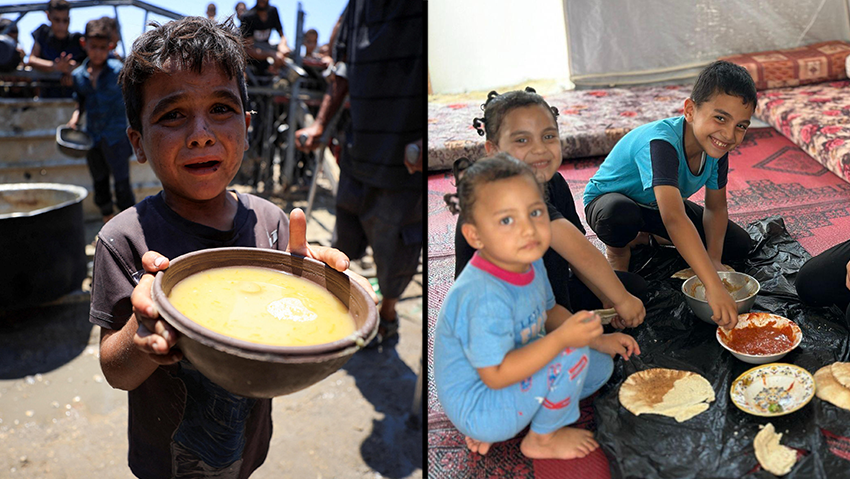
Photos released by World Central Kitchen (WCK) showing the opening of local kitchens in the Gaza Strip, with food lines in Gaza City amid claims of a hunger and malnutrition crisis in the territory
(Photo: COGAT, REUTERS/Dawoud Abu Alkas)
The new aid model has shifted power dynamics within Gaza, boosting the influence of local clans and further challenging Hamas’s authority. According to the officials, Hamas is seeking to maintain dominance in the territory post-war and is therefore working to suppress emerging alternative power centers.
Security officials emphasized that the current mission is to balance operational achievements with maintaining a “reasonable humanitarian situation.” They noted that while hundreds of aid trucks are now waiting at the Kerem Shalom and Zikim crossings, distribution has been delayed. Foreign Minister Gideon Sa’ar has blamed the United Nations for failing to collect and distribute the aid, while the UN has accused Israel of bureaucratic delays and security challenges inside Gaza.
Israel noted that after opening the Egyptian and Jordanian corridors, Jordan is expected to resume airdrops of humanitarian aid soon, with the United Arab Emirates to follow. These developments mark a partial return to Israel’s previous aid policies—suspended in the early months of the war—which Israel says had allowed Hamas to dominate supply chains.
(Photo: COGAT)
According to Israeli officials, the UN last Sunday had completely stopped collecting aid trucks at Kerem Shalom, leading to a “zero truck” day. Following international criticism, they said, the UN increased its operations—collecting 70 trucks on Monday and more than 140 daily since. “This shows that when the UN wants to act, it can,” one official said. “Nothing has changed on the ground—this proves the delays were not due to conditions but to other motives.”
Still, Israeli sources admit there are “serious challenges” due to the reduced area available for civilian movement. Amid reports of civilian casualties at aid centers, officials acknowledged that “there is a problematic reality where uninvolved individuals are hurt during distributions,” referring to repeated incidents of gunfire at or near aid sites.
Despite the criticism, Israeli security officials insisted that the humanitarian situation is being managed alongside military operations, and that efforts continue to both curb Hamas’s control and address civilian needs.
Why now?
Security officials claim that Hamas, in coordination with the international community—each for its own reasons—has launched a deliberate campaign focused on the humanitarian situation in Gaza. “The world wants to stop the war,” one official said. “It has tried through negotiations and proposed deals, but now it’s targeting the most sensitive issue: hunger and the humanitarian crisis. Hamas, for its part, has shifted its narrative—from claims of overcrowded hospitals to starvation.”
(Photo: COGAT)
“The humanitarian situation in Gaza is severe and challenging,” officials in Israel acknowledge. “There is a lack of governance by Hamas, civilians are crammed into densely populated zones and aid trucks face massive crowds. The assistance that is getting in helps slow the deterioration, but we’re walking a tightrope—if we fall, the consequences could be dire.”
Officials argue that Hamas is preparing for the post-war period and has realized that many Gazans blame it for the dire conditions. “Hamas fears its own people could turn against it, which is why the starvation narrative serves its interests,” one source said.
Israelis note that the humanitarian situation encompasses multiple issues—food, sanitation, fuel, medical supplies and water. “The main task now,” say security officials, “is to form a comprehensive picture and monitor pockets of actual hunger.”
(Photo: COGAT)
One official pushed back against viral images that have fueled global outcry. “Yesterday, we saw photos of women and children fainting in a Gaza clinic. But if we walk into an average clinic in Tel Aviv, how many dehydrated people might we see? These images don’t prove starvation,” the source argued. “If Hamas had real proof of starving infants, it would be producing much more professional coverage. Gaza is suffering, but claims of famine and deliberate starvation? That’s simply not happening.”
Get the Ynetnews app on your smartphone: Google Play: https://bit.ly/4eJ37pE | Apple App Store: https://bit.ly/3ZL7iNv
Israeli officials also criticized what they see as international double standards. “The world went silent over atrocities committed against the Druze in Syria,” one said. “Now it chooses to speak of a famine in Gaza—when we still have hostages in tunnels.”
Responding to criticism that Israel has failed to conduct proper public diplomacy, security sources said information efforts are ongoing. “We’re constantly engaging with foreign journalists and influencers,” one said. “The arena has not been abandoned. We’re doing the best we can. But not everyone is carrying the load—and more agencies should step up, not just the IDF.”
Palestinians line up at a food distribution point
(Video: Reuters)
A military official added, “This is an extremely complex war. Hamas cynically uses its civilian population. We have hostages, and we will fight until we bring them home. That is our moral obligation. We are not starving people. And we won’t forget October 7.”
Meanwhile, families of hostages have urged Israeli leadership to accept the ceasefire and withdrawal deal currently on the table, which could see the release of 50 captives held in Gaza.
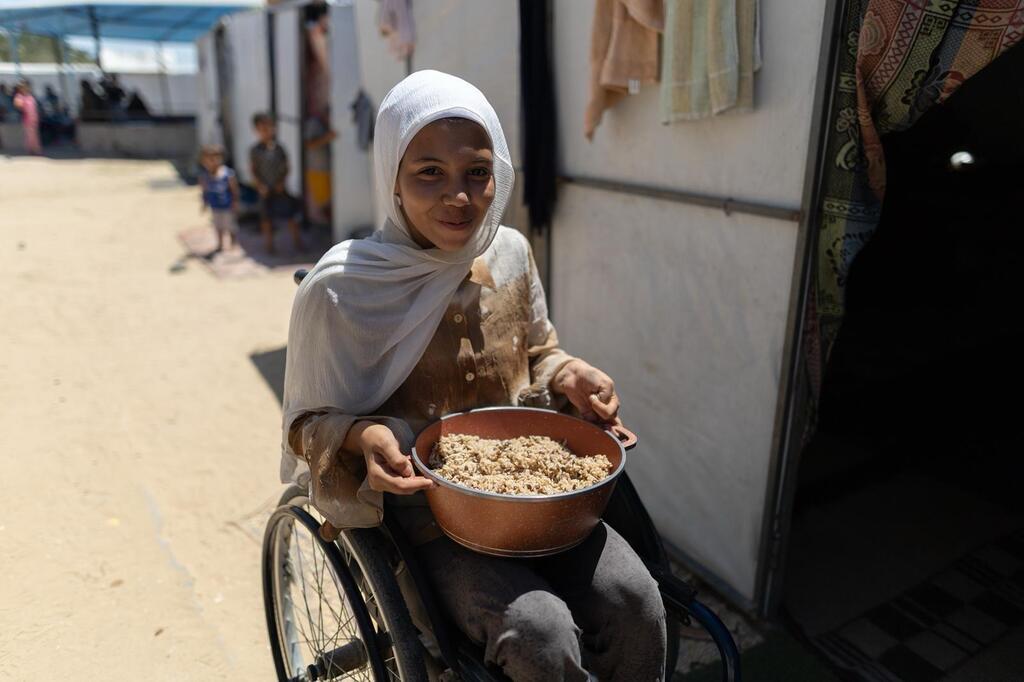
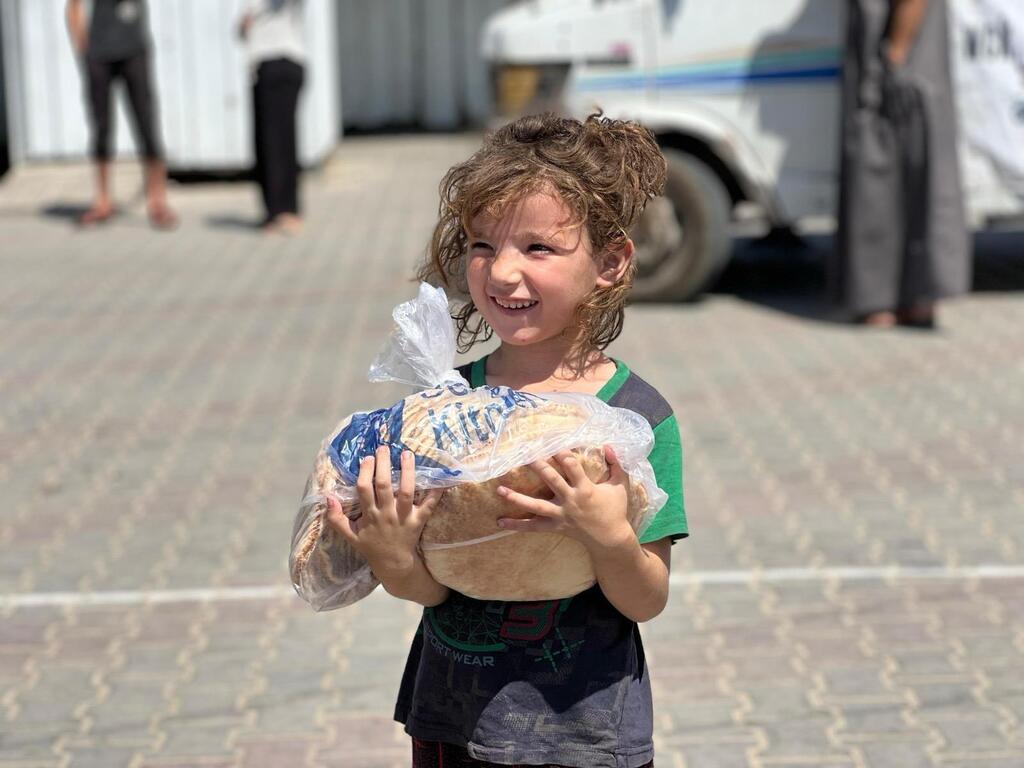
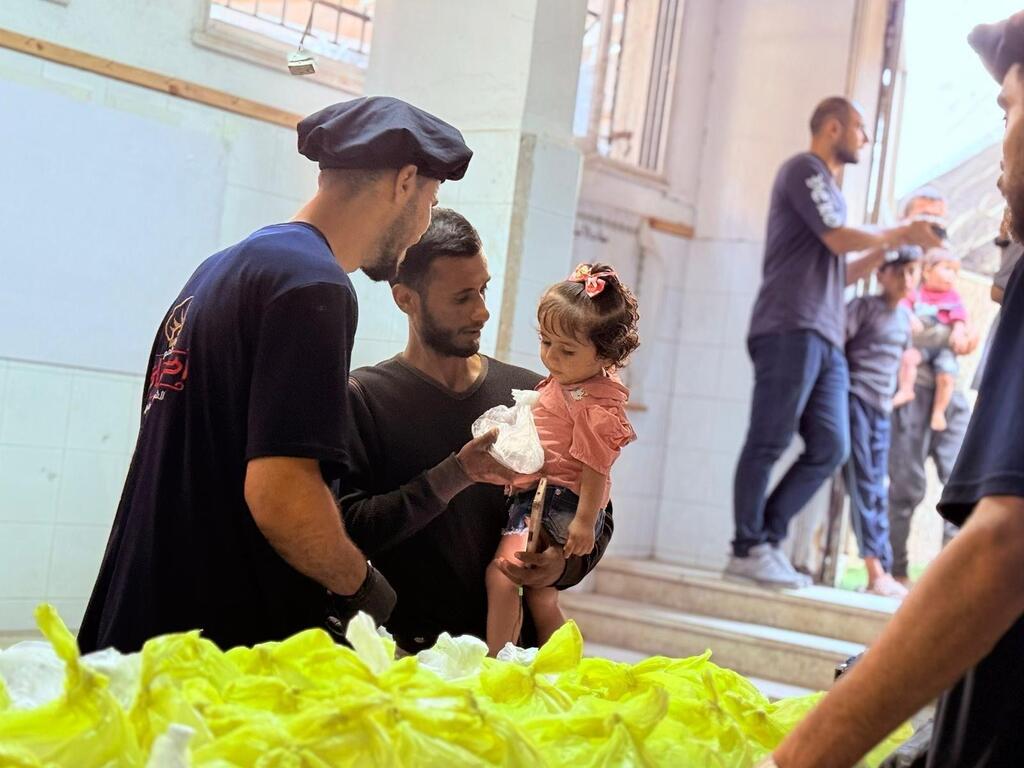
In a counter-message to global media portrayals of emaciated, ill children, the Coordinator of Government Activities in the Territories (COGAT), Israel's liaison to the Palestinians, shared photos taken by the World Central Kitchen aid group, showing smiling Gazan children eating meals—images intended to contrast with the more dire pictures circulating internationally.