


During his recent visit to Washington, Prime Minister Benjamin Netanyahu captured headlines by revealing that U.S. President Donald Trump had recommended him for the Nobel Peace Prize, albeit “quite late.” But a more localized controversy emerged 240 kilometers north, at the Pennsylvania high school Netanyahu attended nearly six decades ago.
Netanyahu, inducted into the Cheltenham High School Hall of Fame in 1999 during his first term as prime minister, is now the focus of a campaign by current students seeking to have his name removed. More than 200 students—roughly 15% of the school—signed a petition expressing concern that his presence on the hall’s wall conflicts with their values amid Israel’s ongoing war in Gaza.
(Video: Fox News)


The petition, submitted to the school’s alumni association and forwarded to district legal counsel, argues that the hall of fame should honor role models. Students cited corruption charges against Netanyahu—commonly called the “cases of the thousands”—and the International Criminal Court’s arrest warrant accusing him of war crimes and crimes against humanity in Gaza. “When we walk past the wall each day and see the names of alumni, the message is clear—these are people we should admire and aspire to be like,” the petition letter read. “We do not think it is appropriate to continue recognizing Netanyahu in that way.”
The alumni association and school officials held a meeting to discuss the issue but reached no decision on whether to remove Netanyahu’s photo. One option under consideration is keeping his name on the wall but updating his biography to include the charges and arrest warrant. School Superintendent Brian Scriven called the situation “sensitive” and urged “additional caution.”
The controversy was reignited by Netanyahu’s interview with conservative commentator Mark Levin on Fox News, which aired Saturday. During the interview, Netanyahu told Levin, “Next time I’m here, we go down to Cheltenham High School, near Philadelphia, and I’ll nominate you for the hall of fame.”
The alumni association, which oversees the hall of fame, is planning a November ceremony to induct more than half a dozen new honorees—though Levin is not expected to be among them. Levin claimed the group “won’t vote me in,” to which Netanyahu replied, “Well, they haven’t kicked me out yet. Great achievement.”
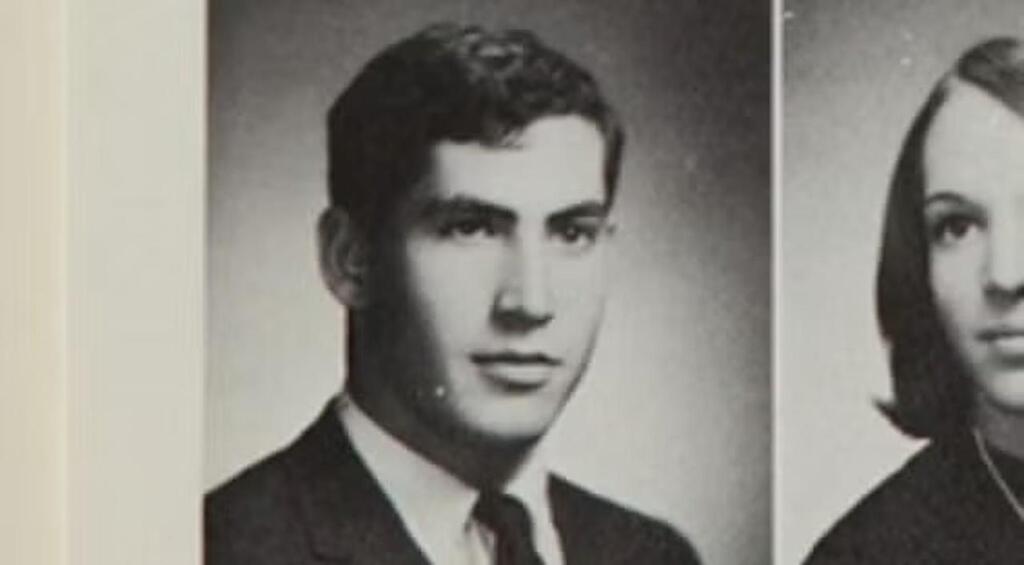
Prime Minister Benjamin Netanyahu
(Photo: Cheltenham High School)
Levin himself has expressed skepticism about the hall of fame’s prestige. On his March podcast, he said he did not “yearn” to be included and described the hall as featuring “every schmuck who’s ever been anybody.” He added that it was unlikely Netanyahu would be inducted in today’s climate. “Now they hate his guts,” Levin said. “But it’s too late.”
The community remains divided. Retired alumnus Rich Notinsky dismissed the petition as excessive, saying, “It’s a high school wall of fame, not a Nobel Prize. Removing Netanyahu will not change Israeli policy.” Meanwhile, Don Aplebaum, class of 1990, said, “I once felt proud of my connection to him. Today I see him as a war criminal, and it’s sad.”
Netanyahu, who graduated in 1967, was a standout student and athlete. His name hangs alongside those of prominent American figures and his late brother Yoni, who died during Operation Entebbe. Classmates recall Netanyahu skipping his graduation ceremony to return to Israel and join its elite commando forces.
Alumni leaders are also considering establishing a formal process to review and potentially remove honorees under changing circumstances. For many students and alumni, the debate goes beyond politics: it’s about who deserves to be celebrated as a role model in their community.