

In-person voting is underway Tuesday in the U.S. midterm elections, widely seen as a referendum on President Donald Trump's second term. With his approval ratings at a low point, Democrats are hoping to capture both chambers of Congress - the House of Representatives and the Senate - whcih would make it much harder for the president to advance his agenda during his remaining two years in office and strengthening their position ahead of the 2028 presidential election.
The first polling stations on the U.S. East Coast opened at noon Israel time, with voting beginning later in the day across the central and western United States.
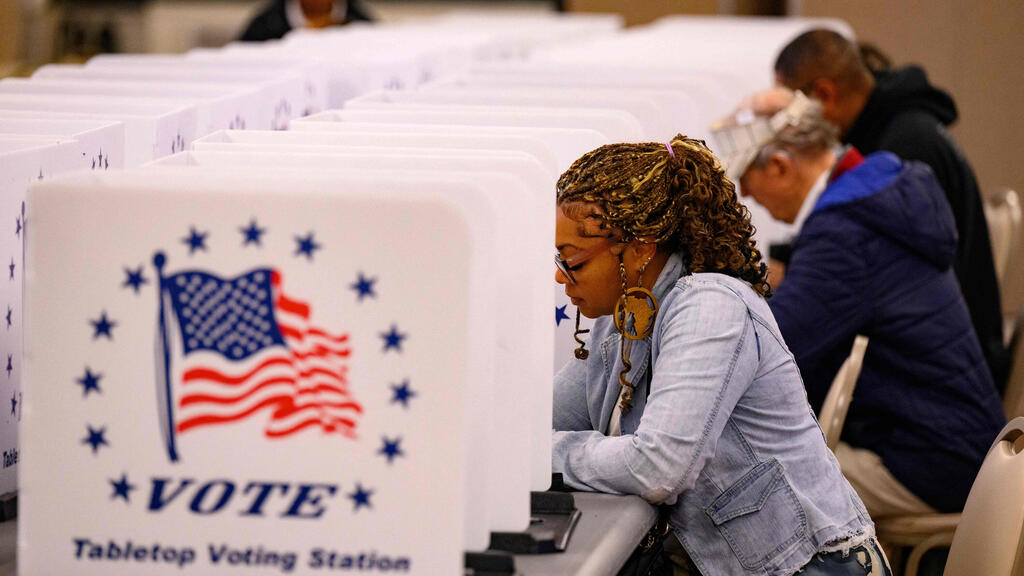
Even before Election Day, more than 57 million Americans had cast ballots through early in-person voting or by mail. That represents a significant increase from the 45 million who voted early in the 2022 midterms and offers an encouraging sign for Democrats, who hope frustration with Trump's policies, particularly the war in Iran and the resulting surge in gasoline prices, will drive large numbers of their supporters to the polls.
Nevertheless, the outcome could still change significantly during Election Day itself, when Republicans traditionally account for a larger share of votes than they do during early voting.
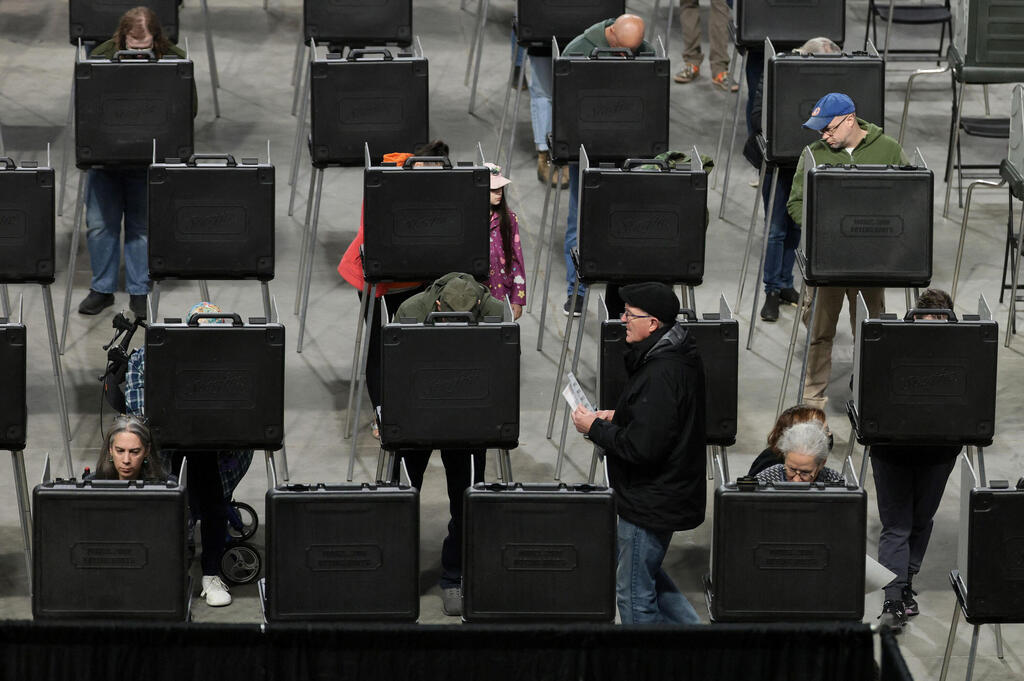
Voting in Maine
(Photo: Joe Raedle / Getty Images North America/ AFP)
The first results are expected to begin arriving at 1 a.m. Wednesday Israel time, when polling stations close in parts of Indiana and Kentucky. The final polls will close in Alaska at 8 a.m. Israel time.
An initial picture of the balance of power in Congress could emerge overnight or Wednesday morning. However, close races, particularly in states where counting mail-in ballots takes longer, may not be decided for several days.
Polls point to a 'blue wave,' but Republicans could still surprise
Midterm elections take place every four years, halfway through a president's term. Americans vote for representatives to numerous federal and state offices, including Congress, state legislatures, governorships and attorneys general.
The elections are widely regarded as a referendum on the sitting president's performance, and historically, the president's party tends to lose ground.
An initial picture of the balance of power in Congress could emerge overnight or Wednesday morning. However, close races, particularly in states where counting mail-in ballots takes longer, may not be decided for several days.
The greatest attention is focused on the races for the Senate and House of Representatives. When the president's party controls both chambers, it is easier for the administration to advance legislation and policy initiatives. When the opposing party holds a majority, the president's ability to govern is significantly constrained, potentially turning him into a "lame duck."
Republicans enter the elections holding majorities in both chambers. In the outgoing House, they have 218 seats compared with 214 for Democrats. Another lawmaker identifies as an independent but leans Republican, while two seats are vacant. In the Senate, Republicans hold a stronger 53-47 majority and can afford to lose up to three seats. In the event of a 50-50 tie, Vice President JD Vance would cast the deciding vote.
But the Republican Party enters Election Day under considerable pressure. For months, polls have suggested that Democrats could regain control of the House. Since gasoline prices surged following the war in Iran, polling has also indicated a more competitive battle for the Senate.
With a Democratic takeover of the House widely anticipated in pre-election assessments, much of the attention Tuesday night will focus on the closely contested Senate races. Thirty-five Senate seats are up for election, but only a handful of races are considered truly competitive. Their outcomes will determine control of the upper chamber.
Polling on the eve of the vote showed unexpectedly close races in deeply conservative states that Trump carried by double-digit margins against Kamala Harris two years ago, including Alaska, Iowa, Ohio and South Carolina. Competitive contests are also unfolding in Texas, a major Republican stronghold that has not elected a Democrat to the Senate in 38 years, and Kansas, where Democrats have not won a Senate seat in 94 years.
Some recent polls gave Democratic candidates substantial leads in several of these races. However, pollsters have warned that conservative voters in rural areas can be difficult to reach and that surveys may once again be underestimating Republican support.
Others point out that polls underestimated Democratic strength in the previous midterm elections. Democrats are hoping that a surge in support from independent voters and moderate Republicans will produce a sweeping "blue wave," allowing them to capture both chambers of Congress simultaneously.
Such an outcome has occurred in only three previous midterm elections, most recently 20 years ago, when public frustration over the Iraq war helped Democrats make major gains.
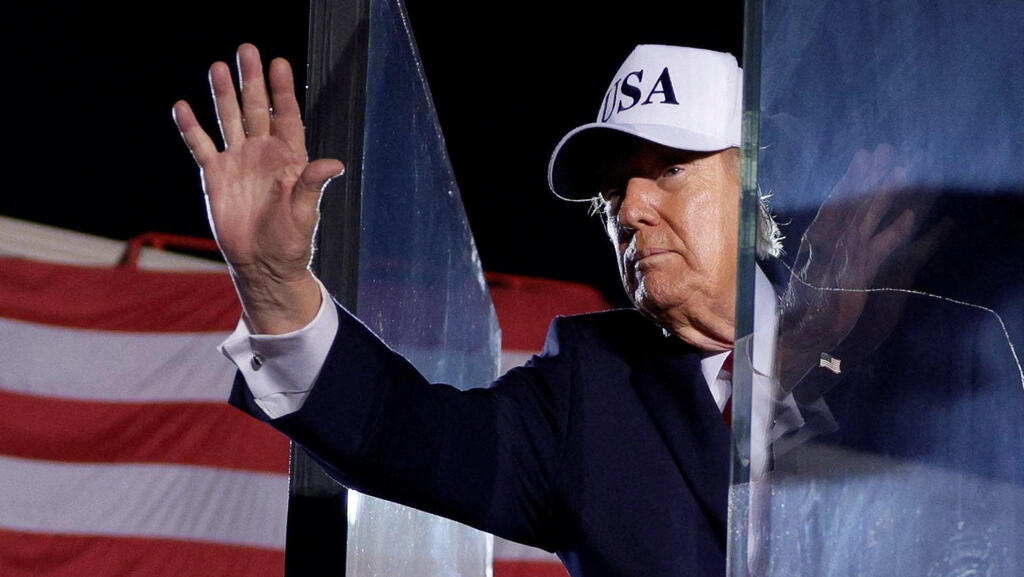
Trump at a campaign rally in Kansas
(Photo: Evan Vucci/Reuters)
In an effort to preserve Republican control of at least the Senate, Trump spent the past month holding a series of campaign rallies designed to energize his supporters and drive turnout. Many of those rallies took place in conservative states he won comfortably two years ago, reflecting the defensive position in which his party now finds itself.
One of his central messages was a warning that the "radical left" could seize control of Washington, both now and in 2028. He argued that Democrats could then entrench their power for generations by appointing new Supreme Court justices and granting statehood to Washington, DC, and Puerto Rico, changes he said would give Democrats an advantage in the Senate.
Israel at the center of Trump's 'election surprise'
With gasoline prices and inflation still high, however, Trump's warnings about Democratic control have struggled to gain traction. The president has done little to help Republicans on that front, frequently appearing dismissive of Americans' economic difficulties. He has repeatedly described the surge in gasoline prices as a "small price" to pay for preventing Iran from obtaining nuclear weapons.
Trump has also insisted that the economy is performing exceptionally well. In an interview with Fox News on Tuesday afternoon, he claimed that "inflation has been solved," even though annual inflation is expected to reach approximately 3.7% this year, well above the Federal Reserve's 2% target.
Israel has also become a major issue in the elections, with American support for the country declining sharply following the wars in Gaza and Iran.
In Michigan, for example, a close Senate race is underway between progressive Muslim Democrat Abdul El-Sayed, who has emphasized his opposition to continued US military assistance to Israel, and pro-Israel Republican Mike Rogers.
Perhaps in an attempt to help the Republican candidate, Trump made a surprise announcement during his Fox News interview Tuesday, claiming that he had reached an agreement with Prime Minister Benjamin Netanyahu to end approximately $4 billion in annual US military aid to Israel.
During the interview, Trump appeared to address arguments made by Democrats such as El-Sayed, who have criticized the assistance as a burden on American taxpayers, even though the funds are used to purchase U.S.-made weapons and military equipment. "The left uses the $4 billion payment, which everybody knows about and is no secret, to portray it as a symbol of unfairness, and we can't allow that to happen," Trump said.
CNN suggested Tuesday evening that Trump's announcement was directly connected to the Michigan race. The president's campaign account on X later amplified the statement, posting an image with a large headline announcing the end of aid to Israel alongside the words "America First."
Earlier, CNN reported, citing a White House source, that Trump had been optimistic during the initial stages of the campaign about Republicans' chances of defying expectations Tuesday night, but had grown more pessimistic in recent days, leaving him in a subdued mood. Later, however, CNN quoted a presidential adviser who insisted that Trump was in "great spirits." The adviser said the White House remained "cautiously optimistic."
'It's scary. We need change': Michigan voters voice frustration
For many Americans, Tuesday's elections offer an opportunity to express dissatisfaction with Trump's policies. Beyond the unpopular war in Iran, the president has launched a mass deportation campaign against undocumented immigrants, which has sparked widespread anger and unrest in American cities. His administration has imposed tariffs on numerous countries, is engaged in a trade war with Canada and has pursued legal action against political opponents.
"I feel I have a duty to do everything I can to change the direction our country is heading right now, to put it back on the path of democracy and away from autocracy," said Jane Callum, a 77-year-old retired teacher who voted for Democratic Sen. Jon Ossoff in an Atlanta suburb.
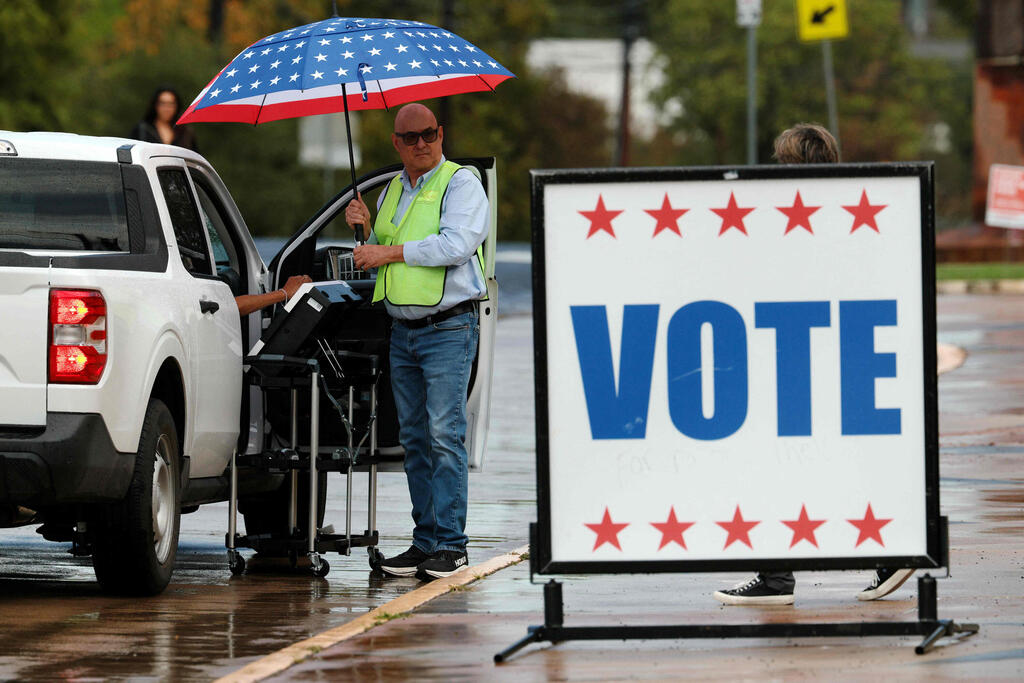
Drive-up voting in Austin Texas
(Photo: Chip Somodevilla / Getty Images North America/ AFP)
Georgia is considered a swing state, and Ossoff won his seat by a narrow margin six years ago. This time, amid frustration with Trump, polls show him holding a substantial lead over his Republican opponent, and the race is no longer considered competitive.
In Macomb, Michigan, north of Detroit, 62-year-old voter Arnes Rogers told CNN he was hoping for change. "It's never been this bad. Gas prices are high. The economy is terrible. We've been losing jobs for the past two years, since he took office," he said. "I hope my company, one of the Big Three US automakers, can keep operating because our parts come from Canada. He's picking fights with everybody, and it's terrible to see where things are going in America right now. It's just scary."
Another voter, Hayden Mendez, said he had cast his ballot for Democratic Senate candidate Abdul El-Sayed in Michigan. Alongside his criticism of Israel, El-Sayed has focused his campaign on the cost of living and health care. Mendez also cited the war in Iran as one of the reasons behind his decision.
"I just think things never should have gotten this bad in the first place," he said. "But I hope whoever wins today actually looks out for the American people and chooses to do things that serve Americans instead of just making things worse for them."
Election fraud fears and questions over whether Trump will accept the results
Tuesday's elections are also taking place amid concerns that Trump, who continues to refuse to acknowledge his defeat to Joe Biden in the 2020 presidential election and has repeatedly made unsubstantiated claims of widespread voter fraud, could attempt to challenge or obstruct the midterm results. In recent months, Trump has raised numerous allegations of election fraud, while the federal administration has taken several steps that have alarmed election officials across the United States.
California Gov. Gavin Newsom warned over the weekend that the Trump administration might attempt to seize ballots and other election materials, allegedly to interfere with the vote-counting process.
1,000 election monitors deployed, but no immigration agents near polling places
On Monday night, the administration filed an emergency petition with the Supreme Court demanding that approximately 20,000 mail-in ballots in California be separated from the count until the eligibility of the voters could be established.
The administration claimed that some of those voters might not be US citizens. California authorities countered that the list submitted by the federal government was unreliable and contained numerous errors. The Supreme Court quickly rejected the request.
Another federal court challenge, filed last month, sought to prevent recognition of a possible defeat by Republican Sen. Dan Sullivan in Alaska. The administration argued that a "spoiler candidate" with the same name as the senator was running in the race and could confuse voters. Trump claimed the candidacy amounted to "election fraud of the highest order," but the court rejected the petition.
Asked last week whether he would accept the midterm election results, Trump offered only a conditional response: "I'll accept them if they're fair."
The U.S. Justice Department also announced Tuesday that it had deployed 1,000 election monitors to polling locations across the country, primarily in Democratic strongholds, to ensure that voting procedures were conducted properly. More dramatic measures feared by Democrats, including the possible deployment of immigration enforcement agents or National Guard troops near polling stations to allegedly intimidate voters, have not materialized.