

At Kibbutz Nir Am on the Gaza border, the Passover Seder looked different this year. Nine families from communities along Israel’s northern front joined residents at the holiday table after arriving for several days of respite away from the sirens and rocket fire near their homes.
The families arrived Wednesday evening, on the eve of the holiday, and are due to remain at the kibbutz through the weekend. Their stay includes lodging at Nir Am’s rural guest complex, a shared holiday meal, activities for children and a barbecue the day after the Seder.
Gallery
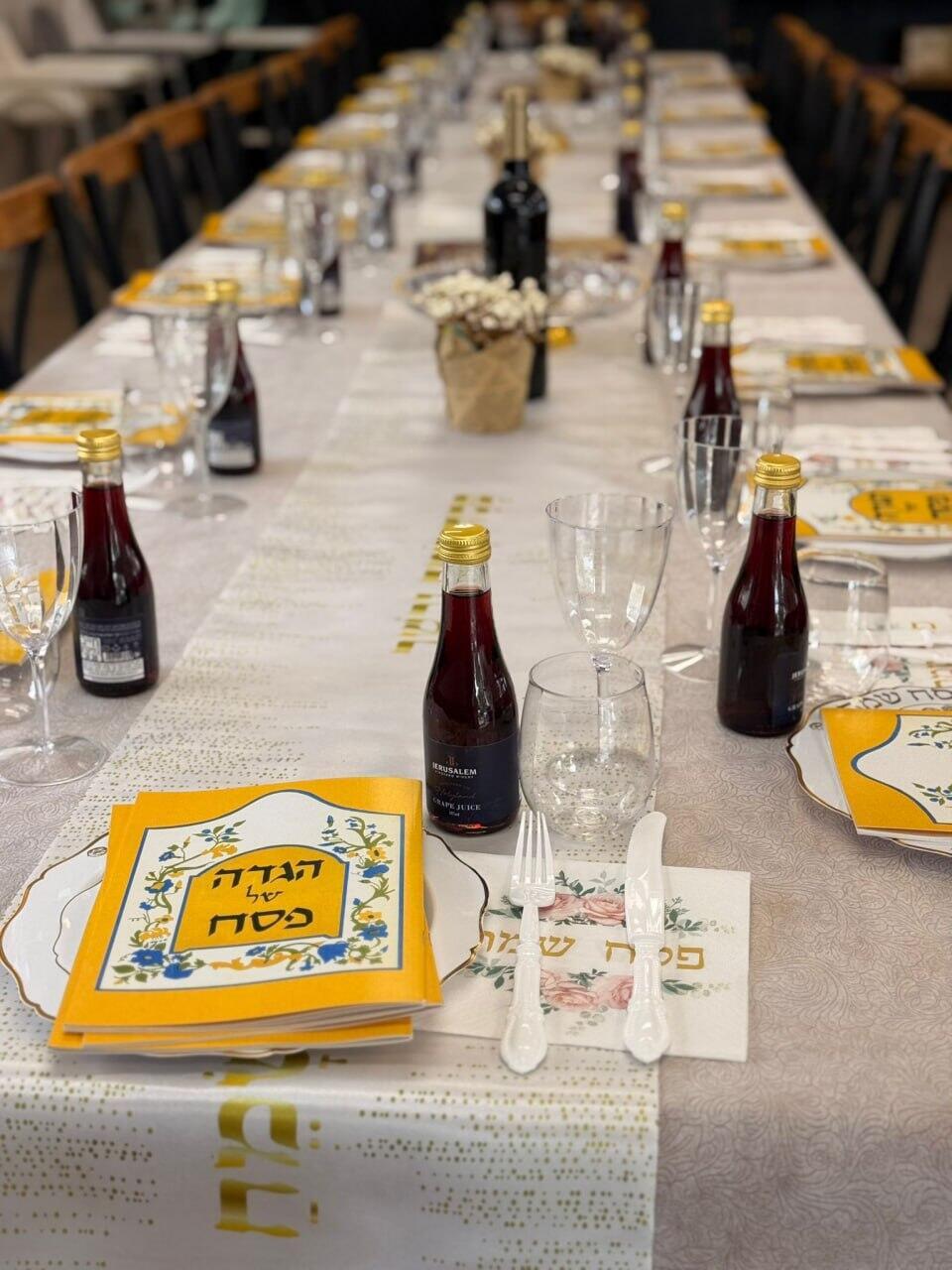
Passover Seder for families from communities along Israel’s northern border in Kibbutz Nir Am
For the guests, it is a brief break from the tense security situation in the north. For the hosts, it is a chance to return a favor.
The community initiative was organized within hours by kibbutz member Dolev Azulai, joined by fellow resident Shai Sasson. Businesses from the Gaza border region also joined the effort, either through donations or discounted services and products.
“Who knows better than we do what it means to be displaced?” Azulai wrote in the kibbutz WhatsApp group. “They are not even officially defined as evacuees right now, and they are simply taking rockets. For me, the fact that we are hosting them is a source of pride and honor.”
Within a short time, community members began offering donations, volunteering to prepare food and helping organize the visit.
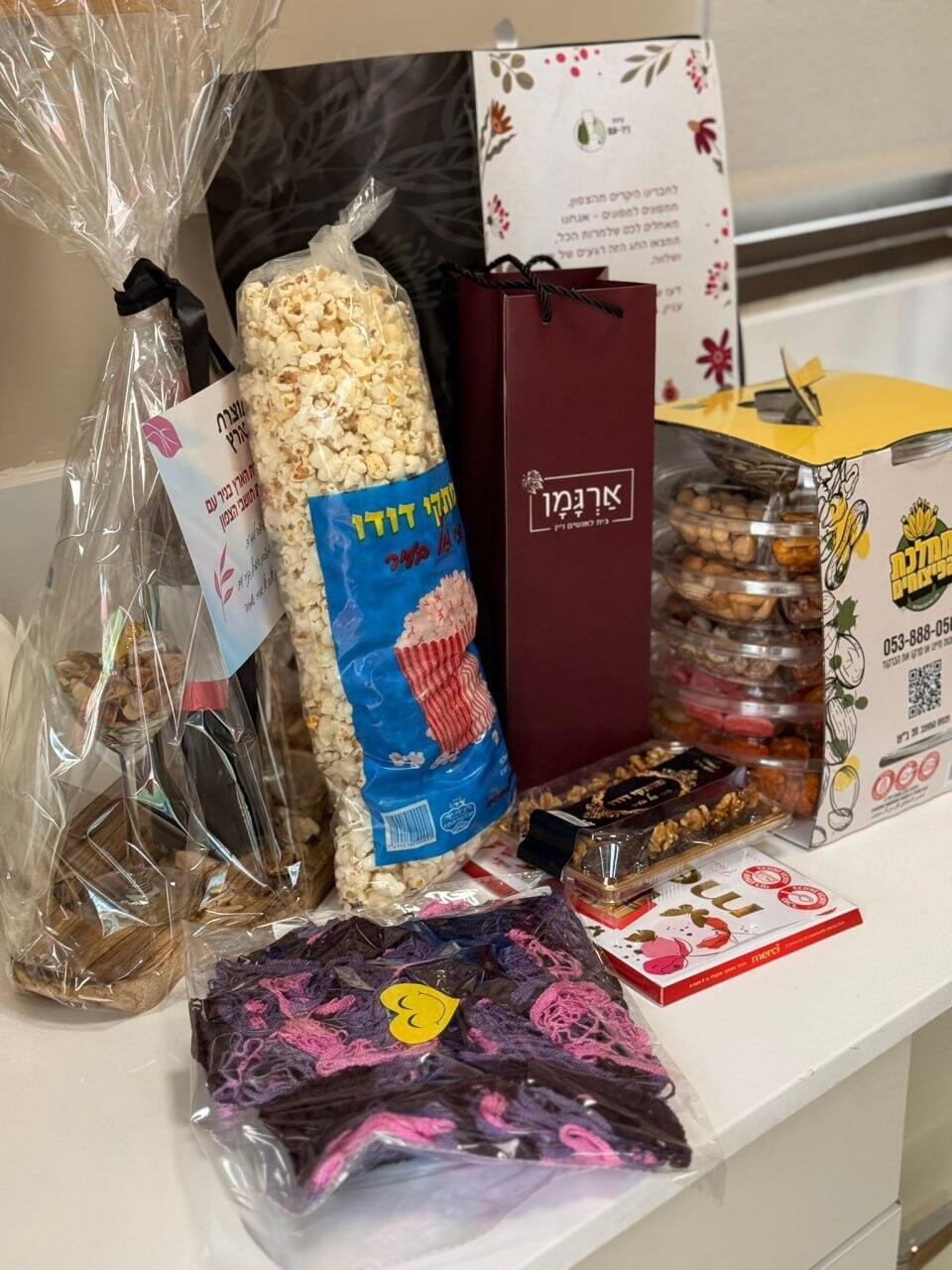
Treating the guests in Nir Am
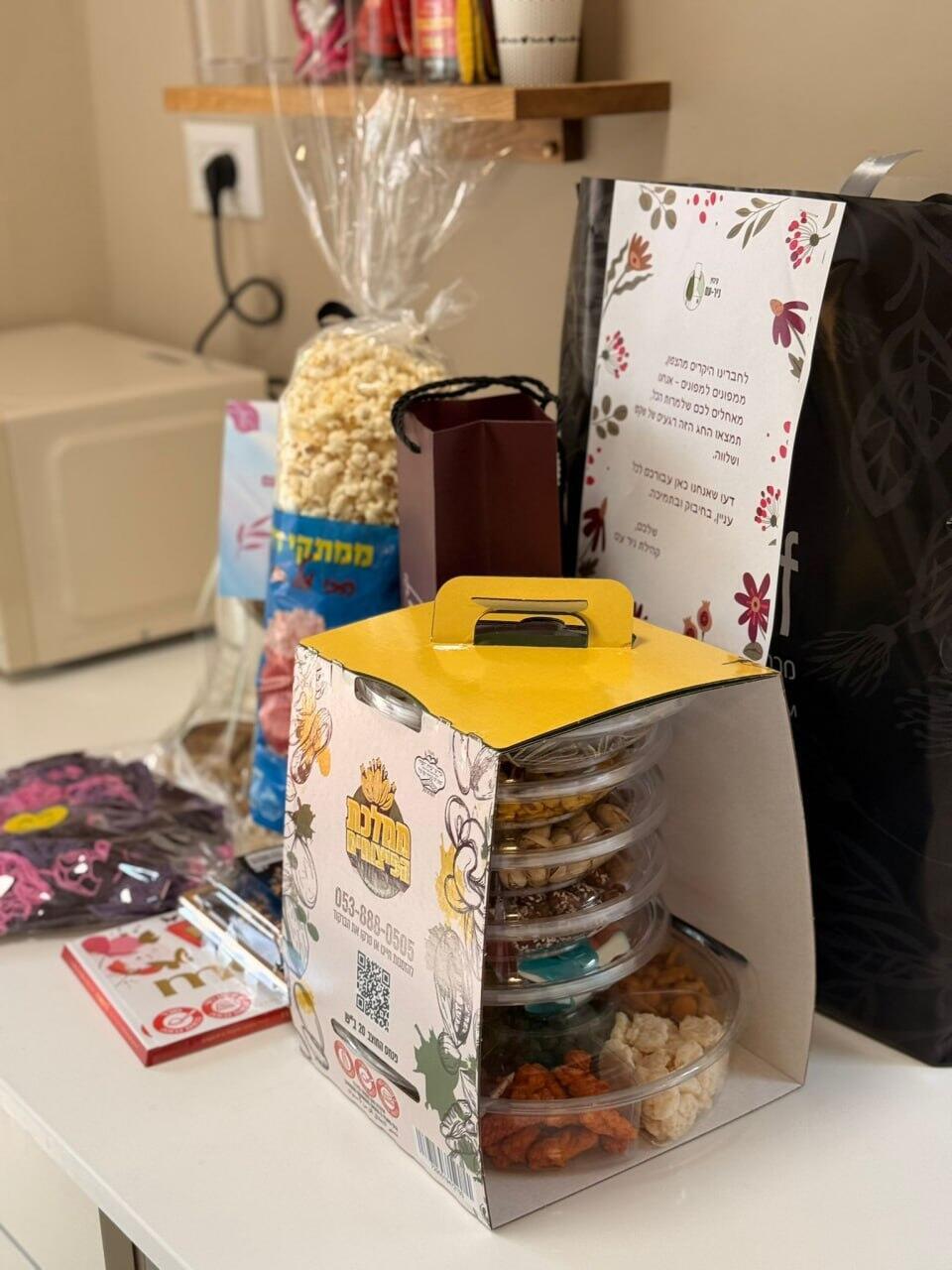
The families are staying at the kibbutz’s rural hospitality complex, Aldea. For Nir Am residents, the initiative is also a way to repay the solidarity they themselves received after the Oct. 7 attack, when many Israelis opened their homes to residents of the Gaza border region.
“After Oct. 7, all of Israel opened its doors to us. It is time for us to do the same,” Azulai said. “One time they host us and another time we host them. It is a little sad to say, but that is our security reality.”
Sasson said the impulse to act came after he saw images from the north. “Who knows better than we do what it means to live in an emergency, when the danger of those 15 seconds is hanging over you and following you with your children at the soccer field, on the way back from the children’s houses or from the local store?” he said, referring to the seconds residents often have to reach shelter after a warning.
“The images coming from the north broke my heart,” he said. “On Friday morning I got a message from Dolev, who recruited me with an emergency call-up. ‘Shayke, nine families with 20 children are on the way. Start working.’ Good thing we have Dolev.”
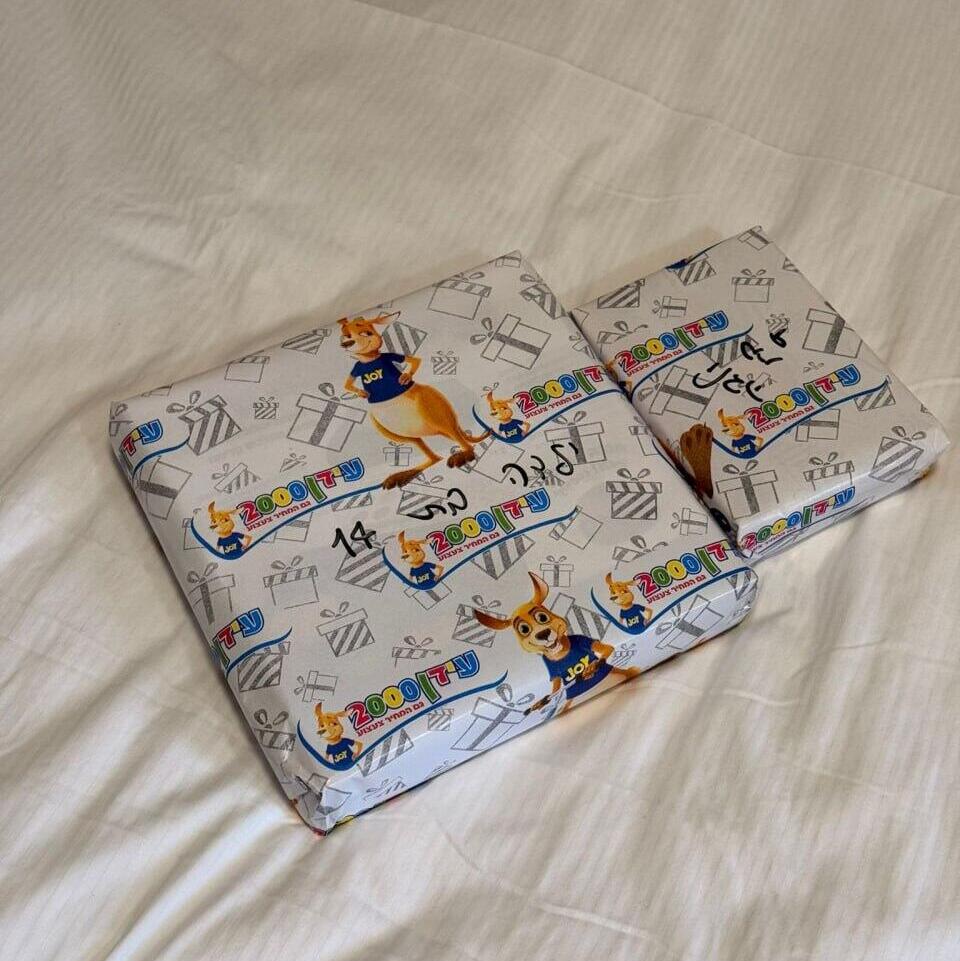
Presents for the children
He said that within a short time of a message being sent to the community WhatsApp group, thousands of shekels had been raised for the initiative. At the same time, he reached out to local businesses, which also responded quickly.
Sasson singled out a number of businesses and volunteers that helped provide food, wine, desserts, fruit, vegetables and vouchers for the visiting families, including a butcher shop in Sderot, local catering providers, cafes, print shops, students from Nir Am and other small businesses in the region.
“It warms the heart to see the friendship and unity of our community in Nir Am and of our brothers and sisters in Shaar Hanegev and Sderot,” he said. “It only shows what a powerful community we have. We have always been a small and amazing community here in the Gaza border region, and in Nir Am in particular. These people are the beautiful face of Israel.”
The Gaza border region has become a refuge for many families from around the country since the start of the war with Iran because of its large number of protected spaces and relatively few warning sirens. In addition to the families from the north, many other guests were staying at the kibbutz over the holiday.
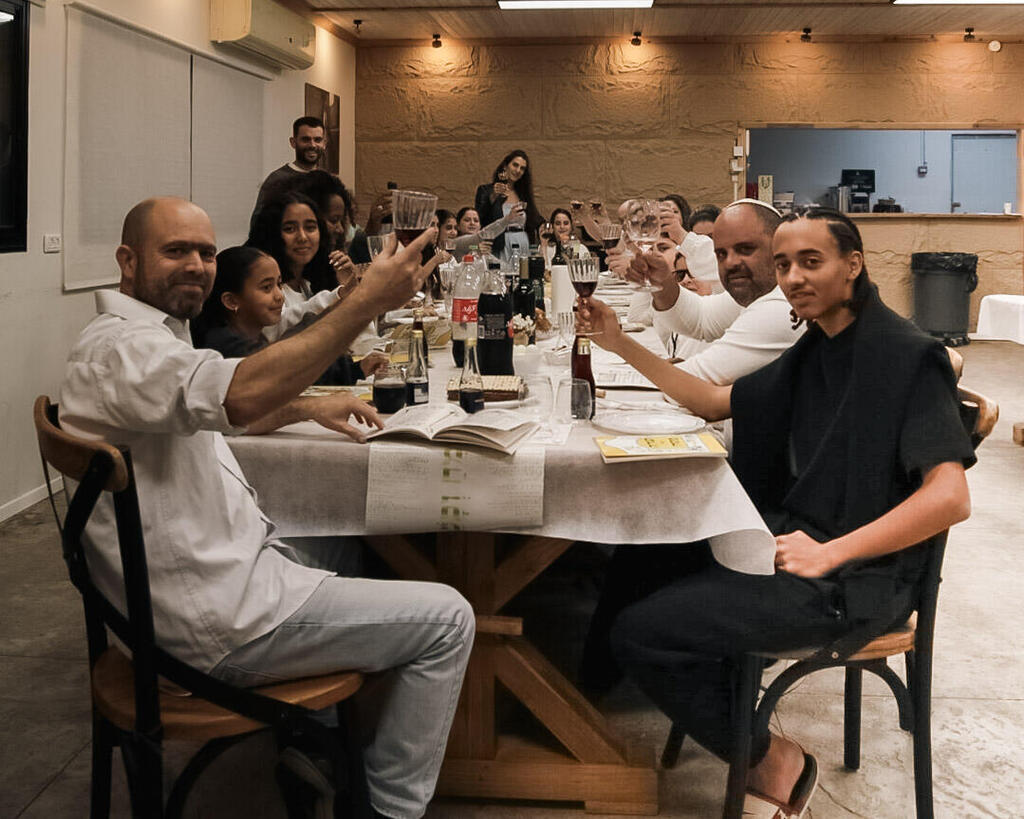
Passover Seder for families from communities along Israel’s northern border in Kibbutz Nir Am
(Photo: Gon Mazraee)
Meanwhile, the Tkuma Directorate—which oversees the rehabilitation of communities hit in the Oct. 7 attacks—says more than 90% of residents of the region have returned to their homes, and that more people now live in the area than before Oct. 7, largely because of the growth of the city of Sderot.
Among the families staying in Nir Am are Adva and David Tal from Kibbutz Snir in the Upper Galilee, parents of three children ages 1 1/2, 3 1/2 and 6 1/2. David was released from reserve duty only about last week.
“We just got here a moment ago,” said Adva. “We came to absorb a little quiet and to be in a different atmosphere. Only when we left the kibbutz did we realize how much tension we had been holding in our bodies. We already took a short walk here, and there are protected spaces everywhere.”
She said the last two and a half years had been especially difficult for the family. “For two years we moved around as evacuees, and to this day I do not understand why they evacuated us and then sent us back,” she said. “Why did they put us through this huge upheaval, moving all over the country, only for us to return to this reality? We do not have a protected room in our house. We sleep in the protected room of the kibbutz nursery.”
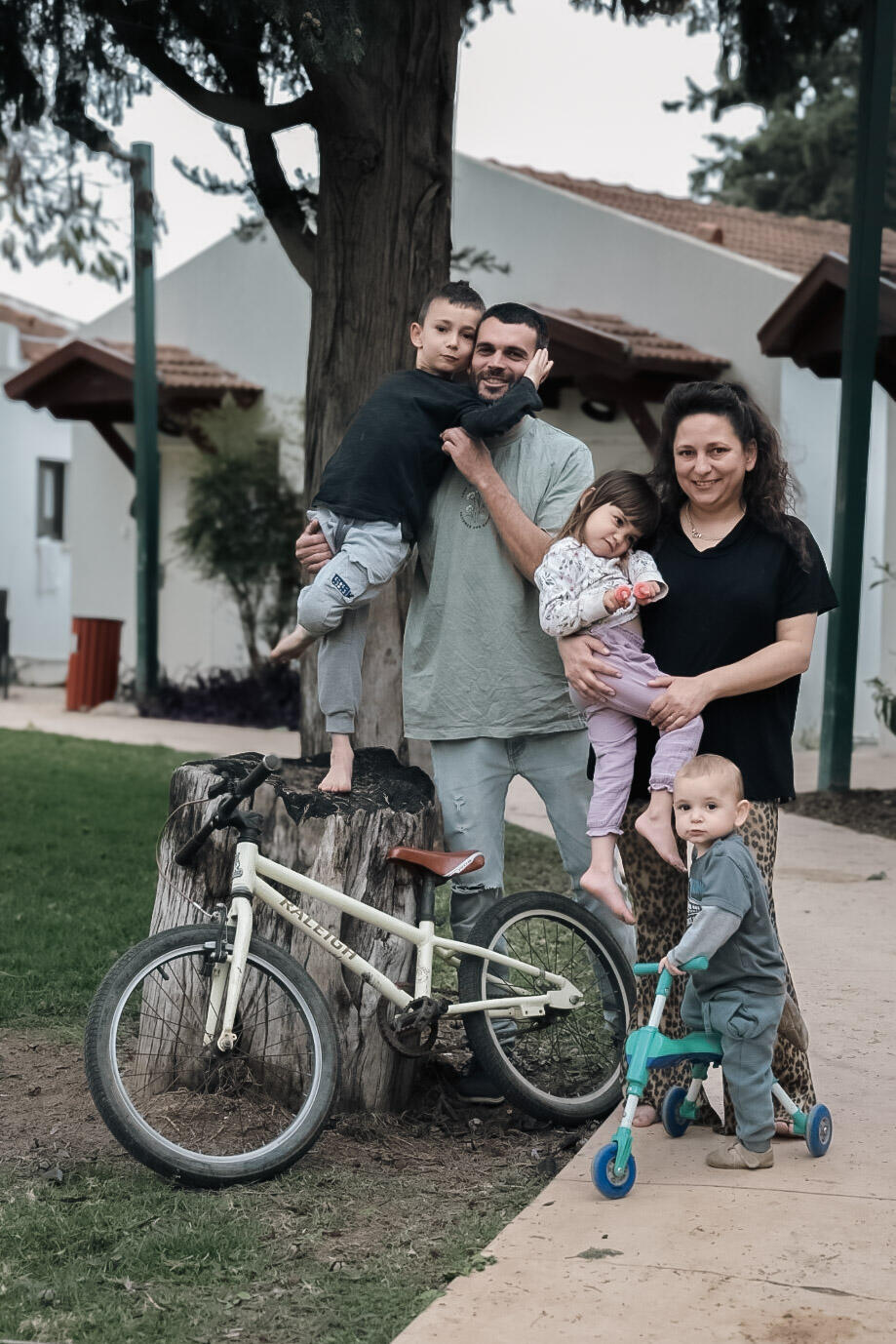
David and Adva Tal with their children in Kibbutz Nir Am
(Photo: Gon Mazraee)
Adva got emotional describing the reception in Nir Am. “It is incredible how they welcomed us here,” she said. “I feel uncomfortable with all this abundance. A kibbutz that went through Oct. 7 and was itself evacuated, and still finds the strength to give to others. It is an extraordinary all-inclusive generosity. It warms the heart.”
“It is strange that this place is now considered safe,” she added. “When we got here, I asked David, ‘Say, isn’t it dangerous here?’”
For the family, the shared Seder with other families from the north will also be unusual. “It is special to leave your comfort zone,” she said. “Passover is usually very family-centered for us. David comes from a family of nine siblings, so it is a major event. So this is exciting and different. I just want to say thank you to everyone who helped make this happen. It is really not something to take for granted.”
Speaking about the situation in the north, she said: “We just want a little quiet, without being surprised through the back door. If they decided to leave us there in the north, then the conditions also need to match that. The children do not have adequate frameworks, and we are not being cared for enough.”
'We got through hardships in the past, and we will get through this, too'
Willy Brand and his family are spending the holiday at the Leonardo Hotel in Be’er Sheva after their home was damaged when a missile exploded in an open area nearby.
“When it hit, we heard the sound of things collapsing, and in the panic we thought the whole house had come down,” Brand said. “My wife called the security forces to ask whether it was safe to go outside. One child wanted to go out and the other was afraid. After a while we left the safe room and discovered the destruction. All the windows had shattered, the wall had come loose. It was complete chaos.”
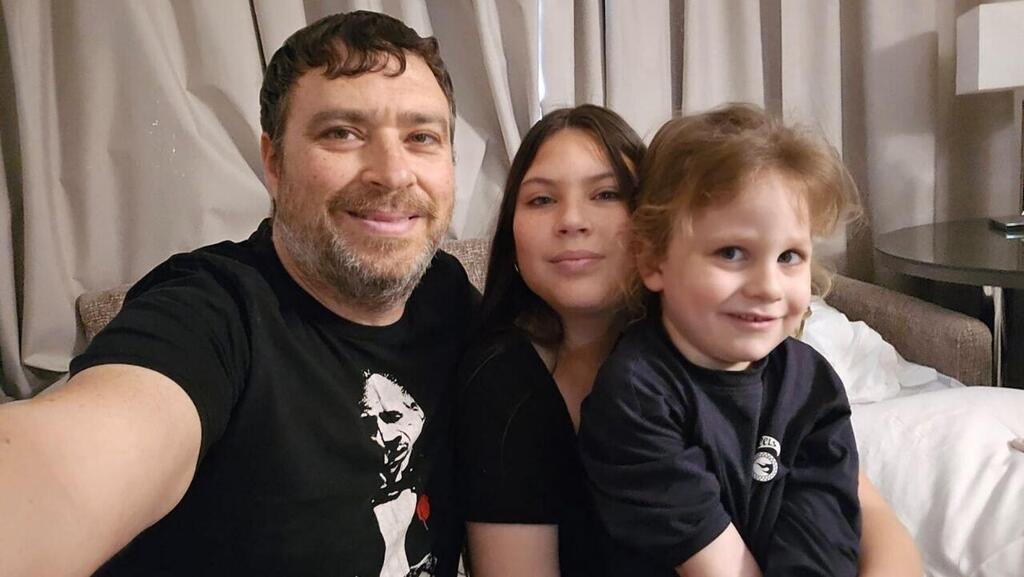
Willy Brand and his family spending the holiday at the Leonardo Hotel in Be’er Sheva
(Photo: Courtesy)
Brand and his wife took their children to their grandmother, and after the Be’er Sheva municipality opened a center for displaced residents at a nearby school, they went there to seek assistance. The family was later evacuated to the Leonardo Hotel.
“We got to the hotel a little after 11 at night,” he said. “People from the municipality sat with us in the lobby until 1:30 a.m. until we got a room. We had planned to celebrate the holiday at home. We were supposed to host the family. Now the plans have changed. We’ll stay here at the hotel. We’ve been here almost three days, and the children are starting to lose it. It’s hard for them. We’re all in one room. It’s not like home.”
Brand said the stay has been especially difficult because two of his children have special needs. “There is no real holiday feeling,” he said. “I had been planning in my head what I was going to make, what I was going to cook and how we were going to get organized. Suddenly all the plans changed. They brought us a holiday basket and a Haggadah, but personally, it’s not the same. I hope that next year Passover will be different.”
The Leonardo Hotel in Be’er Sheva has about 280 rooms and is currently housing about 200 evacuees whose homes were damaged.
Its general manager, Sima Elimelech, is a Be’er Sheva native who lost her brother and sister-in-law in the Oct. 7 attack. “When the report came in about the latest impact, staff members came to the hotel immediately,” Elimelech said. “We received the evacuees until 3 a.m. and promised to embrace them, encourage them and give them the best holiday we could. It was very moving to see.”
Since Oct. 7, the Fattal hotel chain has hosted about 20,000 evacuees, along with other groups including soldiers and elderly people.
“The war has created a new mix of guests in the hotels,” Elimelech said. “We are at full occupancy. Half the hotel is evacuees and half is regular guests who came to celebrate the Seder together. Demand for hotels has only gone up. We mark the holidays here in a festive way. It’s a different atmosphere, even though there are people here who came to us after their world was destroyed. Just two weeks ago, we held a bat mitzvah for a girl whose home was destroyed.”
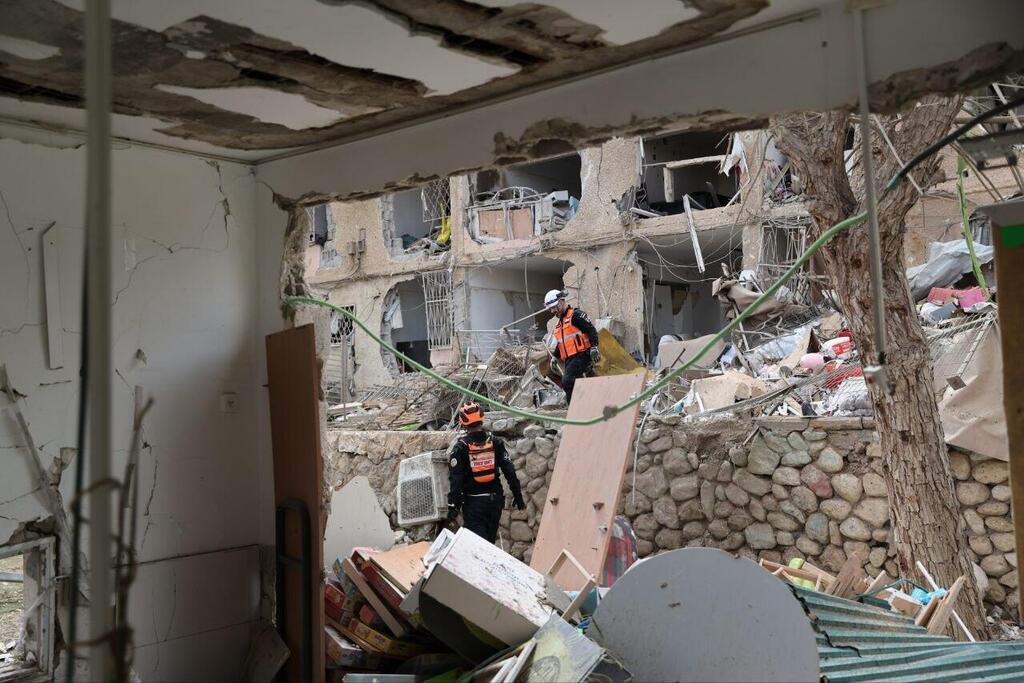
Entire Dimona residential block devastated by a ballistic missile fired from Iran
(Photo: Alex Kolomoisky)
In Dimona, about 780 residents were evacuated to the Leonardo Plaza Dead Sea hotel after a whole residential block was devastated by a ballistic missile fired from Iran last month.
Eliran Brandino, a resident of the city and father of three, said his family usually hosts for Passover, but this year they will be guests with relatives instead. “They didn’t manage to destroy everything for us,” he said. “The hotel gave us a soft landing, and only after I spent a few days in reserve duty and came home did I understand that I no longer had a home. But thank God, every Jew has to celebrate the holiday. And this holiday is our victory. We got through hardships in the past, and we will get through this, too.”
'A proper Seder while following Home Front Command guidlines'
Ayala Amar, 56, was born in Kiryat Shmona and has lived in the northern city all her life. Despite heavy fire on the community in the Galilee Panhandle, she and her husband, Moshe, plan to celebrate the upcoming Passover Seder in the shelter of their apartment building with their children and grandchildren.
Twenty-seven years ago, Amar gave birth to quadruplets as Kiryat Shmona came under sustained Katyusha rocket fire, before missile defense systems such as Iron Dome were in place.
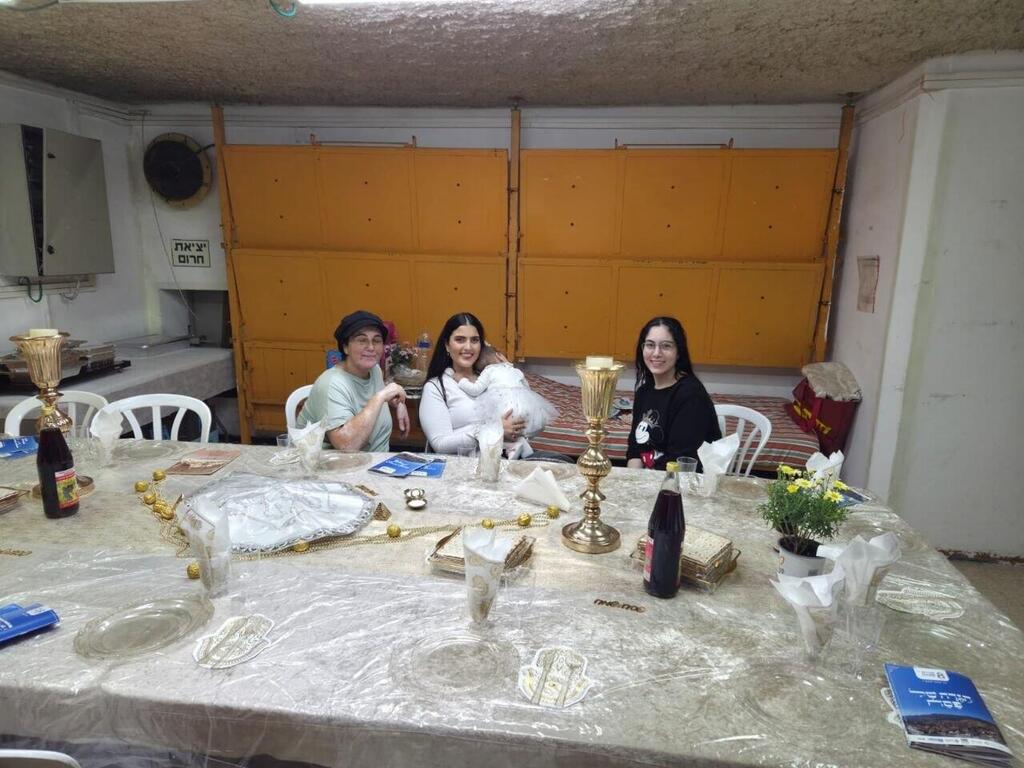
Ayala Amar and her family hold the Passover Seder in a public shelter in Kiryat Shmona
Despite the wars they have lived through, the thousands of rockets that have struck the city, the difficult days and the evacuation, Amar and her husband say they are not prepared to leave Kiryat Shmona.
The couple said they were looking ahead to the Seder with mixed emotion, marking the holiday in an unusual setting inside a public shelter. “We are celebrating Passover in the shelter because, unfortunately, it just keeps going on,” Amar said.
“In the past we celebrated in a hotel because of the evacuation, and we hope this will end because we have no strength left. Sometimes the family is scattered, so we celebrate with the neighbors. The municipality provided us with tables, chairs and dishes, and of course we brought things from home to decorate and create a sense of joy and holiday.”
She said she hoped the current war would be the last her family would have to endure. “We hope this is our last war, that the children and grandchildren will not experience these terrible days and these wars,” she said.
“Kiryat Shmona is being emptied because of these wars. The government has forgotten our city, unfortunately. People need to remember there are other residents in this country. It is not simple to build a safe room — it is expensive, and not everyone can afford it. We wish our soldiers protecting us a happy holiday, and that they return home safely.”
In Pardes Hanna-Karkur, Yvonne Peretz is in charge of preparing her family’s holiday table, laden with traditional Passover dishes. “Usually we host many family members from different places around the country who come to celebrate the holiday meal with us,” Peretz said.
“But this year, because of the war and the restrictions, there are special guidelines, so we are holding a proper Seder, of course, while strictly following the instructions. If there are sirens, we will immediately go to the safe room next to us. What can you do — it saves lives.”
Peretz, who is known in the Sharon region for the large Mimouna celebrations she organizes each year, including an event in Or Akiva attended by Prime Minister Benjamin Netanyahu, said she hoped for quieter days ahead. “We hope for days of calm and security,” she said. “Passover is the holiday of freedom, and we hope for a better reality and quieter, better days.”