

Silicon Valley’s billionaires have won. California voters rejected a proposal to impose a 5% tax on the wealth of roughly 200 of the state’s richest residents in the U.S. midterm elections, with the result called overnight Friday into Saturday. About 54% voted against the measure, compared with 46% in favor.
The decision ends an extraordinarily expensive battle in which technology founders, venture capitalists and senior executives joined forces to defeat a tax that could have cost some of them billions of dollars.
Gallery
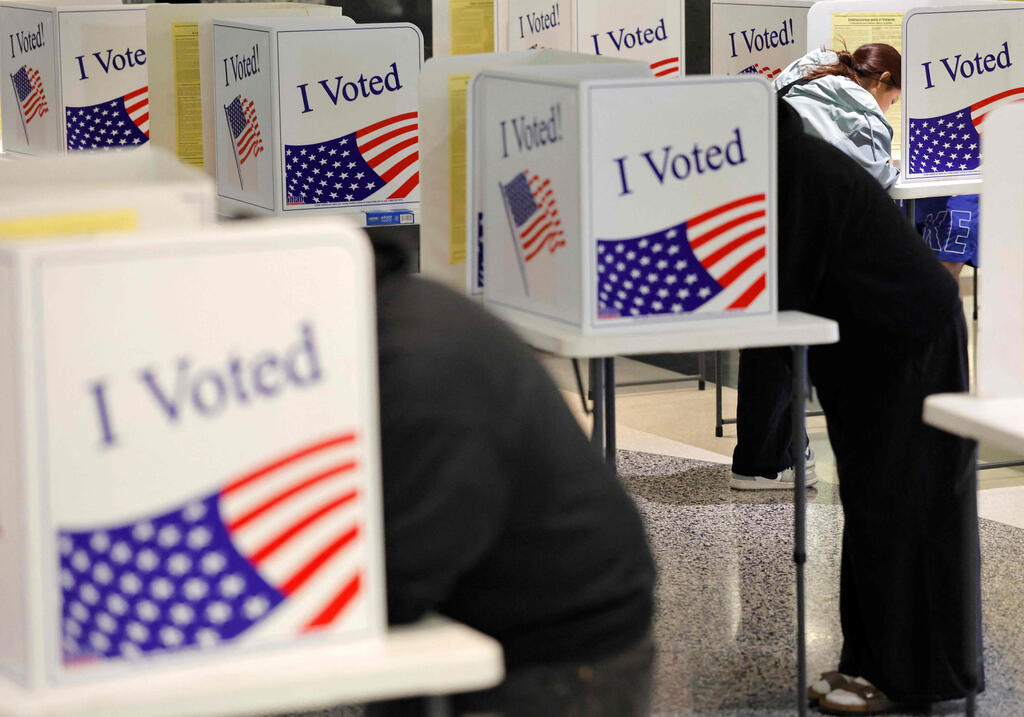
Silicon Valley’s billionaires prevailed. Midterm elections in California
(Photo: MARIO TAMA / GETTY IMAGES NORTH AMERICA / AFP)
Proposition 40 sought to impose a one-time tax on the total wealth of people worth more than $1 billion who were California residents as of Jan. 1, 2026. Unlike an income tax or a tax on profits from selling stock, it would have applied to the value of assets themselves, including shares in public companies and stakes in privately held businesses.
Someone worth $20 billion, for example, could have faced a tax bill of roughly $1 billion even without selling a single share. Most of the revenue was intended for California’s health care system, which is preparing for reductions in federal funding under the Trump administration.
Behind the campaign against the tax was a group nicknamed the “Avengers,” after Marvel’s superhero team. About two dozen members or their representatives held conference calls every Tuesday for months, reviewing polls and advertisements, exchanging information on their opponents and pressing one another to contribute more money.
Around 80 donors poured more than $333 million into Building a Better California, which became the center of the campaign. For many of the billionaires involved, even the enormous sums spent on advertising were small compared with the tax bills they were trying to avoid.
At the center of the group was Jewish Google co-founder Sergey Brin, who moved his residence to Nevada late last year, before the date that would have determined whether the tax applied to him. Brin, whose fortune was estimated at about $260 billion, donated $102 million in seven installments.
He was joined by former Google CEO Eric Schmidt, who contributed more than $40 million; investor John Doerr, who gave $40 million; and Stripe CEO Patrick Collison, who contributed $33 million.
Collison faced a particular challenge because much of his fortune is held in shares of Stripe, a privately owned company. Unlike publicly traded stock, those shares cannot simply be sold at the click of a button to produce cash for a large tax payment.
The billionaires also made sure they would not become the public face of the campaign. Internal documents revealed in a New York Times investigation showed that organizers understood that California voters were not particularly sympathetic to the state’s wealthiest residents.
Instead, the campaign emphasized emergency workers, employees and local organizations, while social media videos were designed to look less like billionaire-funded political advertising and more like content aimed at Democratic voters.
More than two-thirds of the donations received by Building a Better California during the six weeks before the election came in the form of stock. That allowed donors to transfer appreciated assets without first selling them and paying capital gains tax.
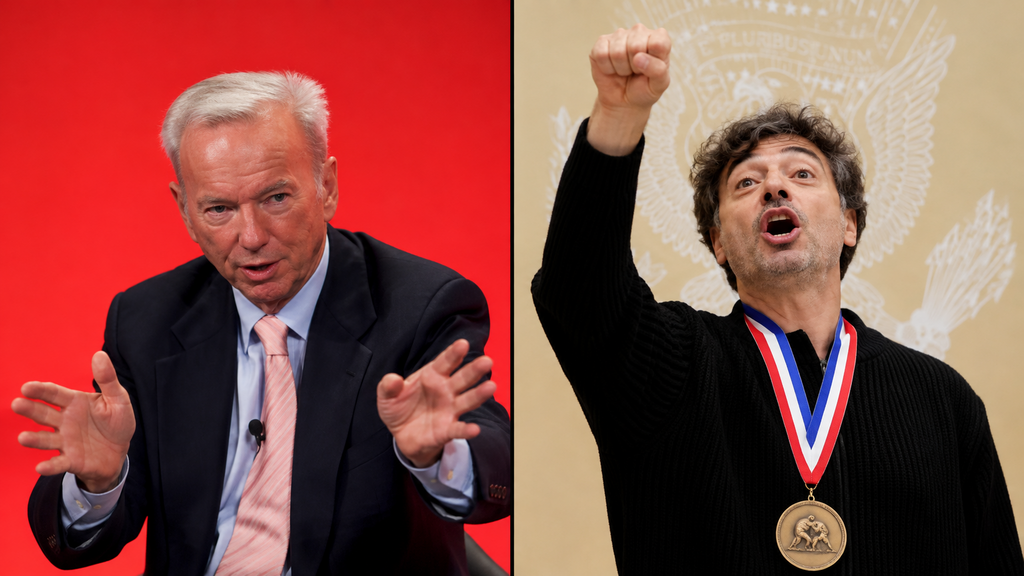
Sergey Brin and Eric Schmidt
(Photo: REUTERS/Evan Vucci, Jonathan Brady/Pool Photo via AP)
Taxes under dispute
Supporters of the billionaire tax, led by a health care workers union, estimated that it could raise about $100 billion over five years, most of which would go toward health services and filling gaps left by Trump administration cuts. California state analysts offered a much more cautious estimate, saying the measure would generate tens of billions of dollars.
Opponents argued that the tax would drive entrepreneurs out of California, encourage wealthy residents to move to Texas, Nevada and other states, and ultimately reduce the state’s tax revenues. Supporters countered that billionaires can accumulate enormous fortunes through rising stock values without paying taxes on those gains until their shares are sold.
The debate also divided California Democrats. Sen. Bernie Sanders, California Rep. Ro Khanna and the California Democratic Party supported the tax. Democratic Gov. Gavin Newsom opposed it, warning that it could damage the state economy and prompt large numbers of wealthy residents to leave.
Newsom was joined in opposition by the California Teachers Association and Planned Parenthood, organizations generally associated with the liberal camp. Governor-elect Xavier Becerra also opposed the proposal.
The defeat of Proposition 40 may not be the billionaires’ only victory. Opponents of the tax also promoted Proposition 42, which would prohibit new taxes based simply on ownership of financial assets and personal property and, in most cases, block retroactive taxation.
The measure was leading with roughly 52% support against 48% opposition. Wealthy donors spent about $159 million backing it, and the campaign presented it to voters in part as a way to protect retirement savings.
If approved, Proposition 42 would create a constitutional obstacle to future wealth-tax proposals unless voters later chose to change the rules again.
But the results do not amount to a sweeping rejection of higher taxes on the wealthy. In the same election, about 60% of California voters approved another measure making existing higher income tax rates permanent for high earners, including individuals making more than roughly $371,000 a year, rather than allowing the rates to expire in 2031.
That measure is expected to preserve between $5 billion and $15 billion in annual state revenue. And in Los Angeles, Nithya Raman, associated with the socialist-progressive camp, defeated incumbent Mayor Karen Bass.
The results suggest California voters are not necessarily opposed to higher taxes on wealthy residents, but many were unwilling to embrace the new experiment of taxing wealth itself.
The health care workers union behind Proposition 40 has already said it will not give up. Union leader Dave Regan said that if lawmakers fail to find another solution for funding health services, the group will return to voters in 2028 with another proposal to tax billionaires.
But if Proposition 42 is approved, the union’s next attempt will face an additional hurdle created by the very billionaires it sought to tax.