


A new voice emerged from Iranian state media — sharp, defiant and directed squarely at Israel. Until recently unknown, Iman Tajik was introduced last Monday as the official spokesman for Iran’s Islamic Revolutionary Guard Corps (IRGC) in its ongoing fighting against Israel.
Tajik, believed to be a high-ranking military officer, now joins the pantheon of military propagandists in Iran’s so-called “Axis of Resistance,” taking up a role akin to Houthi spokesman Yahya Saree and Hamas’ Abu Obaida. Together, the trio now forms a tightly coordinated propaganda triangle, designed to project unity, menace and resolve in the face of Israeli attacks.
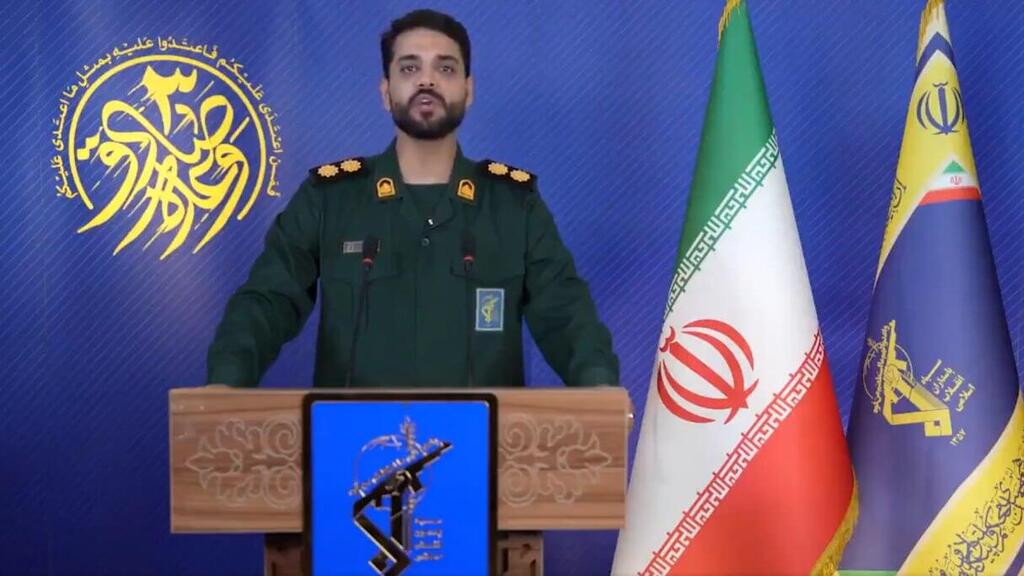
Tajik’s videos are disseminated rapidly across both official Iranian outlets and social media channels affiliated with the regime. Each video is carefully staged: Tajik stands at a podium in uniform, delivering threats in a forceful, near-shouting tone.
Behind him hang the flags of Iran and the IRGC. In his statements, he often references specific threats — “precision missiles,” “command centers” or “biological sites” — with deliberately vague phrasing intended to suggest operational dominance.
Get the Ynetnews app on your smartphone: Google Play: https://bit.ly/4eJ37pE | Apple App Store: https://bit.ly/3ZL7iNv
In one of his latest statements, issued on Sunday after another round of Iranian strikes, Tajik claimed that IRGC forces had targeted Ben Gurion Airport, Israeli command-and-control centers and even a “biological facility.” He described the use of “particularly destructive warheads” and assigned each strike a serial number, furthering a narrative of an ongoing campaign marked by deliberate escalation.
Among pro-regime circles and in segments of the broader Arab world, Tajik is already being celebrated. On platforms like Telegram and X, users have shared images of him alongside Saree and Abu Obaida with captions such as “Iman Tajik is our pride,” “Iran’s answer to Yahya Saree” and “Tajik’s voice is now my ringtone.”
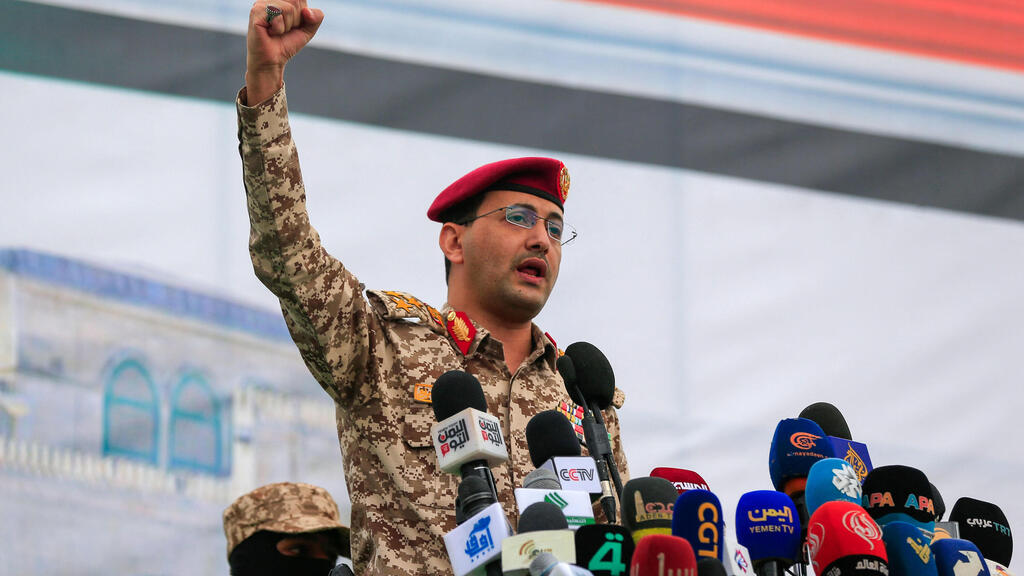
Houthi military spokesman Yahya Saree
(Photo: Mohammed HUWAIS / AFP)
Some users expressed frustration that his briefings are delivered only in Persian and called for an Arabic-language spokesperson to be appointed as well. For now, Tajik holds no formal permanent position beyond his role as spokesman for the current conflict.
But as past precedent shows, a temporary propaganda post can quickly turn into a lasting icon — especially in a conflict increasingly defined by both battlefield developments and the information war that surrounds them.