


The United States has intensified its campaign around Bandar Abbas, striking roads, bridges, rail lines, tunnels and communications infrastructure in an effort to sever the supply routes feeding Iran’s main naval base on the Strait of Hormuz.
Over the past two nights, U.S. attacks have focused on the strategic port city, capital of Iran’s southeastern Hormozgan province and home to a central base of Iran’s Revolutionary Guard Corps navy.
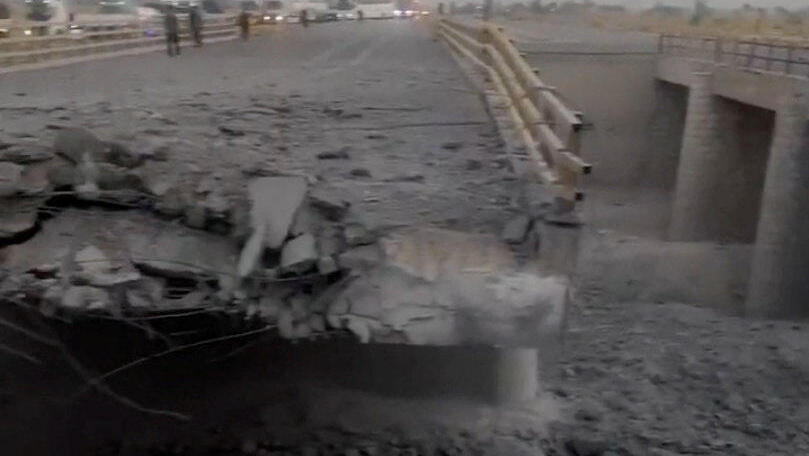
Footage of the bridges destroyed in Iran


The strikes followed Tehran’s refusal to abandon its demand for control over passage through the strait and the collection of transit fees, as Iranian forces began attacking vessels that did not follow routes designated by the IRGC.
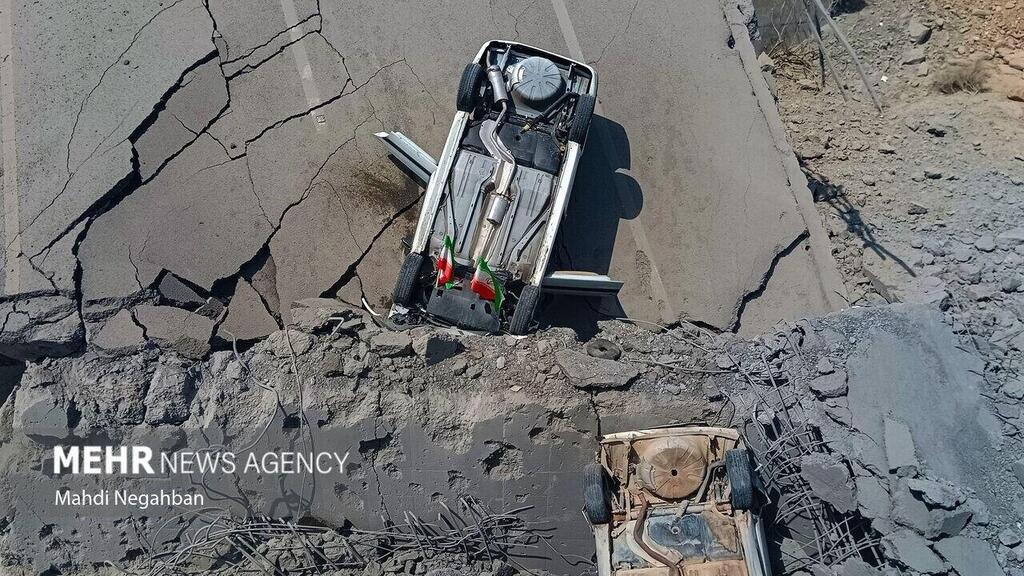
Iranian reports said the United States had struck roads, railways, tunnels, communications facilities and, most prominently, a series of bridges connecting Bandar Abbas with the rest of the country.
The goal appears to be the isolation of the port and the disruption of Iran’s ability to transport military equipment, fuel and reinforcements to forces operating around the Strait of Hormuz.
Bandar Abbas is critical to Iran’s ability to project power through the strait and across the Persian Gulf. Its naval installations support the missile boats, drones, submarines and coastal systems used to threaten or control commercial shipping.
By attacking the roads and infrastructure leading into the city, the United States is targeting not only individual military sites but the wider logistics network that allows those forces to continue operating.
Cutting the routes to Bandar Abbas
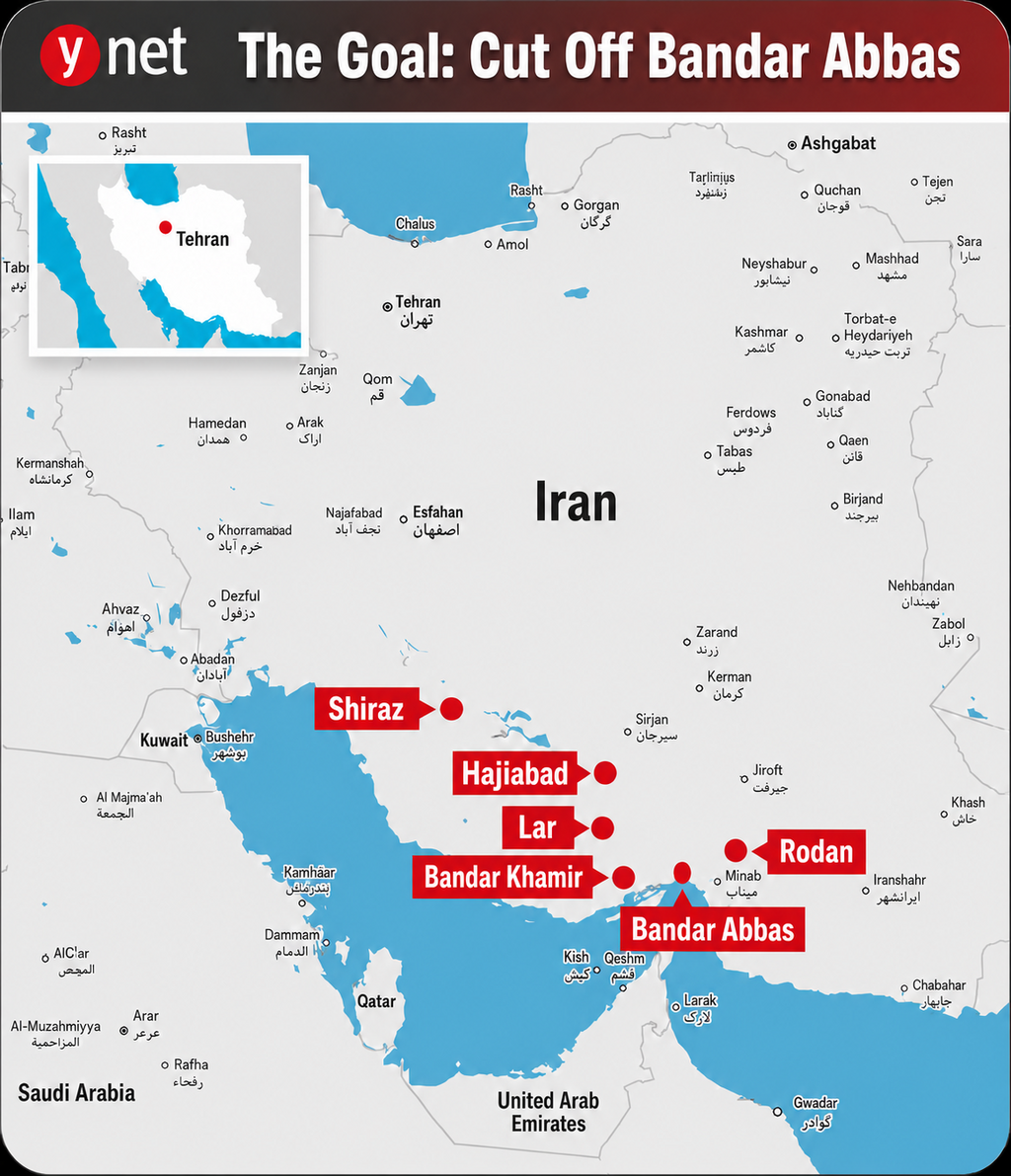
The bridges reportedly attacked sit along several of the most important routes linking Bandar Abbas to central, western and southeastern Iran.
One of the targets was the Kahurestan Bridge on the Kahurestan-Lar road, a major overland artery connecting the port with the country’s interior.
The Geryeh Bridge, located on the Bandar Abbas-Khamir-Lar route, serves as a key crossing in Khamir County and supports heavy truck and logistics traffic along the western approach to the city.
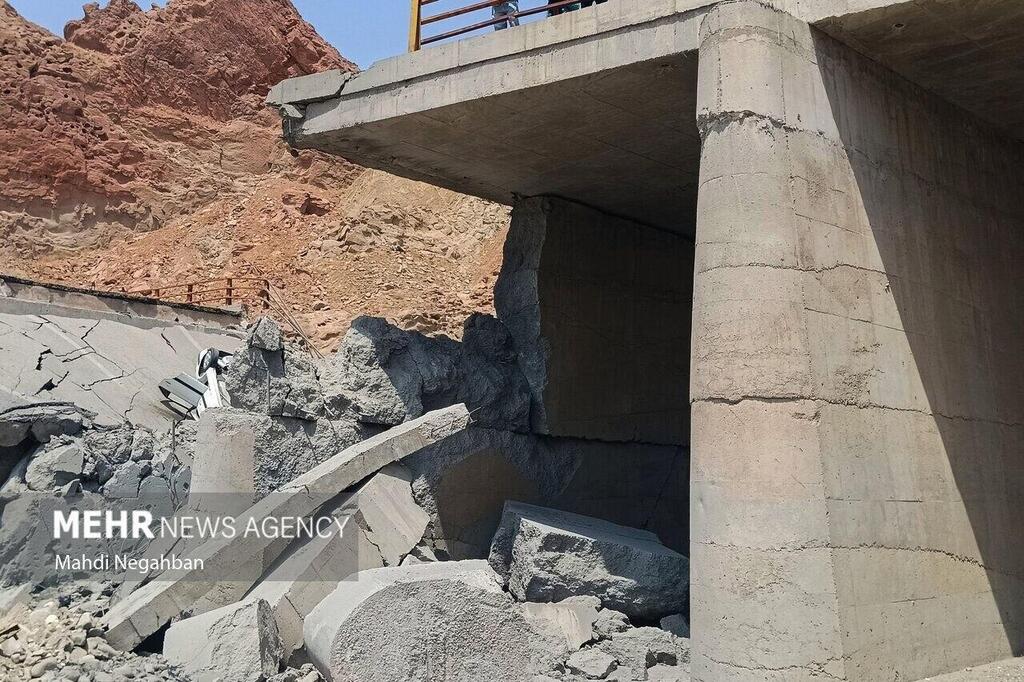
The Bandar Abbas-Rodan bridge struck in Iran
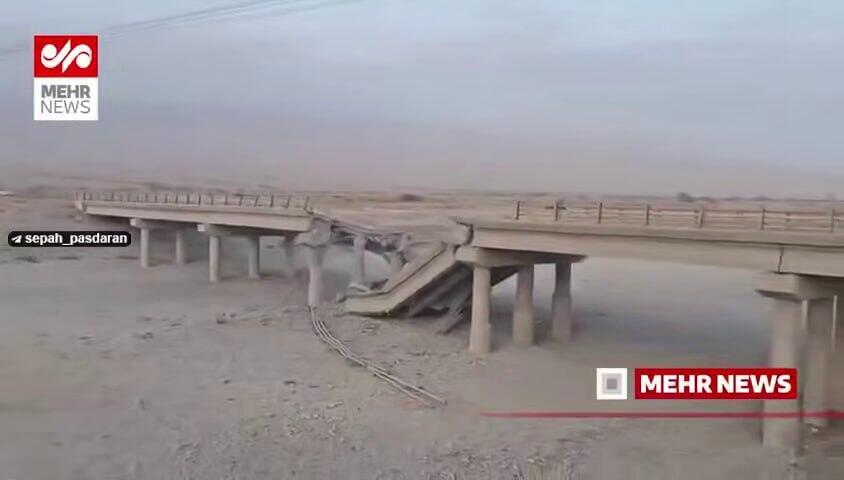
Bandar Abbas-Hajiabad road
Another bridge on the Bandar Abbas-Shiraz route connects the Gulf port directly with Shiraz and the national road system. Striking it could sharply restrict one of the most important commercial and military transport corridors leading north.
The Latidan Bridge, built over the Kol River, connects coastal communities west of Bandar Abbas and forms part of another route into the port.
The Maru Bridge, located near the village of Maru on the road toward Bandar Khamir, serves as an alternative local route that could otherwise be used to bypass damage on the main highways.
A bridge under construction on the new Kashar route between Bandar Khamir and Bandar Abbas was also reportedly attacked, apparently to prevent it from becoming an alternative supply or evacuation route.
The Shur Bridge lies along Highway 71, which connects Tehran with the Persian Gulf through Hajiabad and Bandar Abbas. Damage there could block one of the fastest routes between central Iran and the southern coast.
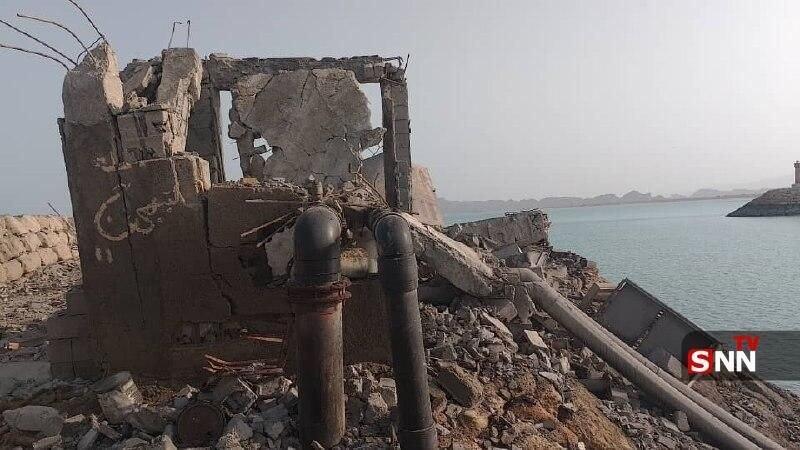
The desalination facility struck in Iran
The Abnama Bridge, north of Minab near Rodan, connects the eastern transport corridor leading toward Rodan and Jiroft. Strikes there were intended to disrupt access from southeastern Iran.
Additional points along the Bandar Abbas-Rodan and Bandar Abbas-Hajiabad roads were also reported hit.
Together, the attacks suggest a coordinated effort to isolate Bandar Abbas from several directions rather than merely damage individual structures.
Railways and communications also targeted
The United States also struck rail lines connected to the port.
Disabling the railway network prevents commercial containers from moving from Bandar Abbas toward central Iran, but it also restricts Tehran’s ability to transfer heavy military equipment south toward the strait.
U.S. forces earlier attacked the office of Iran’s Communications Regulatory Authority in Bandar Abbas, which oversees communications networks, operator licensing and management of the country’s radio-frequency spectrum.
Iranian officials said subsequent strikes damaged four points in Hormozgan province’s communications network.
The attacks indicate that Washington is targeting the command, transport and communications systems supporting Iranian operations, not only weapons or military personnel.
Maritime blockade adds pressure
Alongside the airstrikes, the United States has imposed what amounts to a maritime blockade on Iranian ports and coastal areas in an effort to increase economic pressure on Tehran.
U.S. Marines have boarded and searched commercial vessels, turned ships back and, in at least one case, disabled a vessel that failed to comply with American instructions.
The combined campaign places pressure on Iran from both land and sea: Roads and railways are being severed, while vessels approaching or leaving Iranian ports face interception.
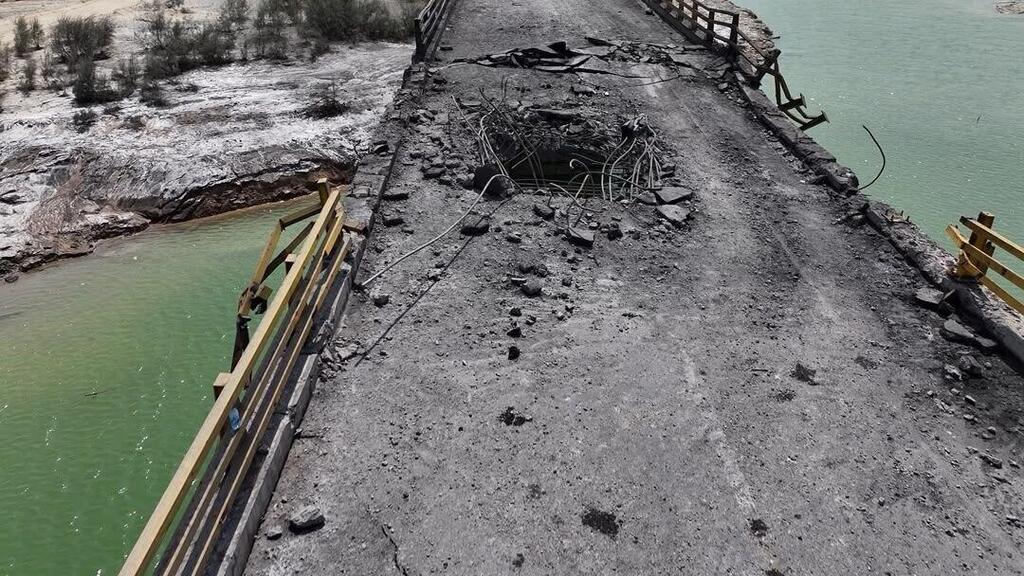
The bridges on the Bandar Abbas-Lar route and near Bandar Khamir struck by the US
Iran has reported deaths and injuries, major disruptions to transportation and communications, longer travel times and growing difficulty moving fuel, equipment and goods.
The escalation has also pushed global oil prices higher, reinforcing Iran’s principal source of leverage over President Donald Trump and the United States.
Iran accuses US of hitting civilian infrastructure
Many of the facilities attacked by the United States are dual-use infrastructure, serving military purposes while also supporting civilian communities and commerce.
Iran has accused Washington of violating international law and endangering civilians.
Iranian officials said a strike on a desalination facility in Hormozgan province cut water supplies to about 10,000 people.
US strikes in Iran
(Video: CENTCOM)
“The government stands with the residents of the south to the end and thanks them for their patience and perseverance,” an Iranian government spokeswoman said following the repeated U.S. attacks in the region.
Road, rail and communications damage has also affected civilian travel and commercial activity around one of Iran’s most important ports.
Washington, however, views the same infrastructure as essential to Iranian military operations around the strait.
Missile, drone and naval facilities in the crosshairs
The infrastructure campaign is only one part of the U.S. operation.
Unmanned vessels have also reportedly attacked facilities used by Iranian submarines and ships.
U.S. Central Command said its strikes were targeting Iran’s military capabilities, including missile and drone facilities and other sites used to threaten maritime trade.
The attacks are aimed at degrading Iran’s ability to launch missiles and drones, deploy naval forces and maintain surveillance over the Strait of Hormuz.
The strait is one of the world’s most important energy corridors, and disruption there has immediate consequences for global oil and gas markets.
Is Washington preparing for a ground operation?
Five days ago, Trump said the United States would “take control of the Strait of Hormuz.”
Since the war began, he has held several discussions about possible ground action inside Iran.
The current pattern of strikes carries some of the characteristics of preparation for a limited operation around Bandar Abbas. By destroying bridges, railways and supply routes, the United States would make it more difficult for Tehran to reinforce the city or move forces into the area.
That does not necessarily mean a ground operation has been approved.
Public opinion in the United States remains strongly opposed to a wider war, while significant opposition also exists in Congress and the Senate.
For now, the likelihood that Trump would risk American troops in a major ground campaign appears limited.
A smaller, tightly defined operation linked to the strait, however, cannot be ruled out based solely on the nature of the current strikes.
Iran threatens regional infrastructure
Iran has warned that if U.S. attacks on its infrastructure continue, it will destroy civilian infrastructure across the Middle East.
That threat has already been reflected in attacks elsewhere in the Gulf.
In Kuwait, an Iranian attack hit a power generation and desalination facility, forcing authorities to activate an emergency plan to maintain the stability of the country’s electricity network.
Iran’s attacks on Bahrain, Kuwait and other Gulf states suggest Tehran intends to impose regional costs for the American campaign against its southern infrastructure.
Travel warnings and negotiations continue
U.S. embassies across the region have issued travel warnings for Americans living in Israel and Arab countries, as well as those planning to visit.
The advisories cite heightened tensions and the possibility of unpredictable escalation.
At the same time, according to Washington, Tehran continues to hold negotiations with the United States and is seeking the restoration of a ceasefire.
That leaves two tracks moving in parallel: intensifying military pressure around Bandar Abbas and the Strait of Hormuz, and continued diplomatic contacts intended to halt the conflict.
For now, the operational focus is clear.
The United States is attempting to isolate Bandar Abbas, weaken the IRGC’s naval logistics and reduce Iran’s ability to threaten shipping through the strait. The unanswered question is whether those attacks are intended only to contain Tehran’s forces, or to clear the way for a more direct operation.