

On Beirut’s coastline under the open sky, Pope Leo XIV on Tuesday morning celebrated a massive mass attended by some 160,000 people — part of his first foreign visit since his May appointment. The gathering took place amid widespread concern that fighting between Israel and Hezbollah could flare up again at the end of the papal visit later in the day.
Delivering a message of peace, the Pope urged an end to attacks on Lebanon. “May the attacks and acts of hostility cease. We must recognize that armed struggle brings no benefit. While weapons are lethal, negotiation, mediation and dialogue build,” he said. “From economic hardship to violence and conflict — many problems have marred Lebanon’s beauty. We must not despair or submit to spreading evil, but rather unite our efforts to restore this land’s glory.”
Pope leaves Lebanon after visit


Lebanon now faces dramatic decisions about its future, most notably the pledge by President Michel Aoun to gather all weapons in the hands of state institutions — a move aimed at disarming Hezbollah. The Shiite organization has strongly opposed the plan, vowing to thwart any such step. That standoff could spark a confrontation either between Hezbollah and the Lebanese army; or, if the plan fails, between Hezbollah and Israel.
Against the backdrop of fears over a breakdown of the ceasefire with Israel, Prime Minister Benjamin Netanyahu and Defense Minister Israel Katz met Tuesday with U.S. Middle East envoy deputy Morgan Ortagus at the Prime Minister’s Office in Jerusalem. The meeting comes as Washington increases pressure on the Lebanese government to order the army to disarm Hezbollah — so far without success. Ortagus is expected to travel to Beirut later this week.
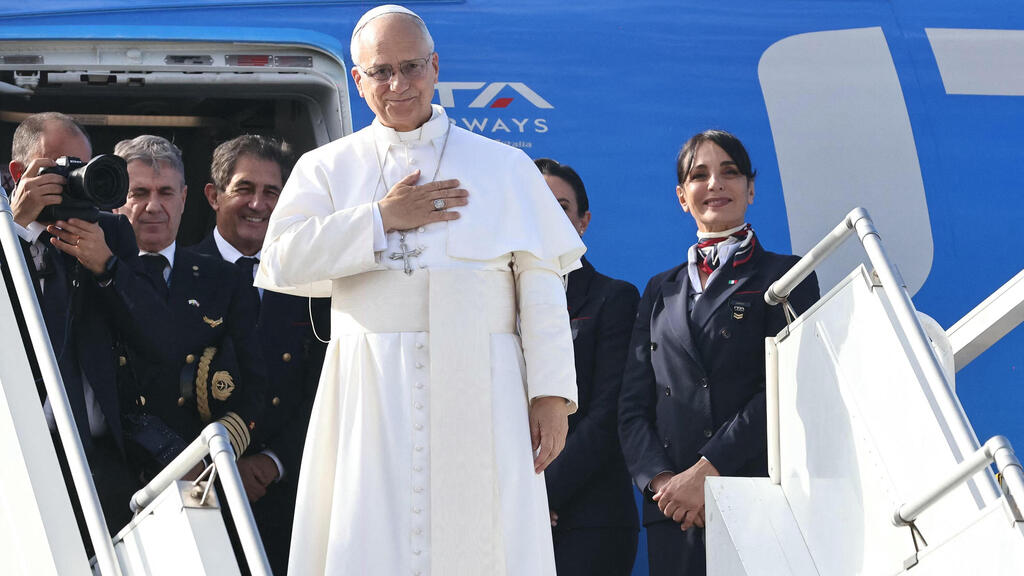
Earlier today, the Pope visited the site of the 2020 explosion at Beirut port — one among many crises to strike Lebanon in recent years. He prayed there and met families of the victims. That marked the formal close of his historic visit, and many now fear a sharp security escalation with his departure, viewing his presence as a kind of protective buffer during a time of high tensions between Israel and Hezbollah.
On Saturday, before the Pope’s arrival, the Saudi newspaper Asharq Al‑Awsat published an article on Lebanon’s mounting anxiety over what will follow his visit. The piece described “defining weeks” ahead for Lebanese across religious communities and social classes, amid reports that Washington had drawn a firm deadline for disarming Hezbollah by year’s end.
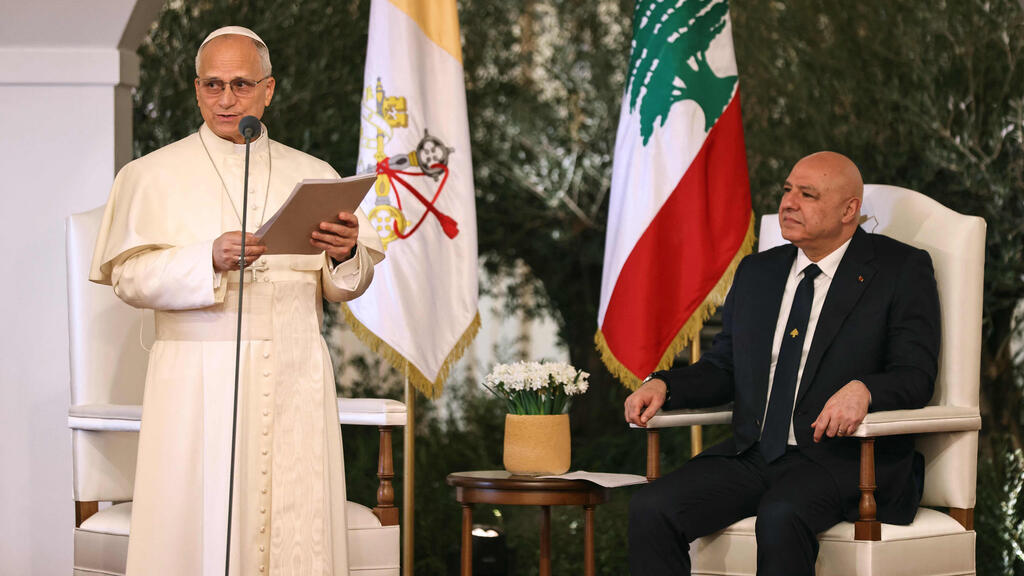
Pope meets with Lebanese President Joseph Aoun
(Photo: Ibrahim Amro / AFP)
The article noted a “collective fear” spreading across Lebanon, affecting people’s personal decisions — from work trips and social events to even everyday planning. Karim, a Lebanese researcher living in Paris, told the newspaper he postponed his upcoming trip home precisely because of the uncertainty he expects after the Pope leaves. Many Lebanese reportedly associate the end of the year with possible political and security changes and prefer not to be in Beirut until the situation clarifies.
Misa’a, a schoolteacher in the Tyre region of southern Lebanon, told the newspaper: “When we talk at school about upcoming activities or plans, we hear the same phrase — ‘Let’s wait until after the Pope’s visit.’” She added that families are now discussing whether security conditions will hold until year’s end or shift drastically. Nadeen, a nurse at a hospital in Beirut’s Dahieh district, said some patients are postponing nonurgent surgeries until after the new year.
Reception for the Pope in Beirut
(Photo: Reuters)
Psychologist Daoud Faraj analyzed the mood. “People connect the fate of the country with two events — the Pope’s visit, which many fear will be followed by escalation, and the end of the year, which coincides with U.S. deadlines regarding Hezbollah’s disarmament," he said. "In the absence of calming official declarations, Lebanese live in countdown mode. We’re talking not just about fear but a phobia of war — a phobia rooted in real data.” He explained that many act based on past experience, split between those who see weapons as security and those who view them as a source of danger.
Recent Lebanese media and social‑media posts allege that Hezbollah’s arms and militiamen indeed pose a concrete threat. An unsigned letter circulating this week claims that fighters — including a senior figure named Wafik Spa — have been visiting a building in the Beirut‑suburb village of Sin el‑Fil, closing off its street, checking the identities of passers‑by, and positioning themselves as a potential target. The letter reportedly came from neighbors who fear Hezbollah’s presence endangers them.
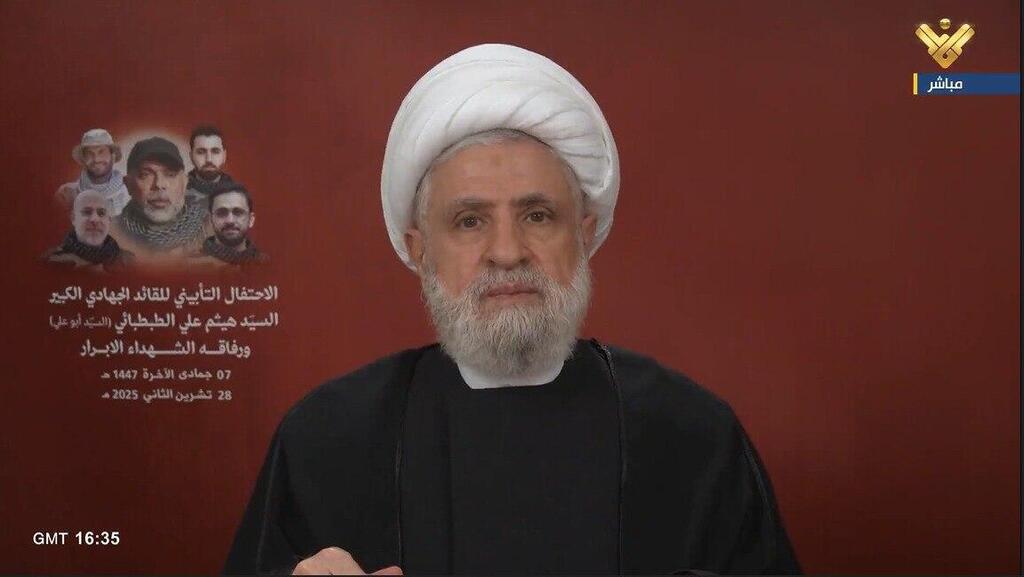
Hezbollah Secretary‑General Naim Qassem
Sin el‑Fil municipality responded that it had not received such a complaint, and said the suburb’s mayor contacted relevant authorities to handle the rumors. The municipality also urged caution, calling on the public not to spread unverified reports to avoid causing panic. The building’s owner denied to MTV Lebanon — a network critical of Hezbollah — that Spa or any other terrorists had visited or leased the building. “Security cameras show no movement of any Hezbollah elements,” he said, explaining that a relative of Spa lived there two years ago with her children. He added that authorities are investigating who is behind the letter, and said its sole purpose seems to be to “generate confusion and chaos.”
On Friday, in a speech where he vowed retaliation against Israel for the killing of Hezbollah’s military chief Haytham Ali Tabatabai, the group’s secretary‑general Naim Qassem said he hoped that Pope Leo’s visit would help bring an end to the near‑daily Israeli strikes in Lebanon.