

On the morning of Oct. 7, 2023, Oz Davidian woke at his home in Moshav Maslul in southern Israel to an unusually heavy barrage of rockets. He and his wife gathered their daughters and searched for shelter. During a lull, as they collected water and diapers, a message appeared in the family WhatsApp group.
His sister Dikla, who was near the Nova music festival site, said several terrified young people had reached her husband, who owns a farm in the area, and were asking for help. “I’ll be out in a few minutes,” Davidian replied. He told his wife and daughters to remain at home, threw a six-pack of water into his pickup truck and drove out. Instead of taking the roads, he drove through open terrain. In retrospect, he says, that decision may have saved his own life as well.
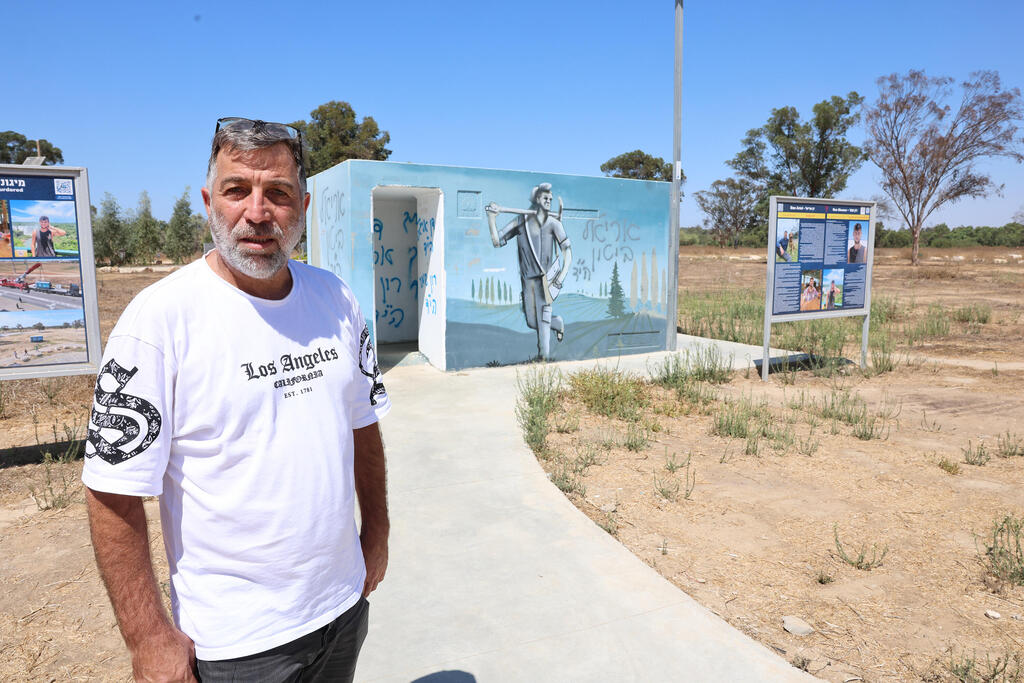
‘Not every location still had people alive’
At first, Davidian did not understand what he was driving into. Near his brother-in-law’s farm, he encountered terrified young people who had fled the festival and only then began to grasp what was happening.
“I told my brother-in-law and my nephews: Load everyone up. I know the terrain, I have a four-wheel-drive pickup, I’m going in to get the kids out.”
He entered through a wadi. Then he went back in. And again. With every trip, the scale of the disaster became clearer: terrorists, relentless gunfire, explosions and young people running for their lives. Whenever he saw them, he stopped and called out: “My name is Oz. Come, I’m here to get you out.”
They crowded into his truck, and he drove them to safety, sometimes under fire. Amid the chaos, Davidian began taking photographs. Selfies with survivors, and later a photograph with Democrats party leader Yair Golan, became part of the visual record of that day.
He says the pictures served two purposes. The first was chillingly simple: he thought they might be the last photographs ever taken of those in the vehicle, and if they were killed he wanted people to know who had been inside.
The second was a plea for help. “I sent them everywhere, to every WhatsApp group I had, so people would understand the scale of what was happening, so they would send reinforcements, send me help,” he says. The images did reach others, some of whom headed south after seeing them.
Davidian also handed his phone to the young people he rescued. “I told them: Everyone gets 10 seconds on the phone. ‘Dad, Mom, I’m alive. I’m on my way to Moshav Maslul or Moshav Patish.’”
Residents in the two communities gave the survivors food, water, clothing and assistance, and helped them contact their families. “There are many kids who may have come back alive from the festival, but they didn’t come back to their lives,” Davidian says. “I think none of them returned to who they were, and they won’t. It’s hard for all of them. Some are really suffering much more.”
Meanwhile, more locations began arriving on Davidian’s phone. Survivors passed his number to friends still hiding in the area, and soon parents, siblings and friends were contacting him as well.
One after another, locations appeared on his screen, people hiding and waiting for someone to come. Davidian says he went to every one of them. Not every location still held someone he could save.
“I didn’t give up on a single location,” he says. At some he found people alive. At others he found bodies. Some were already empty, apparently because those hiding there had been forced to flee.
Before each trip, he opened the locations, mentally arranged his route and drove from one point to the next. Davidian entered and left the danger zone 15 times and rescued 120 people alive. Three years later, that number has not erased the thoughts of those he could not save.
“It’s something that doesn’t leave me,” he says through tears. “There are locations I reached and there was no one alive. A lot of times I think, maybe if I had driven from this side, I could have reached more people in time.”
When told that he did everything one man with one pickup truck could possibly have done, Davidian agrees. But what his mind understands is harder for his heart to accept. “It’s true, I did everything I could. I didn’t give up,” he says, before returning once again to the “maybe” that continues to gnaw at him.
He also struggles to accept the label of “hero” for himself alone. To him, that day was filled with people who fit that description: civilians, police officers and soldiers. “I think we are a country of heroes,” he says. “I met many heroes who came into the area. Not all of them survived. Not all of them are alive.”
Post-trauma
After Oct. 7, Davidian had little time to return home and process what he had experienced. He was called up for reserve duty, in part because of what he had witnessed and footage captured by cameras in his vehicle. For nearly four months, he assisted security forces in the festival area, including with locating bodies and identifying evidence.
He later continued his reserve service with the IDF’s Gaza Division. It was then, after the first mission had ended, that something inside him broke.
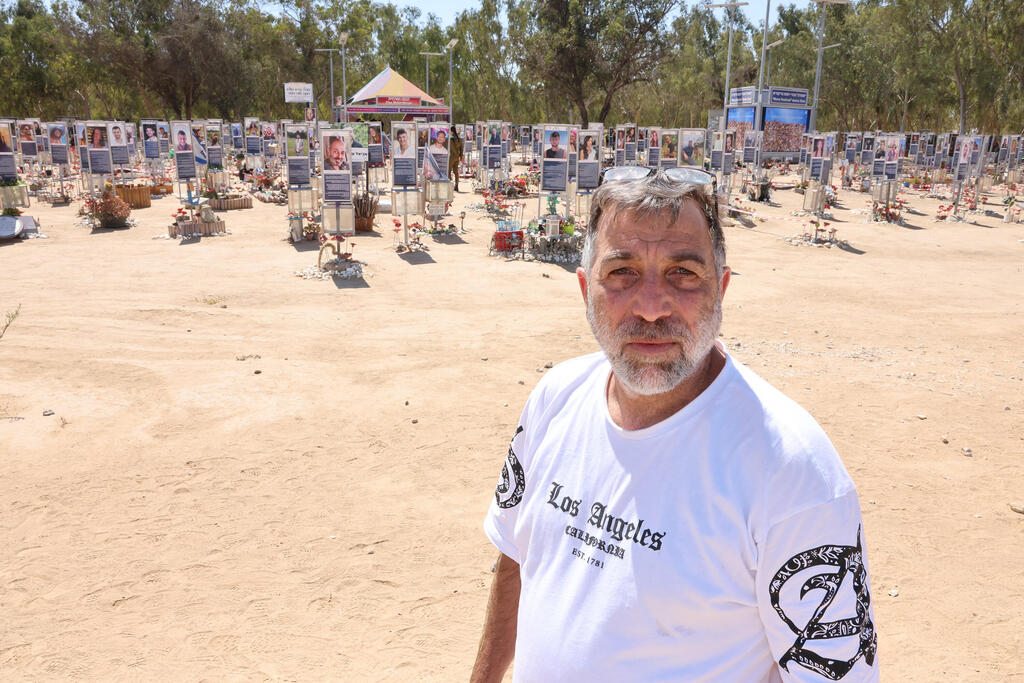
Oz Davidian at the Nova massacre memorial site in Re’im
(Photo: Gadi Kabalo)
While driving near Kfar Aza and Re’im to deliver food to soldiers, Davidian suddenly felt pressure throughout his body. His heart began racing and heat spread through him. Davidian, who was over 50 and a smoker, was convinced he was having a heart attack.
He told his wife he did not feel well, messaged his battalion commander that he was going home and left. Those around him understood what was happening before he did.
When he arrived home, his wife and daughters were waiting. His battalion commander also came, and Davidian was later referred for treatment. “That was the day I understood,” he says. “They explained to me that it was post-trauma and that we were going to start treating it.”
Since then, he has undergone psychological and psychotherapeutic treatment, remains under psychiatric supervision and takes medication. After about a year and a half, he stopped treatment for several months because the process itself became too difficult, then returned.
He remains in treatment today. “The medication helps, the treatment helps, the conversations help,” he says. “Those conversations are incredibly hard, but they really save lives. It’s very difficult to start treatment or to say that you’re being treated. If I hadn’t collapsed out there, I wouldn’t have thought I needed it.”
There are also different moments in his life now. The 120 young people he rescued did not disappear from it. They share a WhatsApp group, and Davidian calls them “my children.”
Tehila, one of the survivors, gave birth to a son about a year and a half after the massacre and named him Oz after Davidian. Shani Arditi, whose photograph in the back of his pickup became one of the images associated with the rescue efforts, has since married.
But for some survivors, time has not turned survival into a return to normal life. “There are many of my kids, and other kids too, who may have returned alive from the festival, but they didn’t return to their lives,” Davidian says. “I think none of them returned to themselves and they won’t return to themselves. It’s hard for everyone. Some are really suffering more.”
He tries to help them in their dealings with state authorities and remains in contact with bereaved families, including families who contacted him that day and asked him to reach their children, only for him to arrive too late.
Oct. 7 has not ended inside his own home either. His wife and daughters were in Maslul while he drove toward the festival. They heard the gunfire and explosions, knew terrorists were in the area and waited to find out whether he would return.
They too have been in treatment ever since, he says. “I’m not the only one who experienced it,” he says. “We’re not just a family with post-trauma. We’re a country with post-trauma.”
‘I don’t know if I’ll be myself again’
Three years later, Davidian says the intensity with which Oct. 7 occupies the public consciousness may be fading, but the event itself cannot be forgotten.
He says he deliberately avoided politics for three years and still wants the memory of the massacre kept separate from election battles. “I think this event is too big for us to use it for politics,” he says. “It hurts me that bereaved families and heroes are being used too, with people attacking one another for political purposes.”
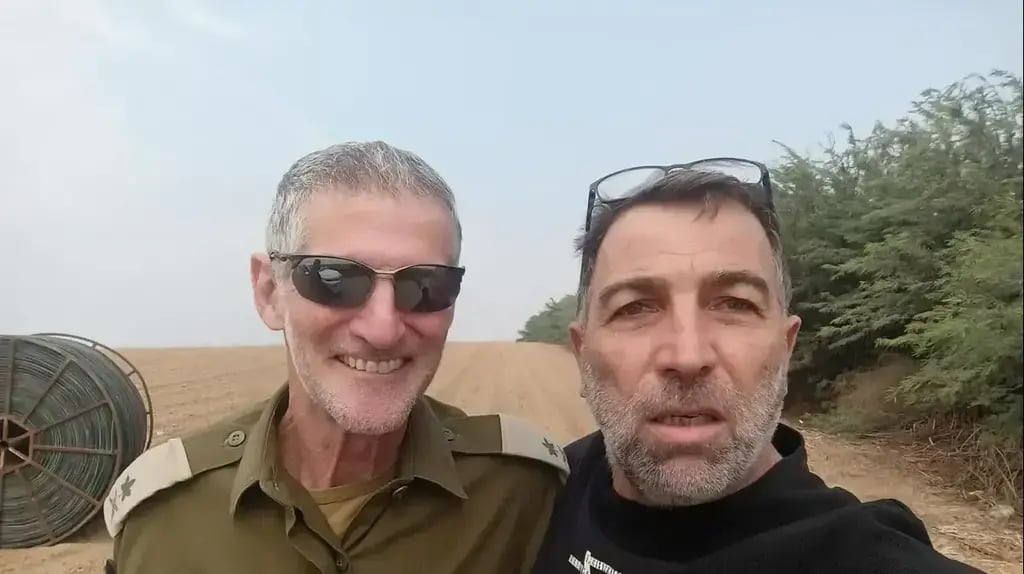
Oz Davidian and Yair Golan on Oct. 7, 2023, in a photo that became the subject of a conspiracy theory
He is particularly disturbed by conspiracy theories surrounding the events of that day. Among them are claims surrounding his photograph with Golan, which circulated online in versions in which Davidian had been cropped out. In Golan’s glasses, the reflection of Davidian’s pickup can be seen.
Some conspiracy theories claimed the pickup, the same vehicle Davidian used to rescue 120 people, belonged to terrorists.
Davidian says he took the photograph himself during the rescue operation after encountering Golan in the field. For him, the acts of courage on Oct. 7 did not belong to one political camp or another. “When we rescued people, we didn’t ask them about their political views,” he says. “We rescued them because they are our children.”
This Oct. 7, Davidian is not expected to spend the day, as he usually does, with his family and the survivors he rescued. He is due to be at the United Nations, where he was invited to address hundreds of diplomats and ambassadors and describe firsthand what he saw and experienced.
He says he initially did not want to travel, but was persuaded that there was value in telling the story there. Three years from now, he hopes to be in a different place. Not necessarily the person he was before that morning. He no longer takes that possibility for granted. But he hopes at least to be closer to the life he once had.
“I don’t know if I’ll manage to return to myself, but I really hope I’ll return to a life fairly similar to the one I had,” he says. “At the end of the day, I’m a moshavnik. A person who gets up in the morning, in the moshav, at home, a wife, children, like any ordinary person.”
And he has one more hope: that three years from now, the country will look different too. “More united, more cohesive,” he says. “Fewer divisions, less polarization, less tearing each other apart and turning one against another. Because in the end, we are all brothers.”
“I may be only one person,” he says, “but whatever I can do, I will do.”