

Kurdish-led forces in northeastern Syria said Tuesday they were forced to withdraw from the al-Hol camp, which holds thousands of families linked to Islamic State terrorists, in order to defend Kurdish areas threatened by advancing forces loyal to Syrian President Ahmad al-Sharaa, as fighting with government forces continued.
The Syrian Democratic Forces, or SDF, said the pullback followed the collapse of an agreement to hand control of Syria’s Kurdish autonomous region to Damascus and came after overnight clashes between SDF fighters and government forces. Tensions persisted despite a ceasefire announced Sunday.
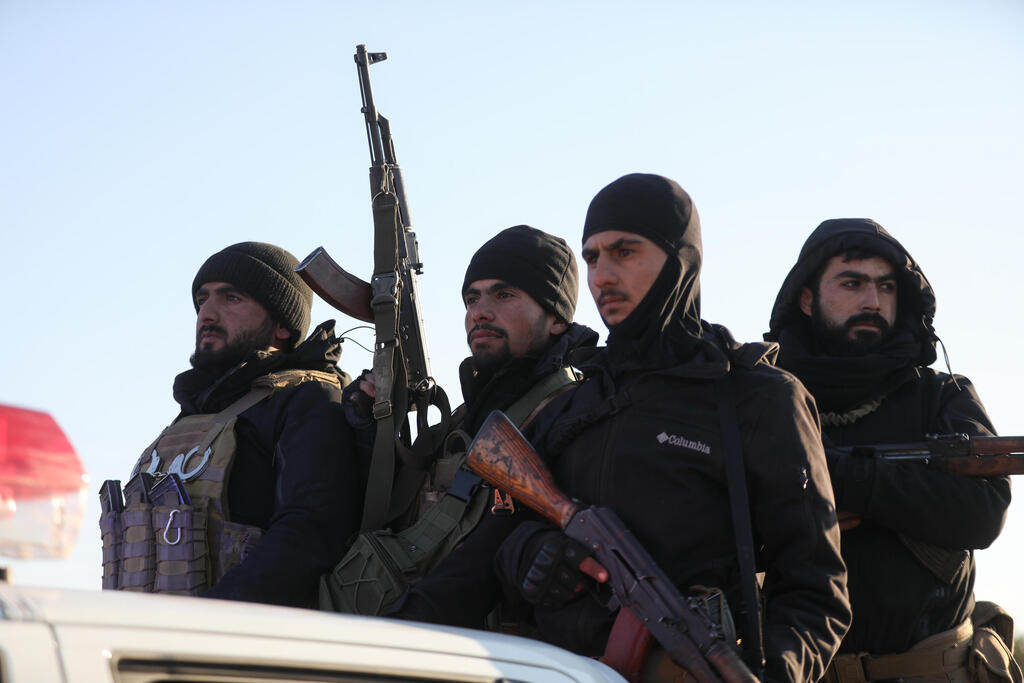
In a statement, the SDF said clashes were taking place near al-Hol camp, which houses thousands of families of Islamic State terrorists. The group said it had halted security operations at the camp and was “redeploying” to protect nearby cities.
The Syrian military said the withdrawal enabled a mass escape of detainees held at the camp, though there was no independent confirmation. An Iraqi network affiliated with the Iran-backed Shiite axis reported that families linked to Islamic State fled the camp, located about 13 kilometers (8 miles) from the Syria-Iraq border.
Al-Hol is the largest detention facility in Kurdish-controlled territory, holding about 24,000 people, including roughly 15,000 Syrians and some 6,300 foreign women and children from 42 countries, including Western states.
Syria’s Defense Ministry said it is ready to assume responsibility for al-Hol and other detention facilities holding jihadists. According to Reuters, the U.S.-led coalition fighting Islamic State has been holding discussions on transferring control of the camp to Damascus.
The developments came days after Syria’s government announced a ceasefire agreement with the SDF following intense fighting in which government forces advanced into Kurdish-held areas. President al-Sharaa said the agreement envisions the transfer of territory, oil and gas fields to state control and the dismantling of the SDF’s military structure, with its fighters integrated into regime security forces — a move widely viewed as a major blow to Kurdish autonomy.
On Monday, the sides traded accusations. Damascus accused the SDF of deliberately releasing Islamic State terrorists from a prison in the town of al-Shaddadi. The SDF denied the claim, saying detainees escaped amid a government attack on the facility — an allegation Syrian authorities rejected.
A U.S. official told Reuters that about 200 Islamic State detainees escaped after the SDF abandoned the prison, though many were later recaptured by government forces. Syria’s Interior Ministry said 120 detainees fled al-Shaddadi and that 81 were later rearrested. The government said it now controls the prison, while the SDF claimed more than 1,500 detainees were released after it lost control.
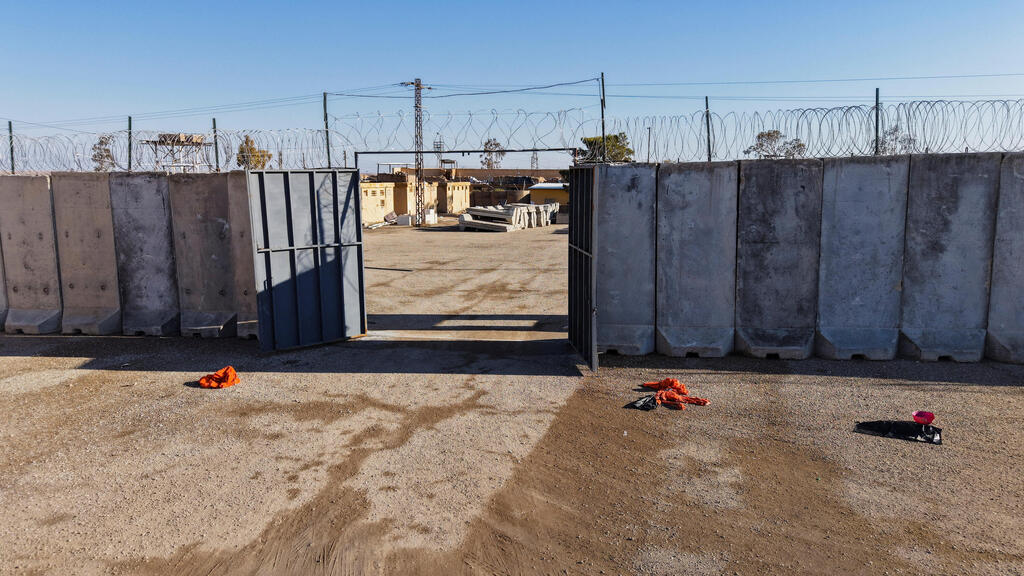
Al-Shaddadi prison
(Photo: REUTERS/Khalil Ashawi)
As part of the ceasefire, Syrian forces deployed across large areas of northern and northeastern Syria vacated by Kurdish fighters, concentrating around Hasakah province, where al-Hol is located. Under the agreement, Damascus is designated as responsible for Islamic State detainees.
On Tuesday, Syria’s presidency said it had reached an understanding with the SDF under which the Kurdish-led force has four days to agree on a plan for the “practical integration” of Hasakah province. There was no immediate comment from the SDF.
The presidency said Syrian forces would remain at the entrances to the cities of Hasakah and Qamishli, rather than entering city centers, if an agreement is finalized. It added that SDF commander Mazloum Abdi would nominate a candidate for deputy defense minister, a governor for Hasakah, representatives to the national assembly and officials to serve in state institutions.
The statement said both sides agreed in principle to integrate SDF military and security forces into Syria’s defense and interior ministries, with discussions continuing on implementation. Civil institutions would also be incorporated into state structures, it said, reaffirming commitments to Kurdish language, cultural and citizenship rights.
Kurdish official Ilham Ahmed said repeated appeals for international intervention had gone unanswered. She said Israeli officials had contacted the Kurdish administration and conveyed that the Kurds were open to receiving assistance “from any party.”
Overnight, the Kurdish autonomous administration declared a general mobilization and called on Kurds from outside Syria to help defend Kurdish areas. Videos circulated on Syrian and Kurdish channels purportedly showing Kurdish supporters on the Turkish side of the border attempting to cross into Syria, while Kurdish media published footage alleging Turkish forces fired at Kurds trying to reach Syrian territory.