

The British government said Friday it is "temporarily withdrawing" its staff from Iran amid heightened regional tensions and the possibility that U.S. President Donald Trump could order a strike on the Islamic Republic.
Britain’s Foreign Office said its ability to assist British nationals in Iran is “extremely limited” and that the embassy is now operating remotely, without physically available consular services, even in emergencies.
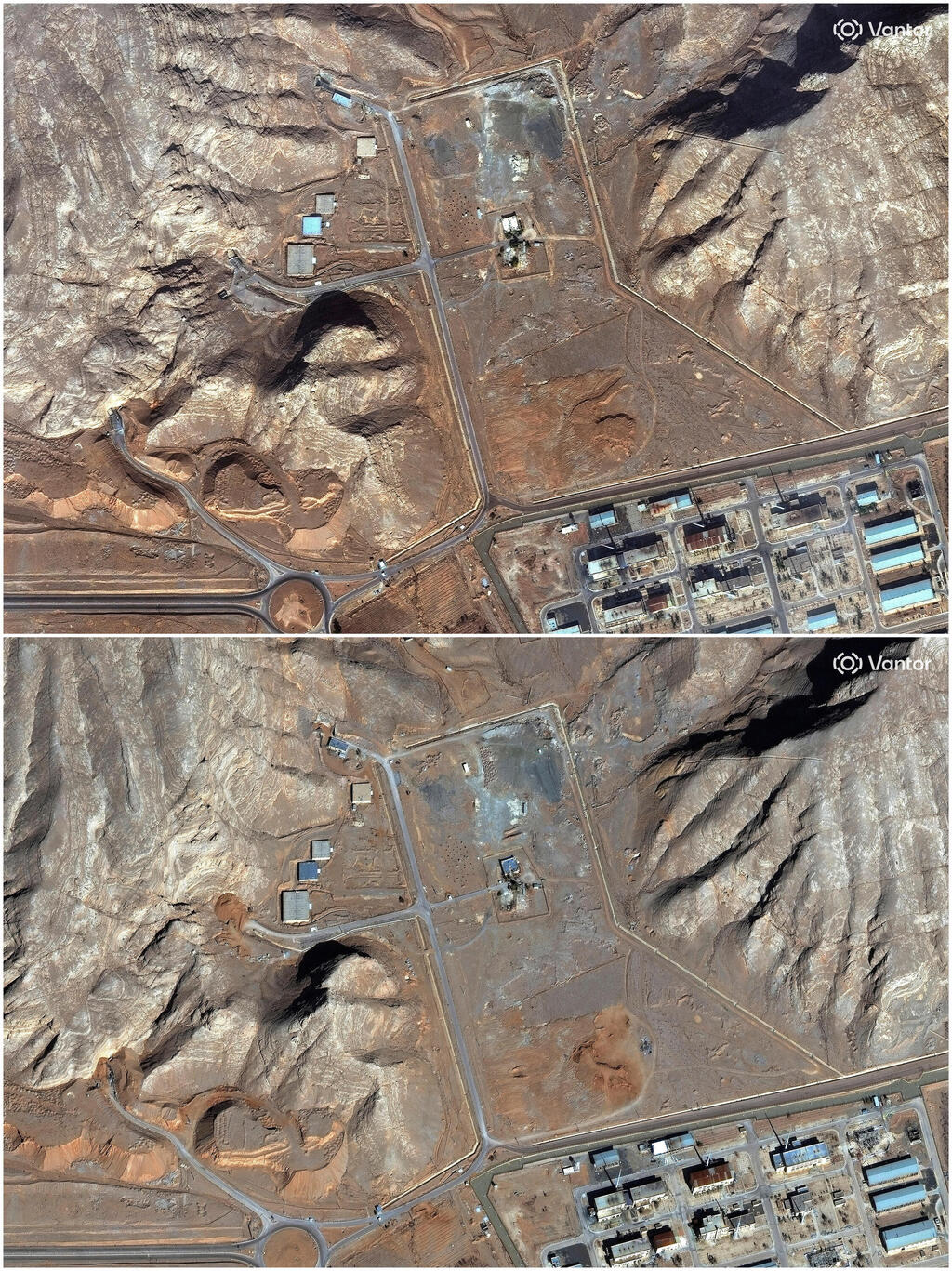
Reconstruction work at Isfahan as seen in satellite images released about two weeks ago. Top to bottom, before the strike and after repair efforts
(Photo: 2026 Planet Labs PBC and Vantor/Handout via Reuters)
Meanwhile, Reuters and The Associated Press reported that a confidential report by the International Atomic Energy Agency sent to member states and reviewed by the news agencies reveals that part of Iran’s most highly enriched uranium, at levels close to weapons-grade, has been stored in an underground area at the Isfahan nuclear site.
It is the first time the IAEA has reported the specific location where uranium enriched to up to 60% purity has been stored. That level is close to the roughly 90% enrichment required to produce a nuclear weapon.
The Isfahan nuclear facility was struck by Israel and the United States during the 12-day war, and its entrances were damaged. However, diplomats who spoke with Reuters said it did not appear that the facility sustained significant damage.
About two and a half weeks ago, satellite images showed that Iran had buried tunnel entrances at Isfahan. At the same time, it reinforced other sites and bases damaged during the summer war.
The images also indicated that Iran recently built a concrete protective layer over a structure at a sensitive military site in Parchin, near Tehran, and covered it with earth, apparently as part of preparations for the possibility that negotiations with the United States could fail.