

King Harald V of Norway died Friday at the age of 89. Harald, who had served as king since 1991 and held a largely ceremonial position for 35 years, was the oldest king in Norwegian history and, since the death of Britain's Queen Elizabeth II in 2022, was also Europe's oldest monarch. His son, Crown Prince Haakon, 53, has now become king.
Harald was hospitalized Monday last week at Oslo's National Hospital because of hemolytic anemia, a condition in which red blood cells are destroyed and broken down in the bloodstream faster than the bone marrow can produce new ones. The Royal Palace in Oslo reported that his condition deteriorated over the weekend and that he received antibiotic treatment for a bacterial infection in his blood. His son, Prince Haakon, now the new king, had served as regent since his father's hospitalization.
Gallery
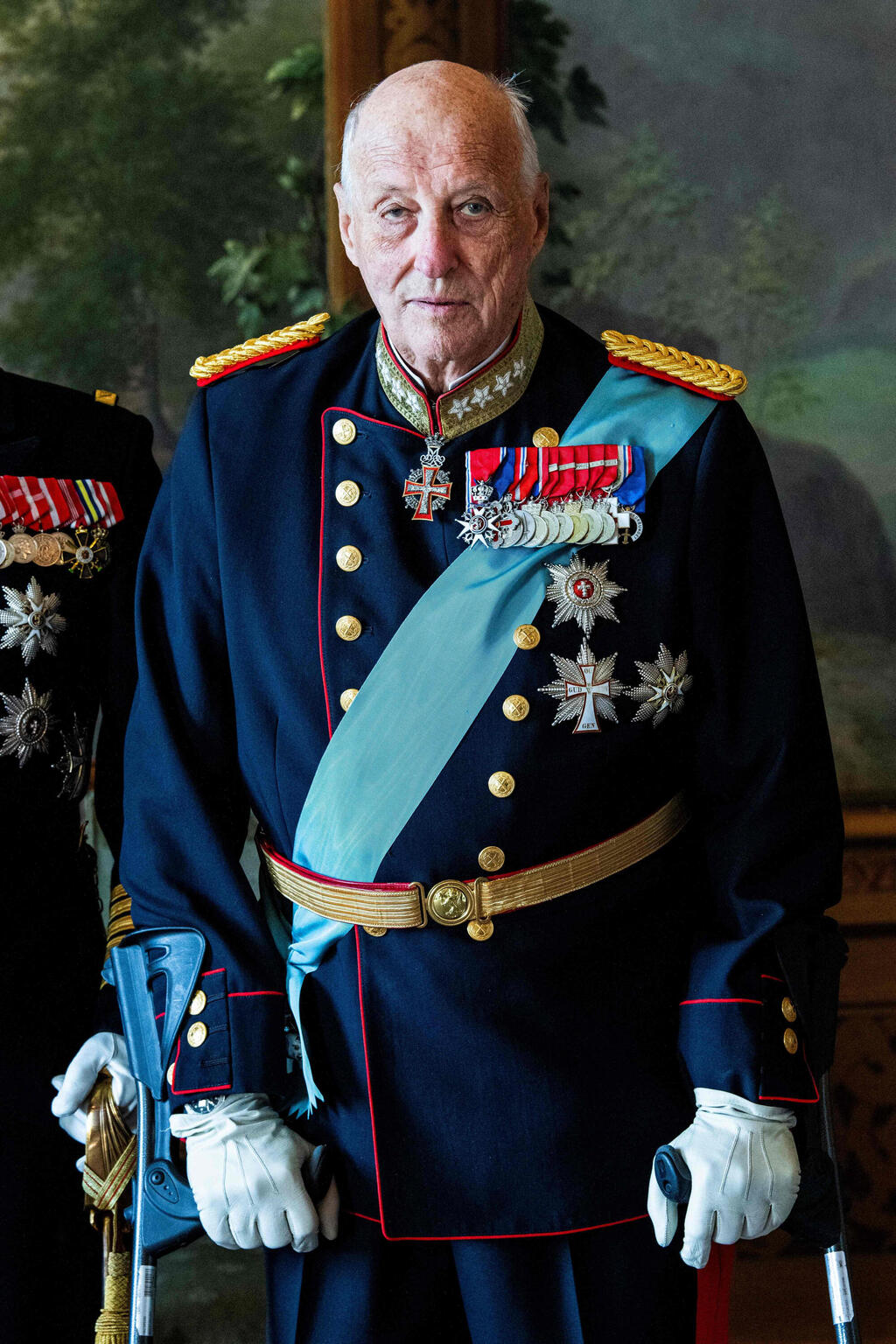
King Harald V of Norway uses crutches during a reception at the palace in Oslo, May 2024
(Photo: Rodrigo Freitas / NTB / AFP)
Harald, a former heavy smoker, suffered from numerous health problems over the years, and his son stepped in for him several times as a result. The first time was between 2003 and 2004, when he underwent surgery after being diagnosed with bladder cancer; the following year, he underwent surgery to replace his aortic valve with an artificial heart valve; and in 2020, he underwent another operation to replace the old valve. That year he was also hospitalized because of breathing difficulties, although his doctors ruled out a connection to COVID-19. In 2024, he was hospitalized again, this time while on vacation in Malaysia, and received a temporary pacemaker, which was later replaced with a permanent one in Norway. In April of that year, the Royal Palace announced that because of his age, he would "regularly" reduce his public duties.
Harald was born Feb. 21, 1937, at Skaugum Estate, the Norwegian royal residence near Oslo, to Crown Prince Olav, later King Olav V, and Princess Märtha of Sweden. Harald was Olav's third and youngest child, but his only son at a time when only males could inherit the throne. He was the first Norwegian king in more than 600 years to be born on Norwegian soil, since Olav IV, who died in 1387. The reason was that for centuries Norway was not an independent kingdom but part of various unions with Denmark and Sweden. When Norway formally gained independence from Sweden in 1905, it chose Haakon VII, Harald's grandfather, as its king. He was originally a member of the Danish royal family, while his son Olav was born in Britain. King Haakon VII's wife and Harald's grandmother was Princess Maud, daughter of Britain's King Edward VII. Because of this family connection, Harald was also 92nd in line to the British throne at the time of his death.
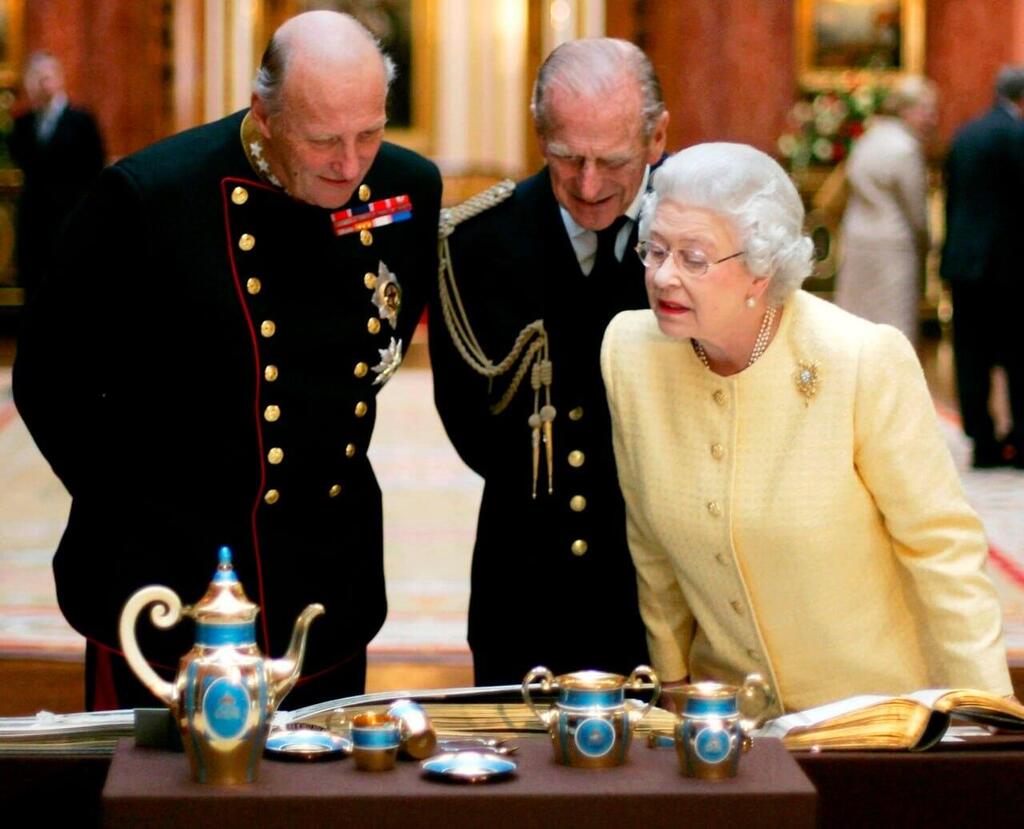
Harald with Britain's Queen Elizabeth II during a visit to Buckingham Palace in 2005
(Photo: AP Photo/Matt Dunham, File)
Harald's childhood unfolded amid the upheaval of World War II. In 1940, when he was just 3, the royal family fled Norway after his grandfather, the king, firmly refused to cooperate with the Nazis who had invaded and occupied the country. The family split up, with young Harald, his mother and his two sisters initially finding refuge in Sweden, which remained neutral during the war. Because of concerns that Sweden was not safe enough for them, they later left for the United States, where they lived in Washington until the end of the war. Harald even attended President Franklin Delano Roosevelt's fourth inauguration in 1945, a few months before Roosevelt's death. His father and grandfather, the king, were in exile in Britain at the time, and the family returned to Norway together after the Nazis were defeated.
Olympic sailing and marriage to a merchant's daughter
About a decade later, Harald's mother, Märtha, died of cancer when he was only 17, a loss that affected him deeply. Harald became crown prince in 1957 at age 20, following his grandfather's death and his father Olav's accession to the throne. As a young student, he attended the Norwegian Military Academy in Oslo and later Oxford in Britain. He was an accomplished sailor and represented Norway at the Summer Olympics three times: in Tokyo in 1964, Mexico City in 1968 and Munich in 1972. He continued competing for decades afterward, and in 2005, when he was already king, his team won a gold medal at the European Championships.
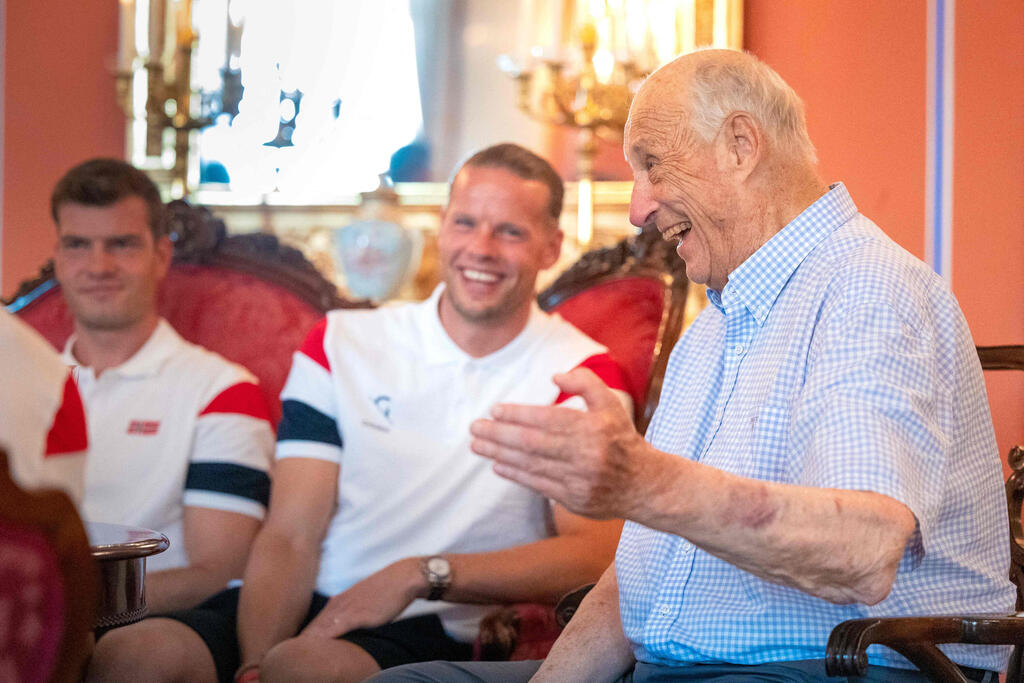
July 13: King Harald V of Norway with members of his country's national soccer team, including goalkeeper Ørjan Nyland, at a reception at the palace in Oslo after they returned from the World Cup following their quarterfinal loss to England
(Photo: Amanda Pedersen Giske / NTB / AFP)
Harald with members of Norway's national soccer team, including goalkeeper Ørjan Nyland, at a reception at the palace in Oslo in July after they returned from the World Cup following their quarterfinal loss to England
In 1968, he married Sonja Haraldsen, a marriage that was considered quite scandalous at the time because she was not of noble birth and was the daughter of a clothing merchant. The marriage followed a nine-year relationship that had been kept secret. King Olav initially refused to allow his son to marry her because of her humble background, but relented after Harald threatened never to marry anyone else, a threat that, if carried out, would have endangered the future of the dynasty. The couple had two children: their elder daughter, Princess Märtha Louise, named after Harald's mother, and Prince Haakon, who has now become king. Norwegian law now grants women the right to inherit the throne, but the change was made only in 1990 and applies only to those born after it took effect, so it did not apply to Princess Märtha Louise.
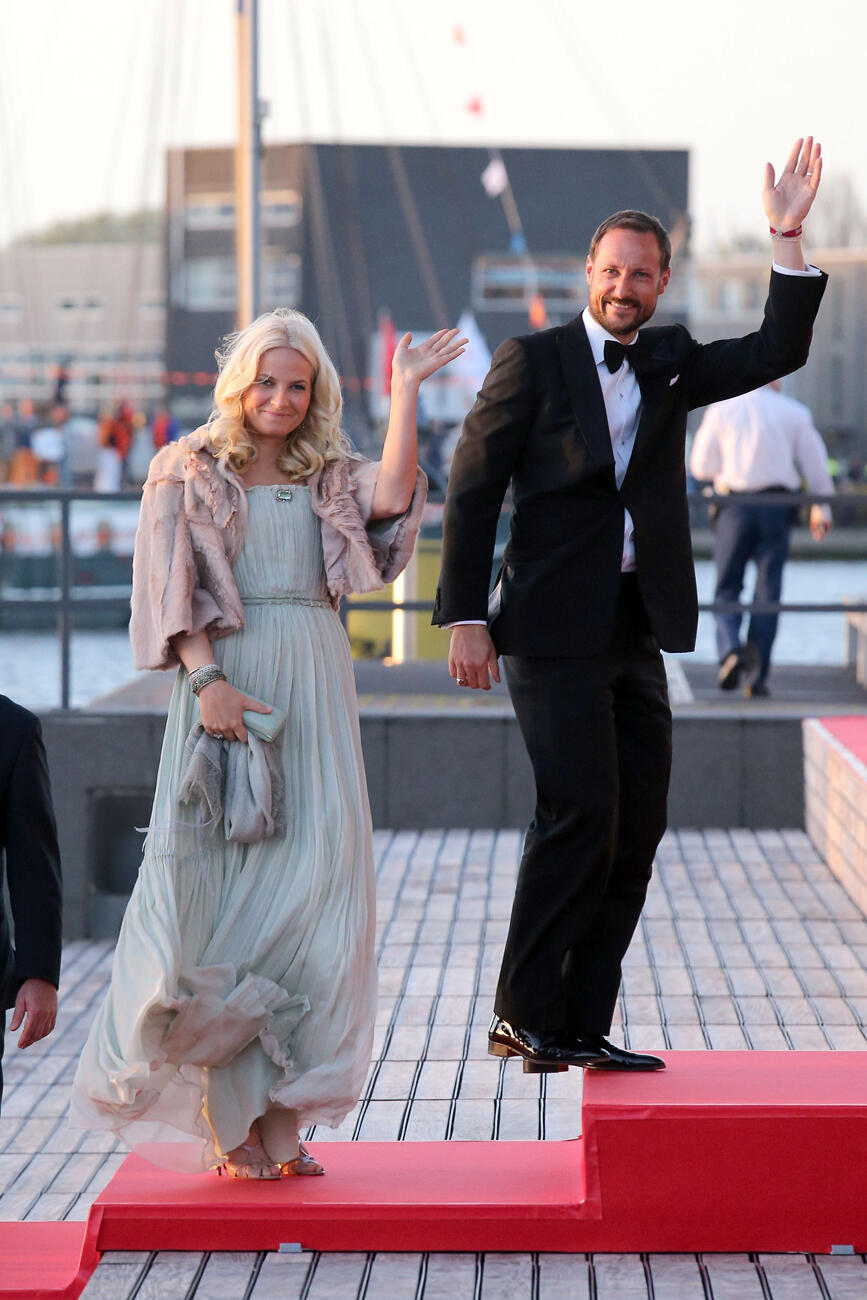
Harald's son, now King Haakon, with his wife Mette-Marit
(Photo: Getty Images)
The king of Norway has primarily ceremonial powers, and Harald is remembered for playing an important role in uniting the kingdom after disasters that struck the country, particularly the mass shooting carried out in July 2011 by far-right extremist Anders Behring Breivik, who killed 77 people, most of them teenagers attending a youth camp organized by Norway's Labour Party on the island of Utøya. Breivik shot them dead after detonating a car bomb in Oslo. King Harald met with victims' families, shed tears at a national memorial service and delivered a special speech the night after the massacre in which he said: "It is important that we stand together now and support one another, and that we do not allow fear to take over."
In a subsequent interview with The New York Times, he played down the importance of his contribution to the country's recovery from the tragedy but said: "I always had the feeling that in times of crisis, that's what we're really here for. It was proven in 1940, and we'll see if it develops the same way this time. You do what comes naturally to you, and if it's right — good. Everything happened very quickly, and you have to act on instinct." In that interview 15 years ago, he also expressed confidence in his son Haakon's abilities, saying Norway "is in good hands." He added that becoming king requires "a lifelong learning period" but stressed that his son had already passed his test when he too delivered a speech to the nation following the massacre: "He had some very good ideas, and he gave a strong speech. He performed very well. We are a very good team, I think."
Wanted to express condolences over Oct. 7 but was barred
Harald never visited Israel. In 2020, it was reported that although he had been invited to the country, he did not include it in a visit to Jordan that year, his first trip to the Middle East. He had received the invitation to visit Israel six years earlier from then-President Shimon Peres during an official visit to Norway in 2014. At a gala dinner Harald hosted for Peres at the palace in Oslo, he said Israel and Norway had a "warm and close friendship" and noted that Norway had voted in 1949 in favor of Israel's admission to the United Nations, thereby recognizing the State of Israel. He also mentioned the Oslo Accords, which Peres himself had helped advance in the 1990s, and added: "I sincerely hope that the spirit of Oslo can bring about the progress urgently needed in negotiations between Israel and the Palestinians."
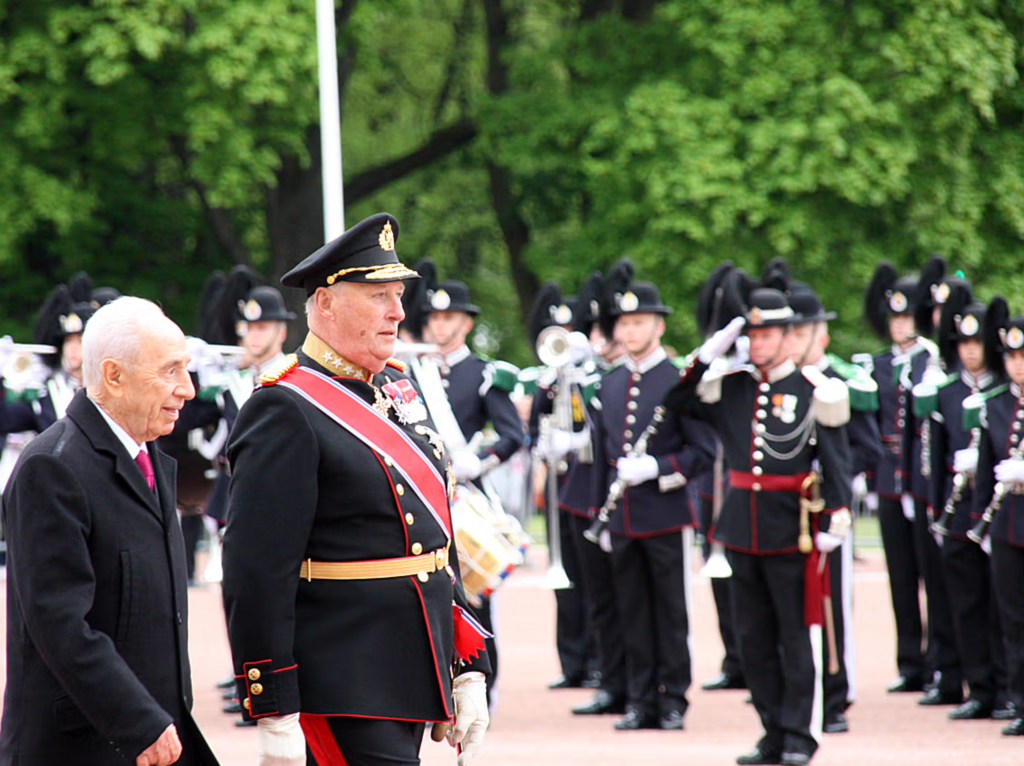
Harald hosts then-Israeli President Shimon Peres during his visit to Norway in 2014
(Photo: Liv Osmundsen, the Royal Court)
After Harald did not visit Israel in 2020, commentators speculated that the decision may have been related to tensions that had already emerged between then-Prime Minister Benjamin Netanyahu and Western leaders over the Palestinian issue. Three years later, after the Oct. 7, 2023, massacre, the king asked his government to allow him to personally express condolences over the terrorist attack, but it refused. Norway's Foreign Ministry said at the time that condolences should be conveyed by a government representative, ostensibly in accordance with standard protocol following terrorist attacks, although the king had previously expressed condolences on behalf of the country after attacks in other countries around the world.
The refusal to allow the king to express condolences sparked anger among Norway's local Jewish community. Only a few months ago, the Norwegian government, which is considered highly hostile toward Israel, expressed regret over the decision. The king himself addressed the massacre on its first anniversary, Oct. 7, 2024, when he visited a synagogue in Oslo and said: "The suffering caused by terrorism and war in the Middle East touches and concerns us. Here at home, everyone who has family and friends in Israel, Palestine and Lebanon is deeply affected. We must stand together so that people and communities feel safe in Norway. No one should experience hatred, incitement and threats because of conflicts elsewhere in the world."
Scandals that have hurt the royal family
Harald's son, Haakon, inherits the throne at a difficult time both personally and publicly, amid several scandals involving members of his family. Haakon's wife, now Queen Mette-Marit, 53, underwent a lung transplant last June because of chronic pulmonary fibrosis, an incurable lung disease in which lung tissue becomes scarred and makes breathing difficult. The transplant was performed just two days after Mette-Marit's son, 29-year-old Marius Borg Høiby, was convicted of two counts of rape and sentenced to four years in prison.
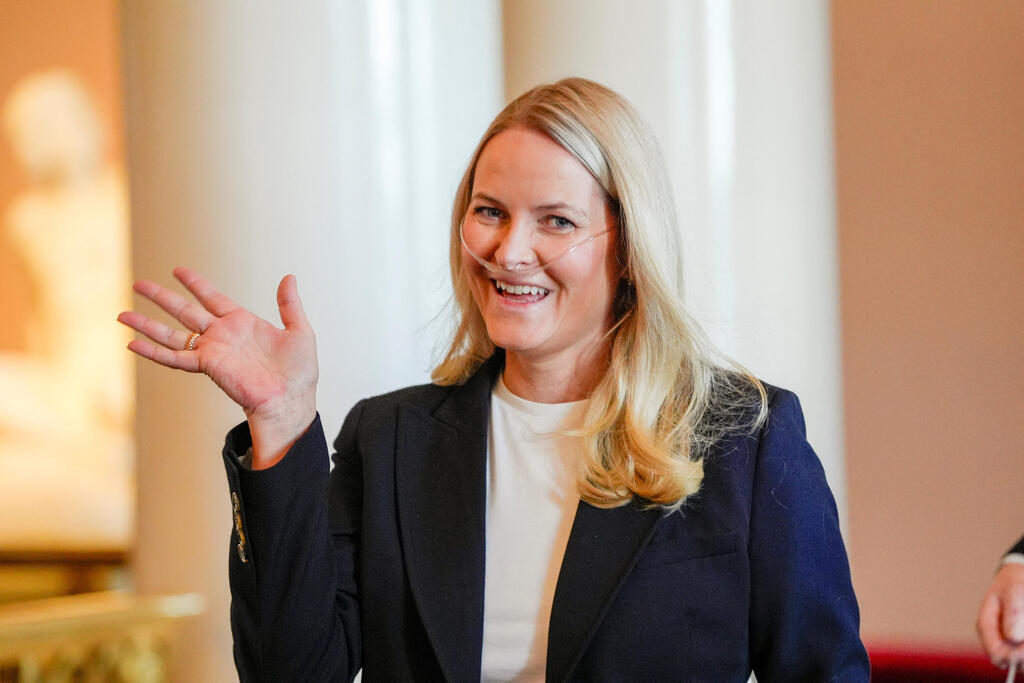
Norwegian Crown Princess Mette-Marit
(Photo: REUTERS)
Høiby was born to Mette-Marit from a previous relationship, before she married Haakon in 2001. Marius is therefore the stepson of the new king, but he does not hold any royal title and is not in the line of succession to the throne. Nevertheless, he is considered a member of the royal family, having grown up with them since he was 4, and the case has damaged the family's popularity as a whole. Mette-Marit and Haakon have two children together, Marius' half-siblings: Princess Ingrid Alexandra, 22, now the crown princess, and Prince Sverre Magnus, 20.
The rape case was followed by a separate scandal involving Queen Mette-Marit's ties to convicted sex offender Jeffrey Epstein, whom she met and corresponded with even after he was first convicted in 2008 of a sex offense involving a teenage girl. In emails made public following the U.S. administration's release of documents related to the Epstein case, she asked him, among other things, "Is it OK for a mother to offer her 15-year-old son a poster of two naked women holding a surfboard?" When the two corresponded about Epstein being on a "woman hunt in Paris," she wrote that "the French capital is good for infidelity" and added that "Scandinavian women are good material."
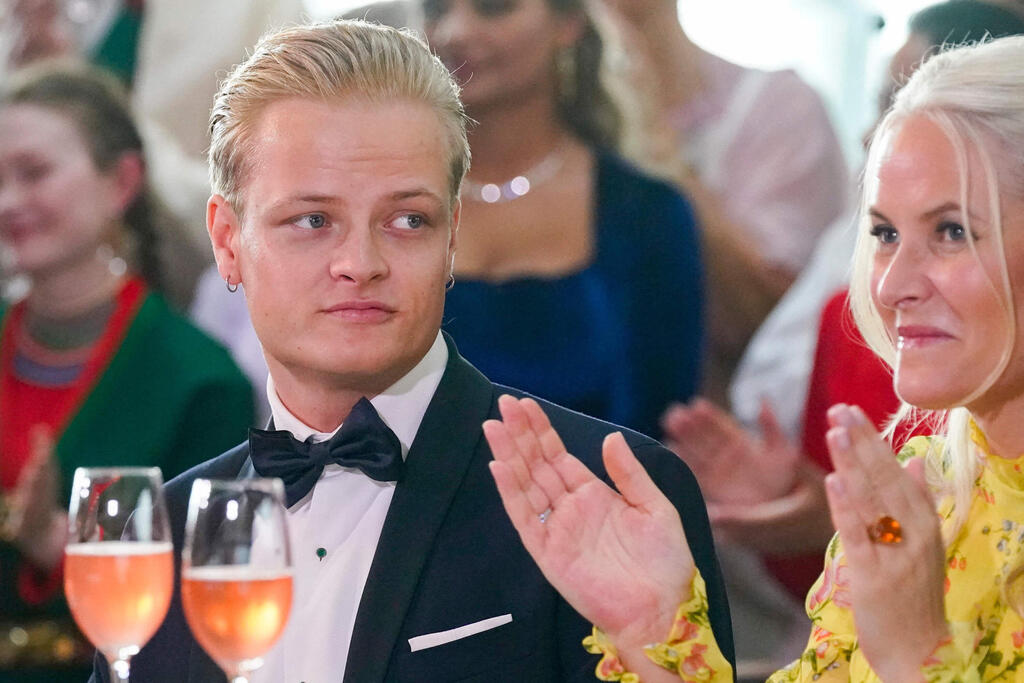
Norwegian Crown Princess Mette-Marit with her son Marius Borg Høiby, archive photo, 2022
(Photo: Lise Åserud / NTB / AFP)
A Norstat poll published Feb. 21, amid Høiby's rape trial, showed a sharp drop in support among Norwegians for retaining the monarchy, from 70% the previous month to 60%. But after the trial ended, its popularity appeared to have recovered somewhat. A May poll by the same institute showed support had risen to 64%, and this may well have been related to the serious illness Mette-Marit was facing. In any case, recent polls showed that support for King Harald himself remained very high, with one poll giving him a favorability rating of 9.2 out of 10.