

The United States and Iran are considering extending the current ceasefire by an additional two weeks, which is set to expire next Tuesday, in order to allow more time for negotiations on a deal to end the war, Bloomberg reported, citing a source familiar with the matter.
The report added that mediators are working to arrange technical talks to resolve the most contentious issues, including reopening the Strait of Hormuz and the Iranian nuclear program.
U.S. and Iranian officials made headway in talks held Tuesday, Axios reported, citing sources familiar with the discussions, raising the possibility of a broader deal that could impact multiple fronts, including Lebanon.
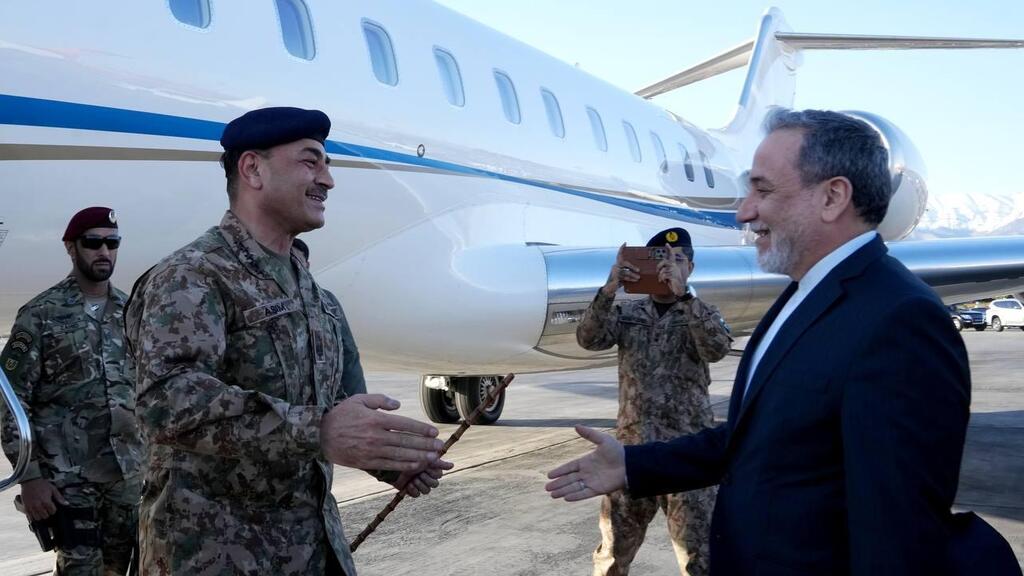
At the same time, Pakistan’s army chief arrived in Tehran and was received by Iran’s foreign minister, in a visit seen as part of wider regional coordination around the negotiations.
Against this backdrop, a senior Iranian political and security source told Lebanon’s Al-Mayadeen network, which is affiliated with Hezbollah, that a ceasefire in southern Lebanon would take effect overnight for one week, under pressure from Tehran.
“Netanyahu may try again to undermine this agreement, and Washington is responsible for restraining him,” the source said.
Israel rejected the claim.
An Israeli official said no decision has been made on a ceasefire in Lebanon, though the security cabinet is set to convene later Wednesday to discuss the continuation of the war.
Israeli officials acknowledged that talks are ongoing and that Washington is pushing for either a ceasefire or a temporary pause in fighting, as part of broader efforts to de-escalate the conflict.
According to Israeli officials, under U.S. pressure, Israel has refrained from striking the Beirut area for about a week, even as Hezbollah fire continues.
The Israel Defense Forces continues heavy operations in southern Lebanon, particularly around Bint Jbeil, where troops are engaged in combat with Hezbollah terrorists.
The military is preparing for the possibility of a ceasefire, potentially starting Thursday and lasting about a week, though officials emphasized that no final agreement has been reached.
Israeli officials assess that any ceasefire in Lebanon could be linked to a broader arrangement involving Iran, Israel and the United States, including a possible extension of a parallel ceasefire framework for one week, though that scenario remains unresolved.
Lebanese officials told Reuters they have been briefed on ongoing efforts to reach a ceasefire between Israel and Hezbollah, adding that the duration of any truce could be tied to developments in U.S.-Iran talks.
Meanwhile, IDF Chief of Staff Lt. Gen. Eyal Zamir issued a warning against concessions in the negotiations.

IDF Chief of Staff Lt. Gen. Eyal Zamir
(Photo: IDF)
“We must not allow them to achieve gains on the nuclear issue, in Hormuz, or on any other matter on the agenda,” Zamir said during a visit to troops from Division 162 operating in southern Lebanon.
Zamir said he had approved plans for continued operations and stressed that Israel remains on high alert.
“We continue to conduct ongoing assessments and approve plans both in Lebanon and regarding Iran,” he said. “Air Force aircraft are ready, armed, and targets are loaded into the systems. We know how to launch a powerful strike immediately.”
He also highlighted the scale of the fighting against Hezbollah.
IDF operates in Lebanon
(Video: IDF)



The 8th Armored Brigade
(Photo: IDF)
“In Lebanon, we are striking Hezbollah on multiple fronts. Hezbollah has more than 1,700 dead since the start of the campaign. This is a severe blow to the terrorist organization,” he said.
According to the military, forces from multiple divisions are currently operating across southern Lebanon, including in Bint Jbeil and surrounding areas, where troops are working to clear what Zamir described as “terror villages.”
“I have instructed that all territory in southern Lebanon up to the Litani River will become a kill zone for Hezbollah terrorists,” he said.
Despite intensified fighting on the ground, diplomatic activity continues to accelerate, with multiple actors seeking to prevent further escalation and move toward a broader ceasefire framework.
For now, officials on all sides stress that no agreement has been finalized, even as signals from Washington, Tehran and regional capitals point to a potential temporary truce in the coming days.