

Mossad chief Roman Gofman held a phone call last week with Syrian Foreign Minister Asaad al-Shaibani, during which the two discussed Turkey’s military presence in Syria, Reuters reported Wednesday evening. Meanwhile, Prime Minister Benjamin Netanyahu referred to Israel’s unusual strike in Syria and said: “We will not tolerate a Turkish military entrenchment in Syria that threatens Israel. We made the message very clear: Don’t. Apparently they did not hear it clearly enough, so we made sure they understood it better.”
According to three sources familiar with the matter who spoke with Reuters, the call between the Mossad chief and the Syrian foreign minister took place on August 14, four days before Israel struck the Abu al-Duhur air base in northwestern Syria, near the Turkish border, overnight between Monday and Tuesday. During the conversation, Reuters reported, Gofman and al-Shaibani discussed Turkey’s military presence in the country, an issue that has recently become a focal point of tensions between Jerusalem and Ankara over Syria’s future. According to the report, it was one of the highest-level contacts to date between Israel and the new government in Damascus. Israel and Syria did not respond to Reuters’ requests for comment.
Gallery
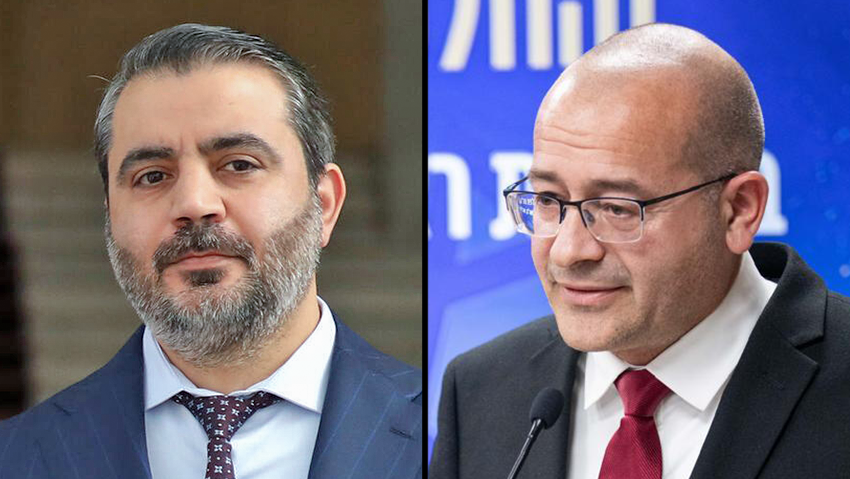
Mossad chief Roman Gofman held a phone call last week with Syrian Foreign Minister Asaad al-Shaibani
(Photo: IDF Spokesperson, Ali Haj Suleiman/Getty Images)
Meanwhile, Democrats chairman Yair Golan sharply criticized Netanyahu on Wednesday evening, saying: “The strike in Syria is a provocative and dangerous move that brings us closer to a confrontation with Turkey and deepens the rift with our allies, first and foremost the United States. Once again, military force is being used for political considerations, and once again Israel is paying the price in security.”
Golan argued that “Netanyahu is once again proving that he is an extreme and unreliable actor who cannot be trusted, certainly not to build a stable regional framework with. This is how he erodes trust in Israel and drives partners and allies away from us. Israel needs leadership that knows how to use force to achieve security, not to create another war for political survival.”
Since the fall of Bashar Assad’s regime in December 2024, Turkey has become one of the main allies of the new government in Damascus. Ankara, which for years supported some of the rebel groups fighting Assad, now assists the government of President Ahmed al-Sharaa and, among other things, trains and advises Syrian forces. Turkey’s defense minister said last year that Turkey had more than 20,000 troops in Syria and had no plans for the time being to withdraw them.
Turkey’s growing military presence has simultaneously become one of the main sources of friction between Ankara and Jerusalem. Reuters reported as early as April last year that Turkish military teams had examined at least three bases in Syria where forces could potentially be deployed as part of deeper security cooperation with Damascus: the T4 base and the Palmyra base in Homs province, as well as the military airport in Hama. Israel struck those sites shortly afterward in what was widely seen as a clear warning to Ankara against expanding its military presence in the country.
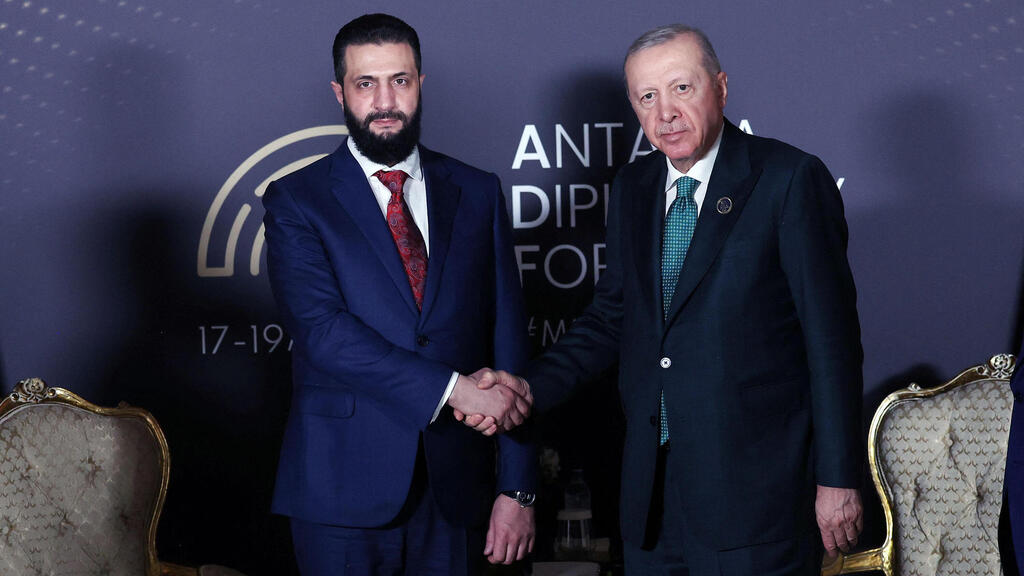
Erdogan and al-Sharaa. A struggle for the future of Syria
(Photo: AFP Photo / Turkish Presidential Press Service / Handout)
Against the backdrop of concerns over direct friction between the two countries, Israel and Turkey already held technical talks last year aimed at preventing unintended clashes in Syrian airspace. Turkish Foreign Minister Hakan Fidan stressed at the time that the contacts were intended only for “deconfliction coordination” and did not constitute an attempt to normalize relations between the countries.
Tensions flared again this week when Israel struck the Syrian Abu al-Duhur base near Aleppo. According to Syrian state television, eight strikes hit the runway and storage facilities at the base, with no casualties reported. The Prime Minister’s Office said after the strike that Syria had been “on the verge” of violating the security status quo agreed with Israel by allowing Turkish forces to deploy at the base. Turkey strongly rejected the claim and accused Israel of trying to justify its strikes in Syria.
Washington also expressed concern over the incident. U.S. envoy to Syria and ambassador to Turkey Tom Barrack described the strike as “an unnecessary escalation” and said the United States was working to establish a coordination mechanism among Israel, Syria and Turkey to reduce the risk that a mistake or misunderstanding could lead to a direct military confrontation.
Alongside the military tensions, unprecedented contacts have taken place in recent months between Israel and the new government in Damascus. In May 2025, Reuters reported that Israeli and Syrian representatives had already held several direct meetings on security issues, after al-Sharaa himself had earlier confirmed that indirect contacts were underway to ease tensions. In August of that year, Foreign Minister al-Shaibani met Israeli minister Ron Dermer in Paris as part of talks on security arrangements in southern Syria.
The contacts later advanced under U.S. auspices, and in January this year Israel and Syria agreed in talks in Paris to establish a communications mechanism that would allow coordination on security and intelligence matters. Last month, al-Sharaa even said his country was interested in reaching a security agreement with Israel that could, in his words, later pave the way for broader peace, though he stressed that Syria was not relinquishing its claim to the Golan Heights.