

A day after an unusual Israeli Air Force strike on a Syrian military base where, according to the Prime Minister’s Office, Turkish forces were expected to deploy, IDF Chief of Staff Lt. Gen. Eyal Zamir visited Syrian territory on Wednesday and warned: “We will not allow hostile forces to establish themselves on our borders.”
The strike drew sharp reactions in Turkey. The pro-government newspaper Türkiye, which supports President Recep Tayyip Erdogan’s policies, declared in its headline that it was a “serious Israeli provocation.”
The subheadline read: “Israeli fighter jets bombed a military airfield in Idlib — only about 55 kilometers from the Turkish border. The airfield was intended for the deployment of radar and air defense systems — and in doing so, [the Israelis] carried out a provocation of war.” Despite the harsh tone, however, the statements were not given particular prominence and were generally buried among other reports.
Chief of Staff Lt. Col. Eyal Zamir visits the 210th Division in Syrian territory
(Photo: IDF Spokesperson's Unit)


The Abu al-Duhur military airfield in the eastern countryside of Syria’s Idlib province was struck Tuesday night. According to the Sabereen News agency, four aircraft targeted runways and storage facilities.
On Tuesday evening, the Prime Minister’s Office issued a statement in English that effectively confirmed the strike: “Israel and Syria agreed to a status quo on security matters, which Syria nearly violated by allowing Turkish troops to deploy at an air force base near Aleppo. Israel repeatedly warned Syria that such a deployment would constitute a threat to Israel’s security — and Syria chose to ignore those warnings. Israel will not tolerate threats to its security and would welcome a return to the status quo.”
Gallery
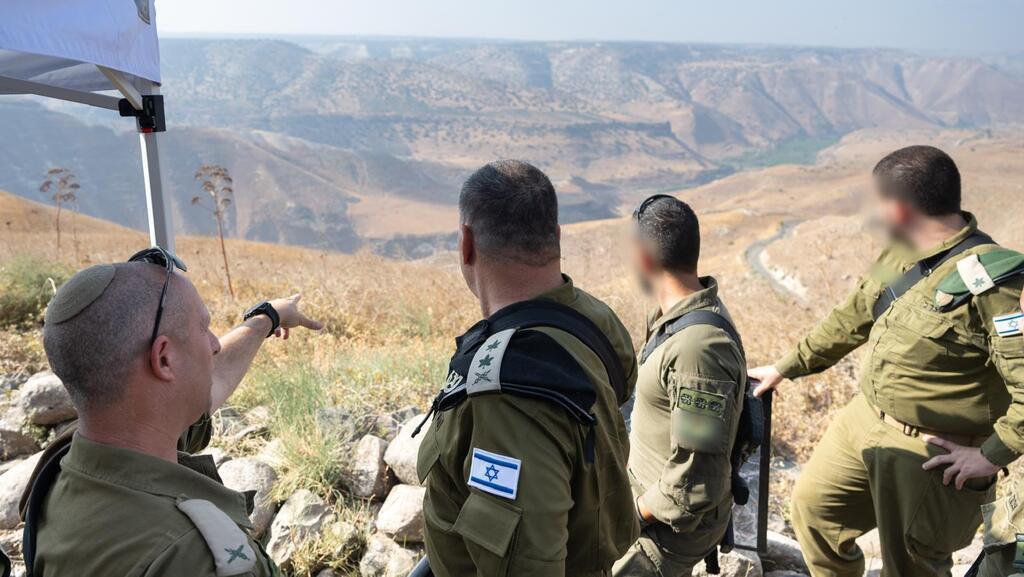
Chief of Staff Lt. Col. Eyal Zamir visits the 210th Division in Syrian territory
(Photo: IDF Spokesperson's Unit)
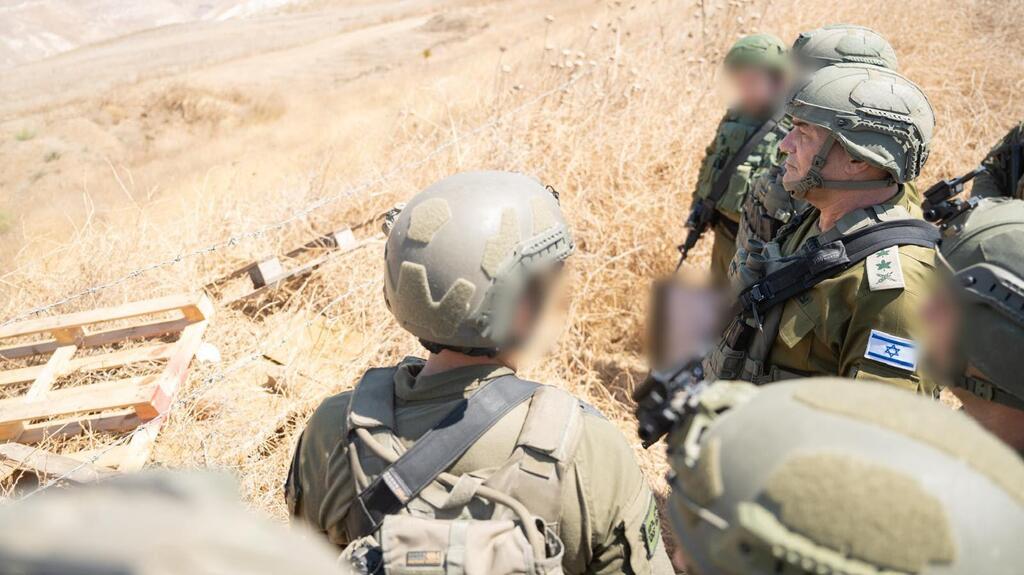
(Photo: IDF Spokesperson's Unit)
Zamir visited the IDF’s 210th Division in Syrian territory on Wednesday and sent a message both to the government in Damascus and to Turkey.
“We are operating in a multi-front reality, in which the challenges are constantly changing and developing — the Syrian arena is one of them,” Zamir said. We see what is happening and are monitoring the changes on the Syrian front — we must prepare for them accordingly. We will not allow hostile forces to establish themselves on our borders, and we will know how to use our operational capabilities precisely where and when needed."
“ We must prevent the development of terrorist threats, while also preventing the formation of a significant military threat on our borders. In Syria as well, we have created a forward defense posture that serves as a buffer at the front of the communities, where our troops are operating,” he said.
Egypt’s Intel Observer, an X account that focuses on intelligence-related issues, published satellite images showing ongoing rehabilitation work at the airfield targeted by Israel. The account said that over time, continued reconstruction of the runway and taxiways could be seen.
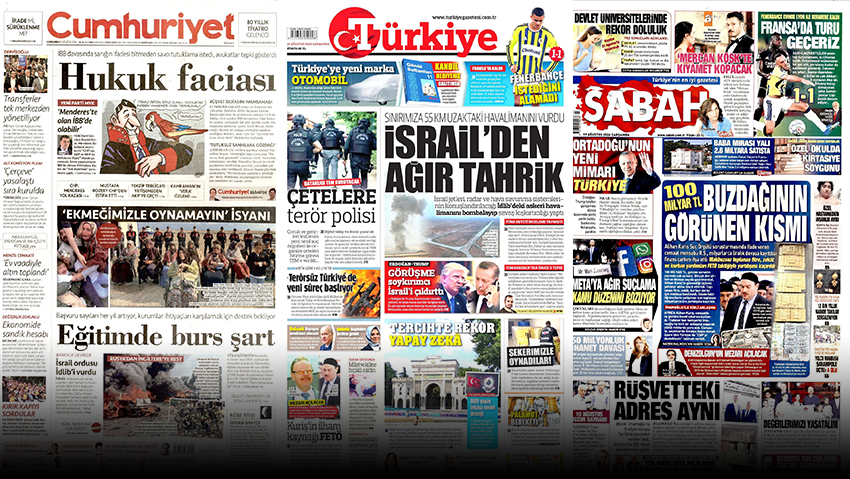
Turkish newspapers report on the incident
(Photo: From the newspaper Türkiye)
According to the account, the activity suggests an intention to return the base to operational use, possibly with Turkish support or as part of a future Turkish deployment on Syrian soil.
Türkiye linked the Israeli strike to Turkey’s growing power on the international stage. The newspaper wrote, among other things: “The Erdogan-Trump call drove genocidal Israel into a frenzy. Erdogan and Trump reached understandings on resolving the crisis in Iran and on peace in Gaza. Netanyahu, panicked by the decisions reached in the call, struck Syria shortly afterward.”
The newspaper Sabah also praised the Turkish president, writing in the context of contacts between Erdogan and Trump that “Turkey is the new architect of the Middle East.”
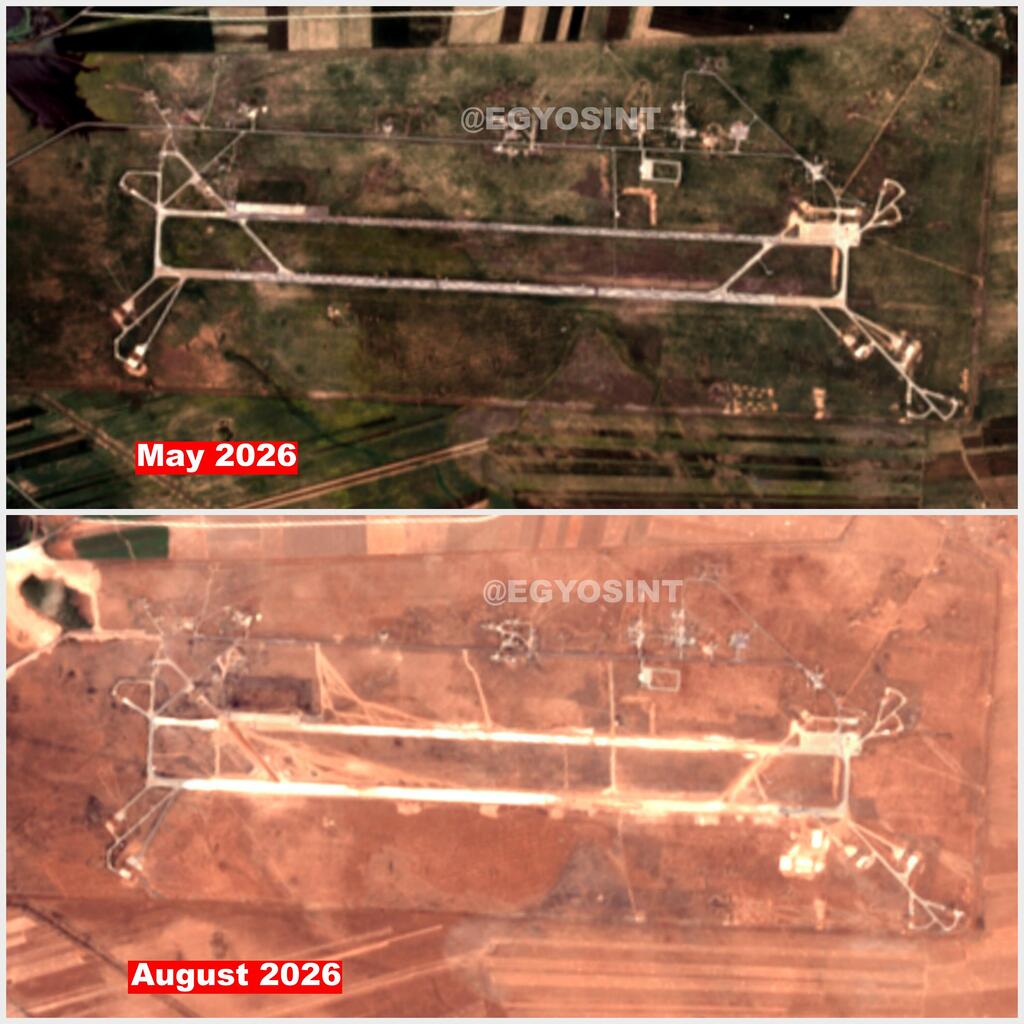
Satellite footage of the reconstruction of the runway at the military airport attacked by Israel - change and reconstruction over four month
(Photo: From X)
The newspaper Cumhuriyet sought to emphasize the disagreement between the United States and Israel over Israeli Air Force strikes in Syria. It wrote: “The strike was carried out at the same time as U.S. Middle East envoy Tom Barrack called for ‘restraint.’”
Meanwhile, amid the regional tensions, Turkey announced Wednesday that it is prepared to work with authorities in Damascus on oil and gas exploration in Syria.
Turkish Energy Minister Alparslan Bayraktar said at a news conference with his Syrian counterpart, Mohammed al-Bashir, that state-owned Turkish Petroleum Corporation, or TPAO, and private companies are ready to conduct seismic surveys and drilling both offshore and on land.
At the same time, Turkey and Syria are expected to activate new electricity infrastructure soon, tripling power transmission capacity to Syria.