

Israel’s energy and infrastructure minister and a member of the security Cabinet, Eli Cohen, said Sunday that there is “no point” in negotiating with Iran, as Prime Minister Benjamin Netanyahu moves up a planned trip to Washington in an effort to influence U.S. talks with Tehran.
In an interview with ynet, Cohen said the core message Israel seeks to convey goes beyond specific negotiating clauses. “There is no point in holding negotiations with Iran,” he said. “It has never honored any commitment it has made, and even if it agrees to all the clauses, it will only be for a limited period. Once the pressure passes, it will return to its old ways.”
Gallery
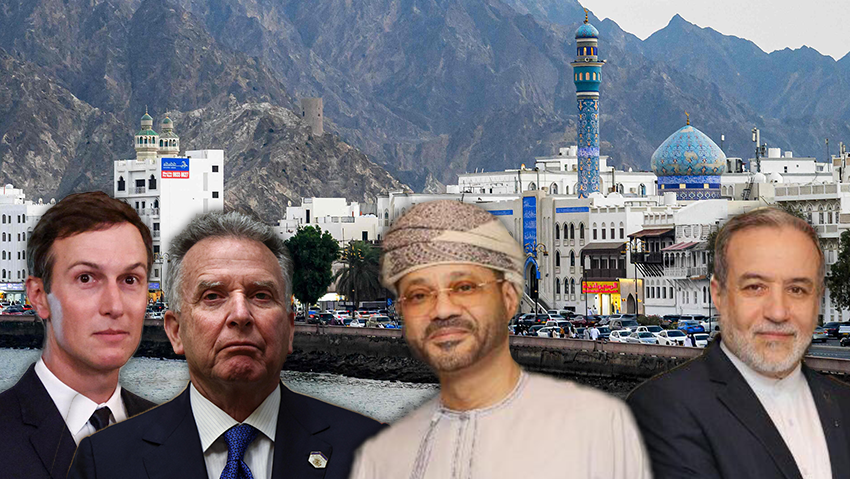
(Photo: Omani Ministry of Foreign Affairs, REUTERS/Evelyn Hockstein/Pool/Kevin Lamarque, Loic VENANCE / AFP)
Cohen said U.S. President Donald Trump wants to keep all options on the table and suggested that if Trump ultimately decides to strike, assuming Iran does not accept his conditions, such a move would increase international legitimacy for military action against Iran. He added that regime change in Tehran is “first and foremost in the interest of the Iranian people,” as well as neighboring Muslim countries and the broader international community, saying that many regional states express that view privately.
Cohen warned that if any agreement fails to restrict Iran’s ballistic missile program, “Israel is a sovereign state and must act to protect its security interests.” He said that if a threat to Israel emerges and action is required, “we will act.”
He also addressed a planned Trump-backed Board of Peace on Gaza, which Netanyahu is expected to skip, saying there can be no discussion of reconstruction or diplomatic frameworks until Hamas is disarmed and the Gaza Strip demilitarized. “Until that happens, there is nothing to talk about,” he said.
Cohen added that in previous discussions between Netanyahu and Trump, it was agreed that a defined period would be given for a multinational force to act against Hamas. “Based on a fairly realistic assessment that such a force will not succeed in disarming Hamas, we will be required to do so ourselves,” he said.
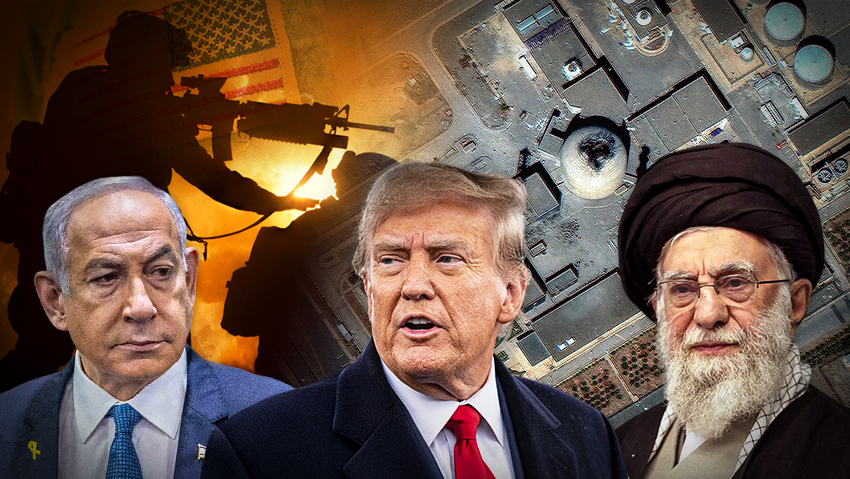
(Photo: Lev Radin /Shutterstock, AP, Haim Goldberg/ Flash90 SATELLITE IMAGE ©2025 MAXAR TECHNOLOGIES / AFP, Getmilitaryphotos/ Shutterstock, Reuters/ Alexander Cornwell)
Earlier, retired Maj. Gen. Yaakov Amidror also commented on the nuclear negotiations, telling ynet that “they have only just begun.” He said Israel has experience with “bad agreements” and must do everything possible to prevent a repeat. “If that requires Netanyahu to travel to the United States, so be it,” he said.
Amidror said the main concern is what could happen if the Americans are not firm in their demands. “We are not managing the negotiations, so we need to reach the president and make our position clear,” he said. Given the stakes, he added, it is critical that Washington fully understand Israel’s concerns. On a possible strike against Iran, Amidror said the United States must understand that if Israel feels its interests are not protected, it will consider how to respond. “After the last conflict with Iran, it is clear Israel can strike on its own. It is preferable to do so in coordination with the Americans,” he said.
Araghchi: Witkoff and Kushner? ‘Just exchanged greetings’
The latest round of talks in Oman ended Friday, with both sides agreeing to hold another round soon. Netanyahu’s trip was moved up amid a sense of urgency and concern that Trump could retreat from red lines.
Iranian President Masoud Pezeshkian said Sunday that the talks, held with the support of friendly governments in the region, marked a step forward. “Dialogue has always been our strategy for achieving a peaceful solution,” he said, adding that Iran’s nuclear position is based on rights enshrined in the Nuclear Non-Proliferation Treaty. “The Iranian people always respond to respect with respect. They will not tolerate the language of threats and force.”
After the talks, US envoys Steve Witkoff and Jared Kushner visited the aircraft carrier Abraham Lincoln, a move widely seen as a warning to Iran. US Central Command posted photos from the ship on X with the caption, “Peace through Strength!”
Iranian Foreign Minister Abbas Araghchi, who led Tehran’s negotiating team, responded by saying that the US “peace through strength” doctrine “returns us to the law of the jungle.” He said deploying a fleet to the region to apply pressure would not weaken Iran or force it to abandon its positions.
Amid reports that he held a direct meeting in Oman with Witkoff and Kushner, Araghchi said it amounted to “just an exchange of greetings.” “The substance of the negotiations is what matters,” he said. “Whether the format is direct or indirect is not important.”
Araghchi said Iran insists on its right to a nuclear program, even if that leads to war. “We insist on uranium enrichment because no one has the right to dictate to us what we should do or demand that we reduce enrichment to zero,” he said. “They attacked our nuclear facilities but did not achieve their goal. The only option left to them is negotiation.”
On US sanctions, Araghchi said they raise doubts about Washington’s seriousness. He said confidence-building steps regarding Iran’s nuclear program are possible in exchange for sanctions relief. “We are capable of diplomacy and capable of war, although we do not want it,” he said. “They think that if they attack us, we will surrender. That will not happen. If the other side chooses diplomacy, we will choose the same path.”
Iran’s military chief of staff, Abdolrahim Mousavi, who said Saturday that his forces are at the highest level of readiness, said Sunday that “despite our full preparedness, we do not want to start a regional war.” He warned that Washington and Tel Aviv would be responsible for any consequences of such a conflict.
Iranian army commander Amir Hatami said Iran is closely monitoring “enemy movements” and is ready to respond decisively to any aggression.