


High Court of Justice justices warned government ministers on Tuesday morning that refusing to honor court rulings could expose public servants to civil lawsuits and leave them without personal immunity.
The warning came in the High Court case concerning the Second Authority for Television and Radio, after the government, at the initiative of Communications Minister Shlomo Karhi and Justice Minister Yariv Levin, declared that it would not recognize the court’s ruling.
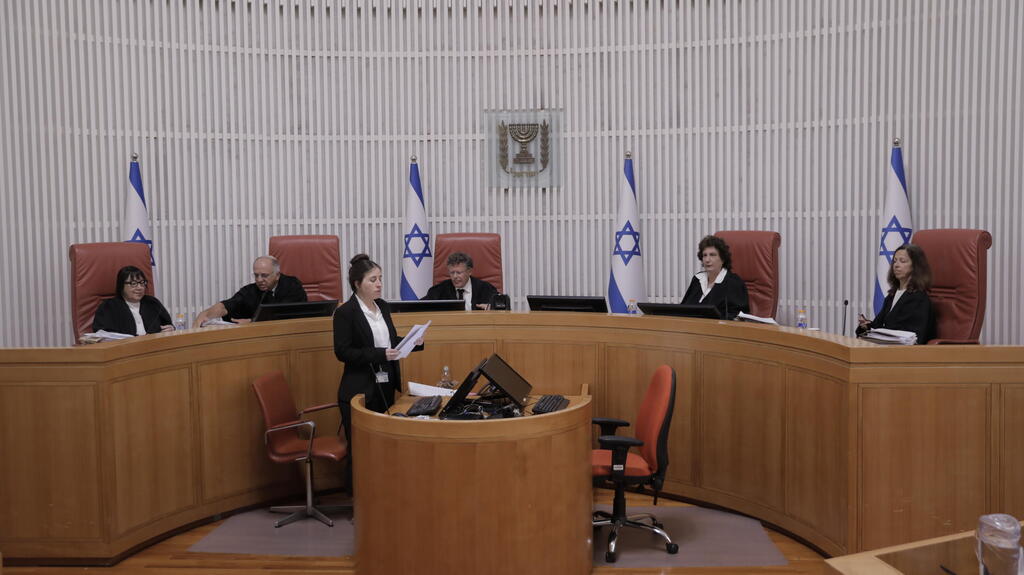
“Basic principles should seemingly be restated,” Supreme Court President Yitzhak Amit and Justices Alex Stein and Ruth Ronen wrote.
“These basic principles apply both to the actions of elected officials and to the actions of public servants, all of whom are required to act in accordance with the provisions of the law,” the justices said. “As for the latter, it bears noting that action by public servants contrary to judicial decisions may, in appropriate cases, result in the personal immunity arrangement granted against tort claims not applying.”
In their statement, the justices cited previous rulings on the duty to comply with court judgments and respect them. “The duty to obey and respect judgments is among the fundamental conditions on which the rule of law in a democratic state is based,” they wrote. “Without obedience to court judgments, the principle of the rule of law and justice is undermined, and the social order disintegrates. Every person does what is right in their own eyes, and the distance between the rule of law and anarchy is razor-thin.”
They added that failure by a citizen to respect a court ruling is itself a serious violation of the rule of law, but that such conduct by a state authority is even more severe.
“A state in which a governmental authority takes the law into its own hands, complying with a judicial order issued against it when it wishes and ignoring it when it wishes, is a state in which the seeds of calamity and anarchy are sown and a dangerous culture of rule by force and arbitrariness develops,” the justices wrote.

Communications Minister Shlomo Karhi
(Photo: Shalev Shalom)
The High Court’s response followed the government’s unanimous decision on Sunday not to honor the court’s ruling regarding the Second Authority.
In its decision, the government said: “You have no authority to trample the law. A ruling that contradicts the law will not be recognized, and decisions made under it are void.”
The government effectively approved a proposal by Karhi and Levin, declaring that it would not recognize any decision, approval, appointment or action by the Second Authority Council as long as it does not meet the explicit eligibility requirements set out in law. Those decisions could include possible approval of the sale of Reshet 13 to the “High-Tech Group.”
The government’s declaration was received with shock in the legal system. Legal officials assessed that the move could harm Israel’s standing internationally and could even lead to steps against it in international tribunals.
Those officials said the decision was an unprecedented move reflecting the government’s escalating approach toward the rule of law. They argued that, together with efforts to split the institution of the attorney general and change the method for selecting judges, the move marks a fundamental regime change in Israel, from a substantive liberal democracy to a formal democracy.
First published: 09:36, 07.07.26