


Israel is preparing for the possibility of renewed war with Iran. In recent weeks, IDF Chief of Staff Lt. Gen. Eyal Zamir has held a series of discussions and briefings with the defense establishment, Military Intelligence Directorate, Operations Directorate and Air Force ahead of a possible new round of fighting, this time in full coordination with the United States.
At the same time, defense officials are seeking to prepare the public for what they describe as a new reality: the campaign against Iran is not expected to end with a single strike.
Gallery
(Photo: AFP - SOURCE: UGC / UNKNOWN, REUTERS/Jessica Koscielniak/Stringer, Oliver CONTRERAS/AFP)
“There needs to be a resetting of public expectations,” a senior defense official told ynet and Yedioth Ahronoth. “The war against Iran will be prolonged. As long as this regime does not fall, we are likely to face recurring rounds of fighting, perhaps every year and possibly even more frequently, in order to ensure that the nuclear and ballistic missile threat does not endanger the existence of the State of Israel.”
According to the official, the gaps between Washington and Tehran remain very wide.
“The people making the decisions in Iran are members of the Revolutionary Guards, and their interests do not align with American demands,” he said. “The American minimum does not meet the Iranian maximum. Therefore, in our assessment, Trump will ultimately have no choice but to launch another round against Iran.”
U.S. President Donald Trump said yesterday that negotiations with Iran were “in the final stages,” but added: “We cannot allow Iran to have a nuclear weapon. They are begging for a deal, we’ll see what happens. Maybe we’ll have to hit them much harder, and maybe not.”
Earlier, Saudi-owned Al Arabiya reported that “work is underway to finalize the last details of a draft agreement between Washington and Tehran.” Iran’s semi-official Tasnim news agency, which is affiliated with the Iranian regime, later reported that the United States had submitted a new proposal to Tehran.
“Iran is currently reviewing the text and has not yet responded,” a source close to the negotiations told Tasnim. “Pakistan is working to bridge the gaps, but those efforts have not yet produced final results.” Trump later said: “We will wait a few days for Iran’s response. We need to get the right answer.”
Still, even if another strike ultimately takes place, Israeli officials do not see it as a move that would end the threat.
“From Israel’s perspective, this will not be the last round as long as this regime remains standing,” the senior official said. “It will be possible to hit Iran very hard, damage economic and military targets and symbols of government, and it will look like a clear victory in Western eyes. But from the Iranian perspective, as long as the regime survives, they will rebuild their military capabilities. Therefore Israel will have to maintain intelligence and operational readiness for another return to fighting.”
Israeli defense officials are particularly concerned that the issue of ballistic missiles is not at the center of the negotiations with Iran.
According to Israeli assessments, Iran possessed more than 2,000 ballistic missiles before the war. Following the launches it carried out and the strikes it sustained, Israel now estimates that roughly half remain.
Israeli officials stress that, contrary to various reports, Iran cannot quickly restore its missile stockpiles on a large scale, especially after heavy launch trucks and production infrastructure were also damaged.
At the same time, since the end of the last campaign, Iran has reportedly been working to reopen missile tunnels that the Israeli military struck and sealed through airstrikes.
“Even if we assume the most optimistic scenario, in which the nuclear issue is resolved — and the chances of that are low — Iran will accelerate its arms race primarily in the missile field,” the senior official said. “There is a certain threshold against which full air defense cannot be provided. Therefore we will have no choice but to strike again.”
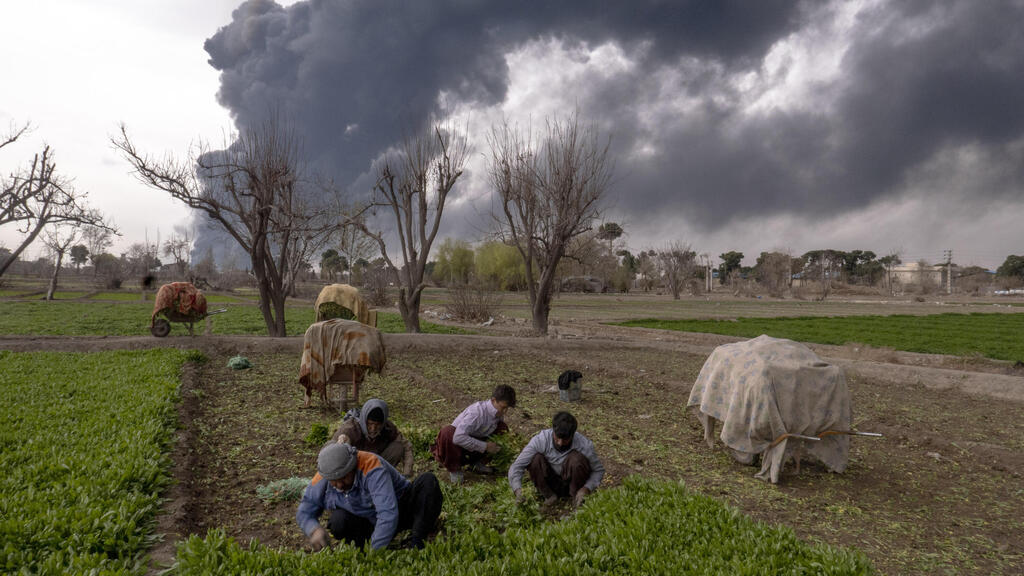
Smoke rises from oil facilities in Tehran
(Photo: Majid Saeedi/Getty Images)
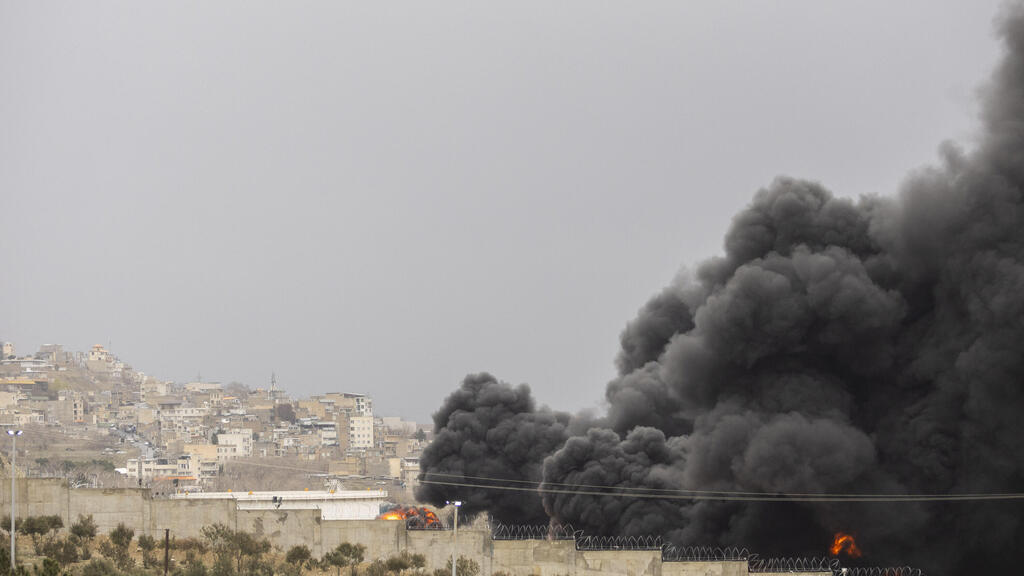
(Photo: Majid Saeedi/Getty Images)
At the same time, Israeli defense officials say Operation Rising Lion has already inflicted deep damage on the Iranian regime.
Military industries were severely damaged, senior figures considered pillars of the regime were killed, ballistic missile production capabilities suffered significant setbacks and the sense of immunity among Tehran’s leadership was undermined.
Now, 45 days after the ceasefire took effect, Israeli officials believe the operation’s effects are still unfolding. According to Israeli assessments, Iran’s new leadership is struggling to stabilize itself, hampering both reconstruction efforts and the formulation of new policy.
Israeli officials also point to what they describe as unusual measures indicating growing concern within the regime over potential domestic unrest. Continued internet restrictions in Iran are viewed as an attempt to prevent protest organizing and anti-government demonstrations.
At the same time, Iran is grappling with a worsening water crisis that Israeli defense officials believe is gradually evolving from an infrastructure problem into a broader economic and social crisis.
The economic crisis is also deepening. Iran’s currency continues to weaken, while the country is experiencing unusually high inflation in basic food products.
Israeli officials assess that damage to access to oil reserves and pressure surrounding the Strait of Hormuz are further worsening the regime’s economic distress.
Despite the severe damage, Israeli officials stress that Iran has not abandoned reconstruction efforts. Throughout the ceasefire, senior regime officials have reportedly worked to rebuild damaged infrastructure and replenish weapons stockpiles, even at the cost of worsening civilian hardship.
The Israeli military assesses that if fighting resumes, the focus will be on deepening the economic damage to the regime and increasing pressure on it. Among the main targets identified are continued strikes on terrorist infrastructure, increased pressure on the Iranian navy and attacks on particularly sensitive centers of economic power.
Defense officials say the ceasefire period was used to prepare a more extensive and higher-quality “target bank.”
“The moment approval is given,” a defense source said, “the IDF is prepared to strike the Iranian regime at its most sensitive points, from economic damage to the targeted killing of senior officials.”
The conclusion in Israel, officials say, is clear: even if additional achievements are made against Iran, the next strike will not end the campaign.
From the perspective of the defense establishment, as long as the regime in Tehran remains in power, Israel will have to prepare for additional rounds of fighting, further strikes and a prolonged confrontation that could continue for years.