

Alexandroni Reserve Brigade troops have entered their second month of deployment along the so-called “yellow line” in northern Gaza, confronting an increasingly complex and dangerous mission.
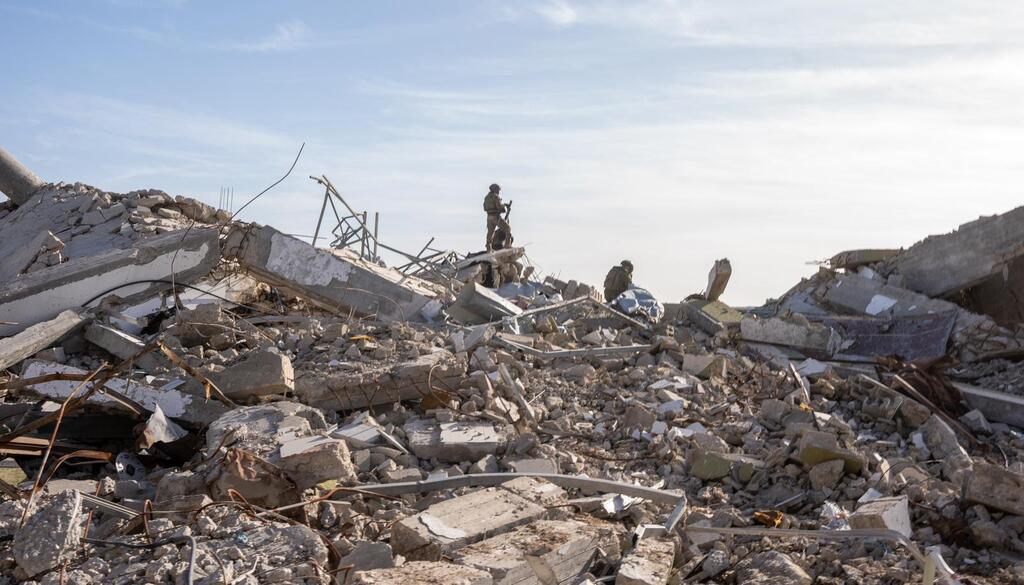
The line, though unmarked by visible barriers, is understood on the ground: where buildings lie in complete rubble, it marks Israeli-held territory; where structures still stand—damaged but upright—it’s Hamas territory, or what remains of it.
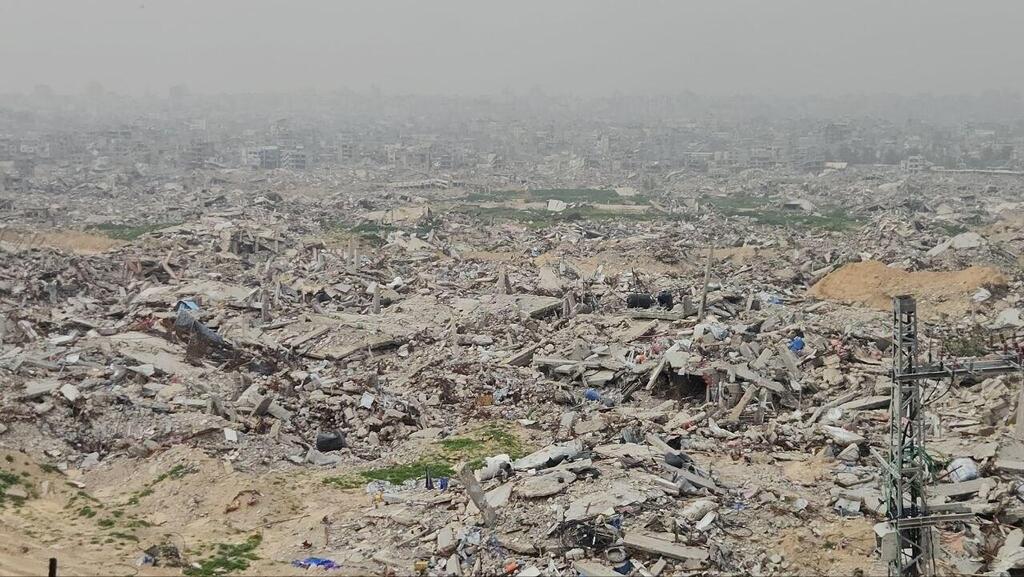
Shijaiyah, Gaza City
(Photo: Yoav Zitun)
The soldiers, mostly Golani Brigade veterans, narrowly avoided tragedy last week when a company commander was severely wounded by Hamas gunfire while overseeing fortification work.
“In our battalion sector, we’ve flattened every structure. Everything is on the ground because they posed a threat and could have harbored terrorists,” said Lt. Col. Y., a battalion commander, speaking to ynet from one of the 43 IDF outposts now dotting the enclave—from the coast near Zikim and Al-Atatra to Tel al-Sultan in Rafah, along Gaza’s western Philadelphi Corridor.
Lt. Col. Y. said his forces are prepared for direct attacks on their post, which serves primarily as a base for operational deployment and defense. “We carry out regular patrols to maintain a security buffer, and we control an 800-meter zone up to the yellow line. Anyone crossing it is either stopped or taken down.”
Pointing to nearby rubble, he added, “Near that blue building, which used to be a school, we found the body of Ran Gvili about two weeks ago—the last fallen hostage. It looks quiet, deceptively so, but Hamas operatives are in the buildings across from us, in Shijaiyah’s old city and the adjacent Daraj and Tuffah neighborhoods. They’re watching us. Preparing.”
Alexandroni Brigade troops played a key role in the recovery of the body of Gvili, who was killed during the October 7 battle at Kibbutz Alumim.
Lt. Col. M., deputy commander of the brigade, accused Hamas of manipulating Israeli humanitarian constraints. “They know we don’t fire on women and children, so they deliberately send them toward us. Hamas knows we’re a humanitarian army. Just this past Friday, a terrorist approached the yellow line with an axe—we neutralized him.”
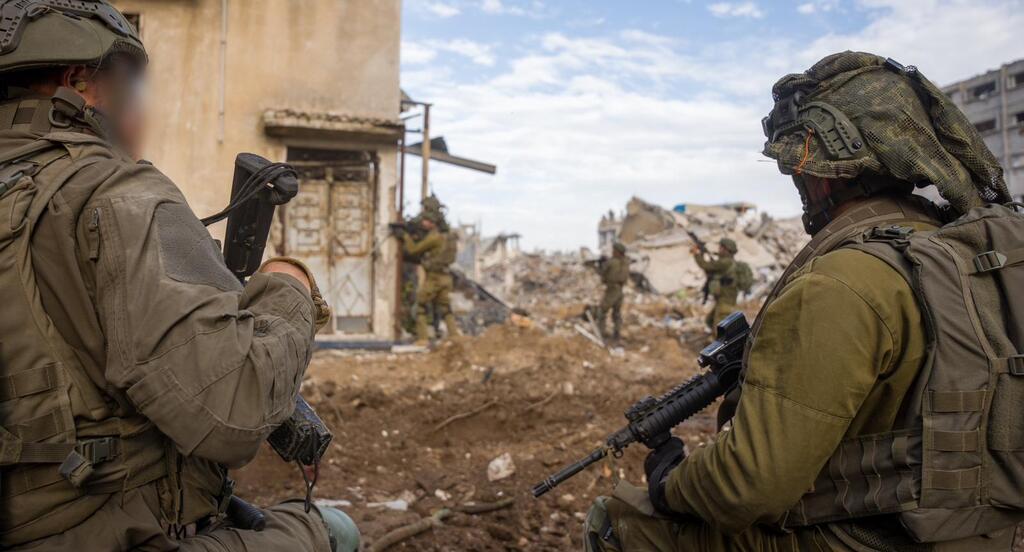
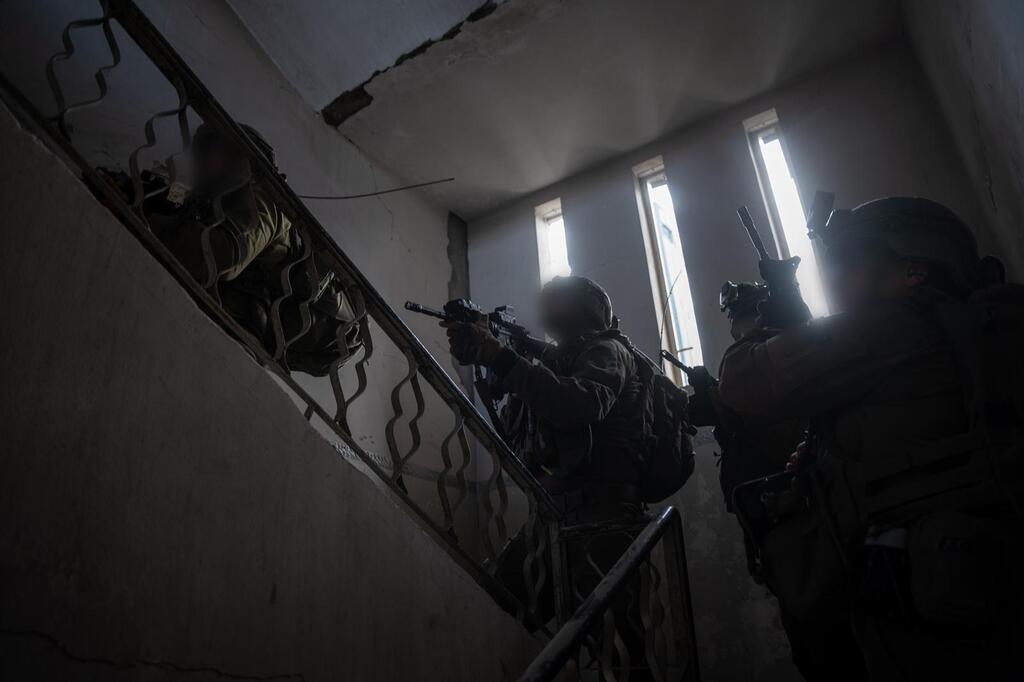
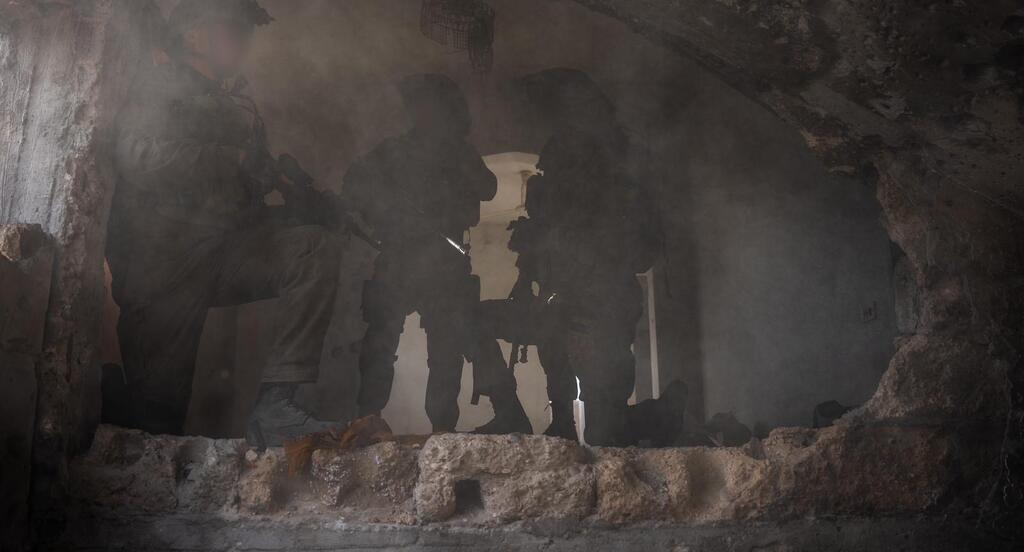
(Photo: IDF)
The daily work of clearing the area is unending, not just above ground, but below. “Our new method for tunnel detection involves statistical drilling, and every time we find more. The more we search, the more tunnels we uncover,” the battalion commander said. “Our priority is to locate and destroy those closest to the border, which pose the most immediate threat. We’re also preparing for the possibility that tunnels run beneath our outposts.”
Hamas, he said, has also attempted to breach the yellow line to access weapons caches hidden before the IDF gained control of the border area—a 70-meter-high ridge that separates Gaza from the western Negev. The IDF has observed Hamas bolstering its command and control structure, appointing new local commanders in Gaza City.
“These new commanders are less experienced than the ones we eliminated earlier in the war,” Lt. Col. M. noted. “Still, there seems to be a relatively organized chain of command on the other side that’s even restraining its operatives under current conditions.”
Yet IDF forces face significant operational limitations. Commanders admit they cannot engage Hamas operatives merely conducting surveillance from within their own territory, or gunmen moving deeper behind the line.
“These are the conditions of the current agreement—they gave something, and we’re bound by the terms,” said the deputy commander. “But for us, the war isn’t over. This is only an interim arrangement. The enemy is preparing for renewed combat, setting up explosive charges and laying groundwork.”
“In many ways, Hamas is starting to resemble Hezbollah’s Radwan force—still active, but badly wounded and pushed back,” he added.
First published: 20:04, 02.09.26