

The Shin Bet security agency announced Tuesday it had broken up a terrorist cell operating in the West Bank under the direction of operatives in Lebanon.
The cell, which was in the advanced stages of planning an attack, included recruits who conducted surveillance on an Israeli settlement in the northern West Bank. Five suspects have been arrested and indicted.
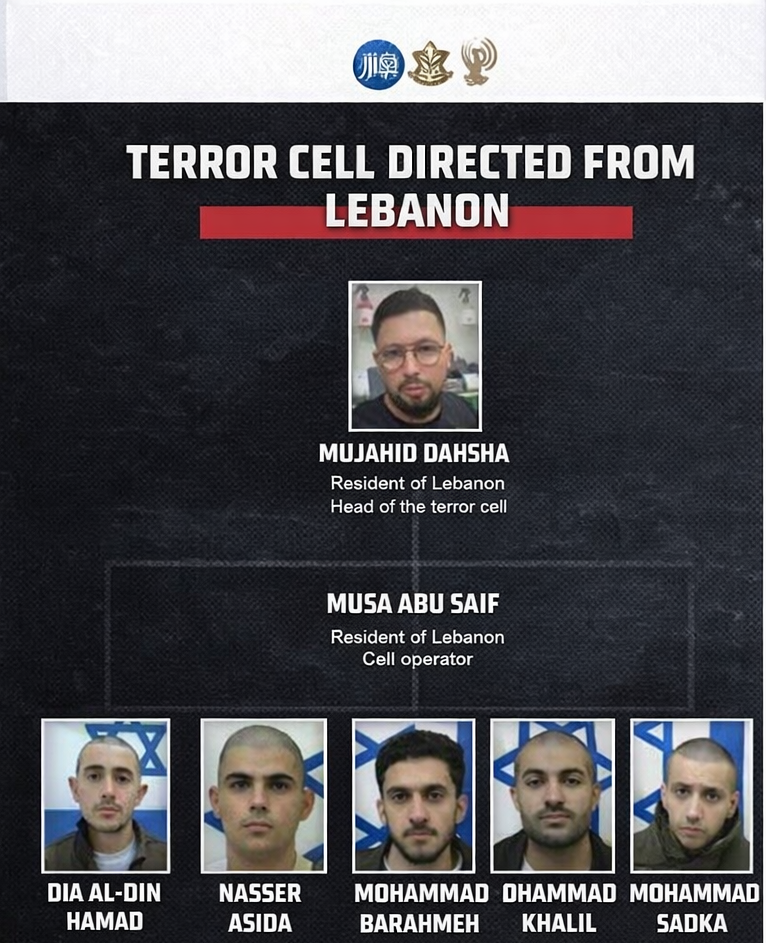
The operation began in October, when Shin Bet detained Mohammad Sadka, a resident of the village of Anza in the northern West Bank, on suspicion that he was preparing to carry out a terrorist attack. During his interrogation, investigators discovered that Sadka had traveled to Lebanon, where he was recruited by Musa Abu Saif, a member of a terror network known by the call sign “Jibril,” and tasked with operating inside the West Bank and recruiting additional members to form armed cells.
After returning to the West Bank via Jordan, Sadka recruited several others, including Mohammad Khalil from Ramallah and Mohammad Barahmeh, also from Anza. Both were later arrested and questioned.
According to the Shin Bet, Sadka maintained communication with his Lebanese handlers via social media platforms and gaming apps up until his arrest.
A second cell was also uncovered during the investigation, also allegedly operated by the same Lebanese network. Two residents of the village of Tell in the northern West Bank — Dia al-Din Hamad and Nasser Asida, both in their 20s — were arrested.
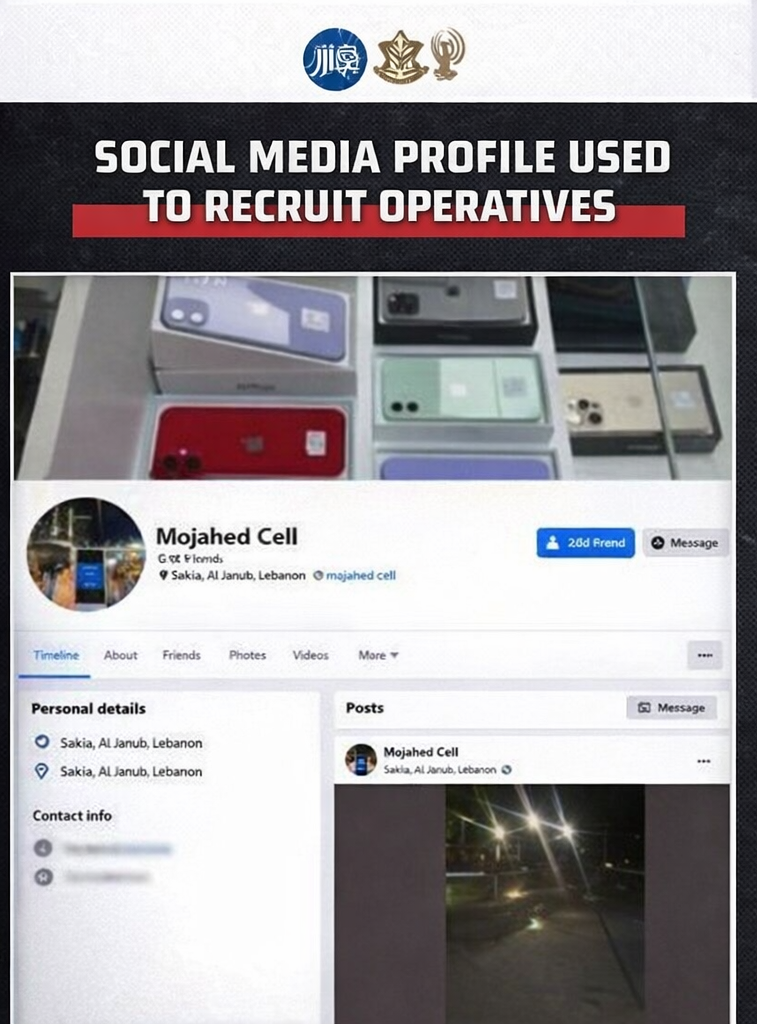
A social media account used to recruit the operatives
(Illustration: Shin Bet)
Their interrogation revealed that they had been recruited by a Lebanese terror operative named Mujahid Dahsha, who coordinated activities with other figures identified only by their aliases “Abu Ahmad” and “Abu Wahid.” Communication was conducted primarily through online messaging platforms.
As part of their recruitment process, the two young men reportedly underwent firearms training and were instructed to photograph an Israeli community in the West Bank. They were also promised funding for the purchase of weapons.
Shin Bet intelligence indicates that Dahsha, who has known ties to both Hamas and Hezbollah, was the central figure behind the network that recruited both terror cells. The agency said the network’s objective was to carry out attacks against Israeli targets.