

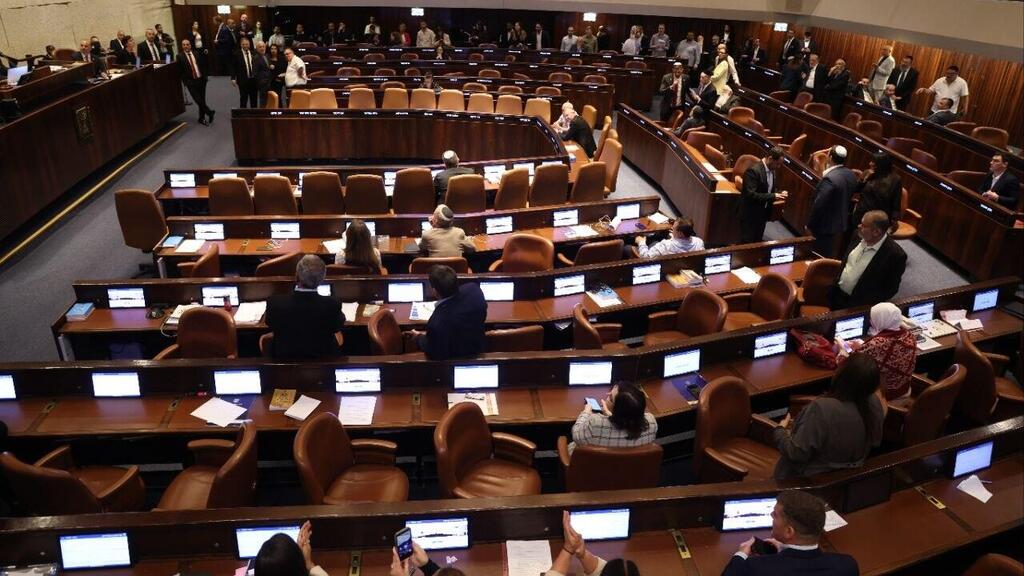
A central element of the ruling government coalition’s judicial reform plan advanced overnight between Monday and Tuesday, as the Knesset plenum approved in its first reading a bill to split the role of the attorney general. The bill passed with 65 lawmakers in favor and 47 opposed, and will now return to the Constitution Committee for further deliberations.
The bill, which the coalition will try to pass in its second and third readings before the current Knesset is dissolved, would divide the attorney general’s powers into two separate positions: attorney general and prosecutor general.
Under the proposal, the prosecutor general would hold authority over criminal law and head the prosecution system, while the attorney general would hold the remaining legal powers, lead the government legal advisory system and oversee the parts of the State Attorney’s Office that do not deal with criminal matters.
The bill proposes regulating the appointment process, eligibility requirements and term of office of the attorney general, stipulating that the government would appoint the attorney general based on the recommendation of the prime minister and justice minister, and that the term would match that of the government that appointed the attorney general. It also proposes regulating the conditions for ending the attorney general’s term, the grounds for removal or suspension, and the appointment of a deputy who would serve as acting attorney general.
The bill further states that the attorney general would assist the government in carrying out its policy and goals within the law and provide legal advice to all executive branch bodies. It also proposes The bill also proposes making the attorney general’s legal opinions generally binding on government agencies. But the government could decide that a specific opinion is not binding and allow agencies to disregard it.
The bill would give the government final authority over the state’s position in court. The attorney general would usually represent that position, but if the attorney general refused, or a minister felt the position was not being properly represented, the government could appoint another lawyer.
The bill would set rules for appointing the prosecutor general, who would be chosen by the government from candidates recommended by a public committee and serve one six-year term. It would also define how the prosecutor general could be removed or suspended, and who would serve as acting prosecutor general if needed. The role would be independent and subject only to the law.
Supporters of the bill raised two main arguments. One is concern over excessive concentration of power. According to this argument, the combination of the attorney general’s various roles created a public institution with broad powers, posing a problem in a democratic system, one of whose basic principles is the dispersal of governmental power.
A second argument is concern over an inherent conflict of interest between the roles, given that on one hand, the attorney general provides services to the government and ministers and builds relationships with them based on trust, closeness and cooperation, while on the other, the attorney general heads a system that leads investigations and indictments including against government ministers — a role that requires distance from them.
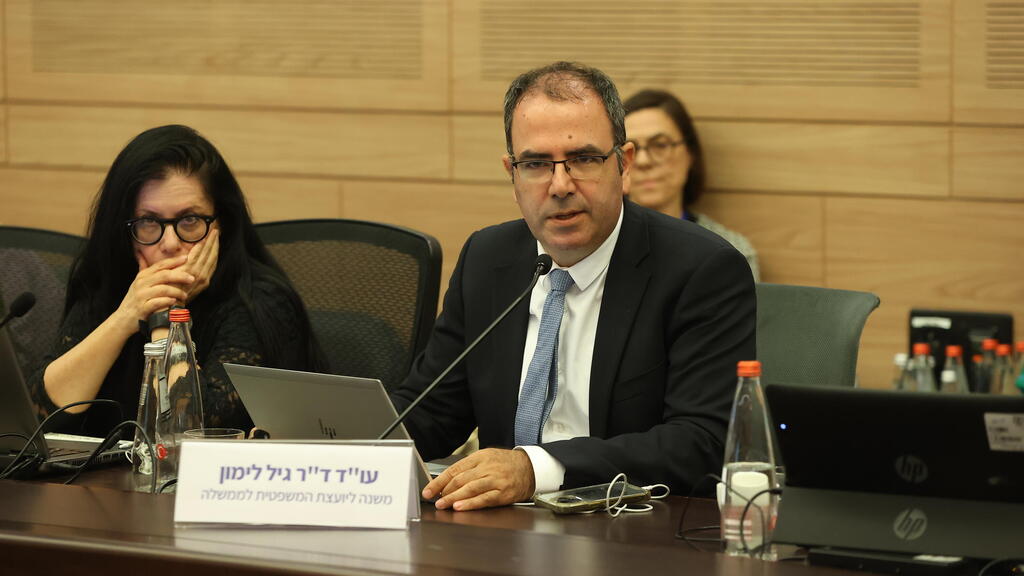
Deputy Attorney General Dr. Gil Limon: 'Abolishes the role of the attorney general as we know it, as a gatekeeper'
(Photo: Amit Shavi)
The Shas party said in a statement: “Tonight, with Shas’ support, the bill to split the attorney general’s role was approved in its first reading. This is a necessary step to reduce the excessive and aggressive power seized by the anarchist attorney general and her colleagues in the judicial system. In recent years, the government’s legal advisory system has become a factor that systematically thwarts government decisions and a cruel political persecution machine against entire publics. Her disgraceful failure yesterday in the High Court proves how forbidden it is to leave such great power in the hands of one person.”
'The gatekeeper role is being abolished'
The bill has drawn strong opposition from the legal establishment. “This law is not only a split law, but an abolition law — it abolishes the role of the attorney general as we know it, as a gatekeeper," Deputy Attorney General Dr. Gil Limon said during a Constitution Committee hearing. "This is a role of great importance in routine times, but all the more so in special circumstances, one of which is an election period, which demonstrates the combination of the attorney general’s roles. In our view, if we go to elections with a political attorney general, the meaning is a danger to democratic elections.”
“This is not related only to the method of appointment, but to the safeguards that exist in case law and practice — appointment, termination of office, binding status of opinions and more," he added. "Suppose that, a week before the election, the government wants to make a decision that has a substantive impact on the election. The government could determine that an attorney general’s opinion stating that this decision is illegal does not bind it."
Limon explains that a "very important component is safeguarding proper administration. During an election period, the role of all legal advisers in government ministries, who under the bill would be guided by a political attorney general, is to ensure that decisions involving improper use of state resources are not made. Ahead of elections, we establish dedicated teams whose purpose is to make sure that the government, which holds great power, does not use it to influence the election results. Suddenly, far-reaching decisions arrive on national priority and more.”