

The Lod District Court on Tuesday upheld a police appeal against Prime Minister Benjamin Netanyahu’s close adviser, Jonatan Urich, a suspect in the “Qatargate” affair, ruling that he must remain barred from the Prime Minister’s Office at least until September 10. Ynet has also learned that he has been summoned for additional questioning tomorrow at Lahav 433 headquarters.

Immediately after the ruling, Urich posted on X: “There is no power in the world that will prevent me from returning to work for Prime Minister Benjamin Netanyahu.”
Judge Amit Michaels wrote that there was no reason to dismiss the suspicion that Urich could be considered a public servant for the purpose of establishing potential charges of bribery and breach of trust. “I do not believe such a suspicion should have been ruled out,” he noted. “A final decision can only be made after a full hearing where both sides present arguments and relevant precedents.”
The judge stressed that there is still a reasonable suspicion of bribery and breach of trust—a low legal threshold sufficient to justify restrictions during an investigation. He added that how Urich’s role was perceived—by himself, by witnesses, or by the Prime Minister—was only one factor among many to be weighed later.
Michaels also questioned why Urich, despite his close ties to Netanyahu, did not inform the Prime Minister about his dealings with Qatar. “It is puzzling,” he wrote. “If these actions were truly legitimate, why conceal them—particularly when some touched directly or indirectly on sensitive issues at the heart of Israel’s security and foreign policy?”
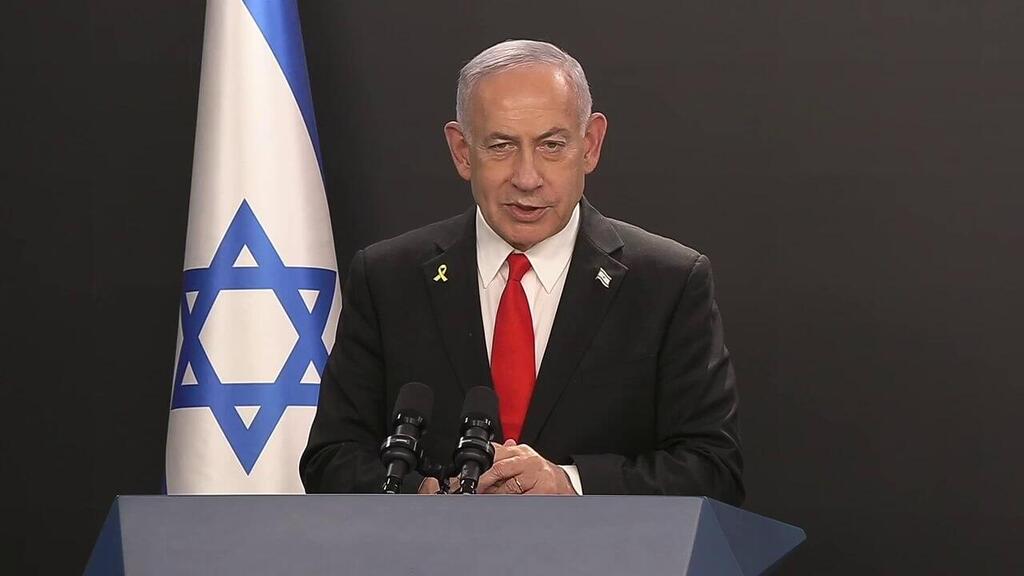
PM Netanyahu
(Photo: GPO)
The judge further noted that the sums Urich received from Qatar to improve its image were far from trivial: “The amounts transferred were by no means negligible, strengthening suspicion regarding his involvement in the project.”
Last week, the Petah Tikva Magistrate’s Court ruled that Urich could return to the Prime Minister’s Office, subject only to financial guarantees ensuring his compliance with questioning. Police appealed, arguing: “His actions ran counter to the interests of the Prime Minister’s Office and of the state. Evidence shows the Prime Minister was unaware of Urich’s full dealings with Qatar, was not presented with supporting documents, and was not informed of their scope or potential security implications.”
These comments followed testimony from Netanyahu himself in the Qatargate case, revealed by Judge Menachem Mizrahi of the Petah Tikva Magistrate’s Court. Netanyahu said there was “nothing wrong” with Urich’s work with Qatar, noting that “Qatar is not an enemy state.” He added that since Urich was not a public servant, “he can work in whatever he wants.”
Police, however, countered: “We hold direct evidence, including testimony from a central figure involved, that these acts were carried out in blatant contradiction to the interests of the Prime Minister’s Office—and therefore to Israel’s public interest.”