


The Economist devoted much of its late September 2025 issue to the dramatic erosion of American public and institutional support for Israel. In an extensive series of reports, the British weekly describes how, amid the prolonged war in Gaza and Prime Minister Benjamin Netanyahu’s policies, Americans are turning away from Israel—and the political system is reflecting this shift.
According to the magazine, Israel now finds itself more dependent on the United States than ever, yet its foundation of support is eroding in ways that could change the rules of the game. By drawing on polling data, testimonies, and political analysis, the Economist paints a comprehensive picture of a widening rift: across parties, generations, and communities, with the potential to reshape U.S. foreign policy toward Israel.
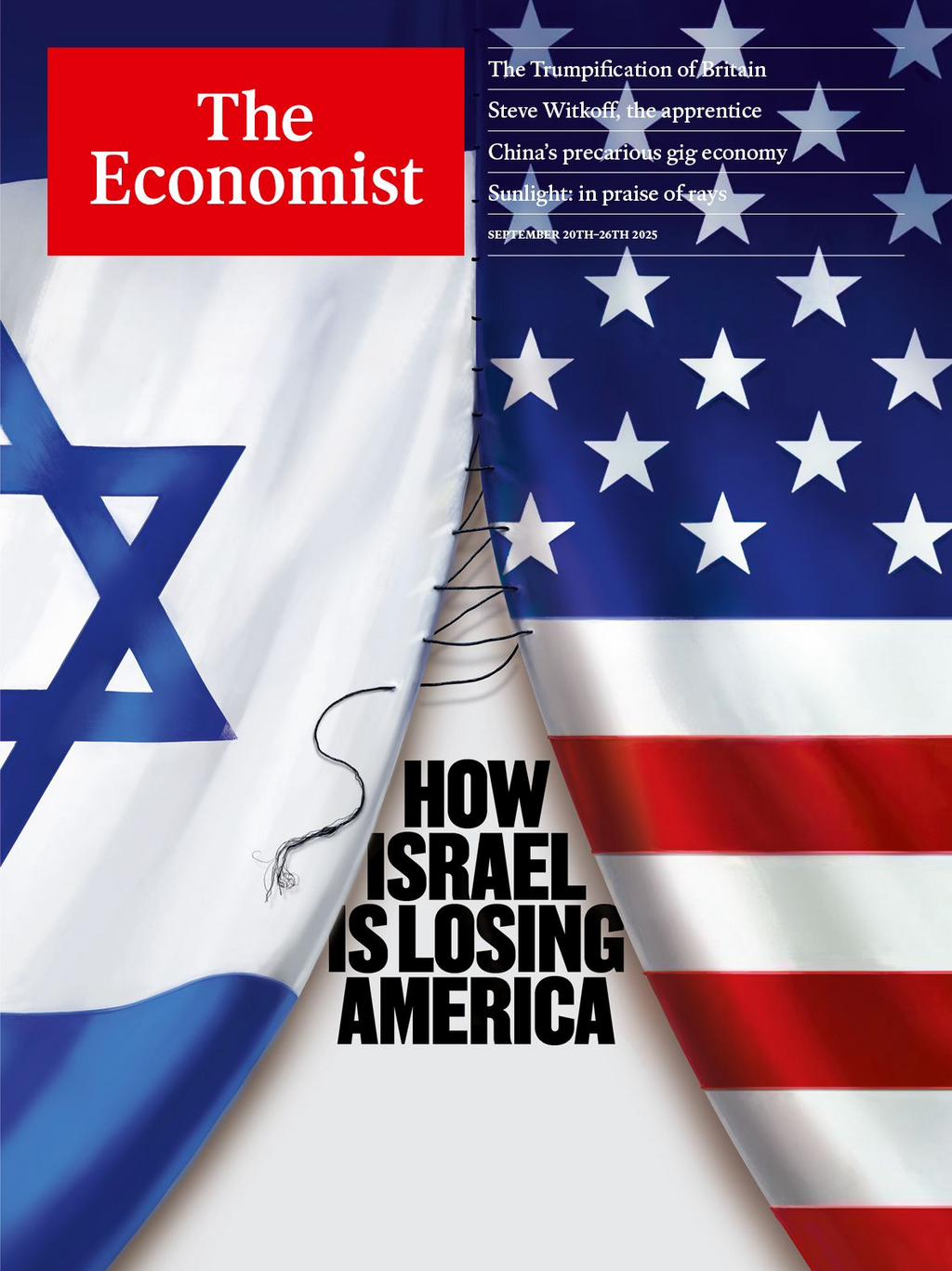
The publication frames its coverage not only as journalism but also as a warning: unless Israel changes course—both diplomatically and in the court of public opinion—it risks isolation, dependent but without a true backer on the global stage.
'How Israel is losing America'
In its cover story, “How Israel is losing America,” the magazine notes that while Netanyahu poses with U.S. Secretary of State Marco Rubio and declares the alliance as “solid as the Western Wall,” the numbers tell a different story. Polls show 53% of Americans now hold a negative opinion of Israel, with sympathy for Israel versus the Palestinians at a 25-year low. Forty-three percent of respondents believe Israel is committing genocide in Gaza.
The steepest drop is among older Democrats, where negative views have surged 23 percentage points in just three years. Support has also slipped among young Republicans—from 63% in 2022 to nearly an even split today. Even among young evangelicals, once a cornerstone of pro-Israel sentiment, support fell from 69% in 2018 to 34% in 2021, with pollsters noting the decline has continued.
(Photo: AFP)
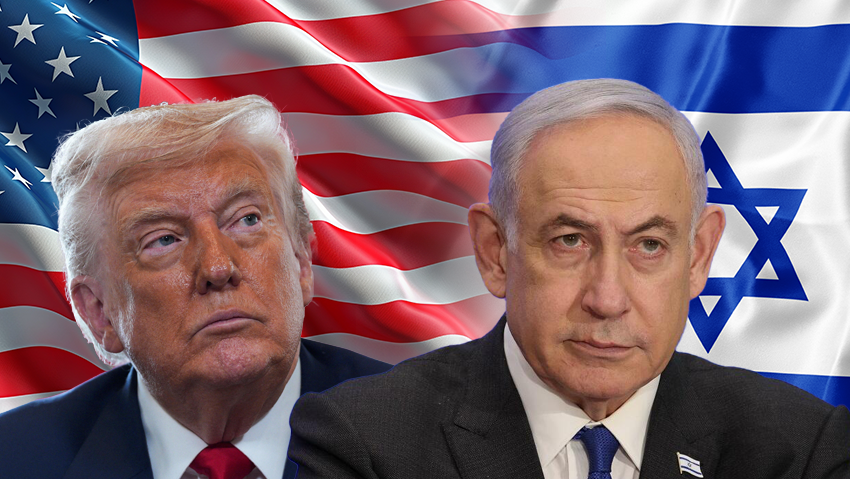
For decades, the U.S.-Israel bond rested on a mix of shared values and overlapping strategic interests, from the Cold War to the fight against Islamist extremism. But in the past decade, younger Americans have increasingly adopted colonial interpretations of the Israeli-Palestinian conflict and oppose Jerusalem’s right-wing government. The Economist argues Netanyahu has tethered Israel to the Republican camp, alienating Democrats—yet even on the right, cracks are beginning to show.
'America is falling out of love with Israel'
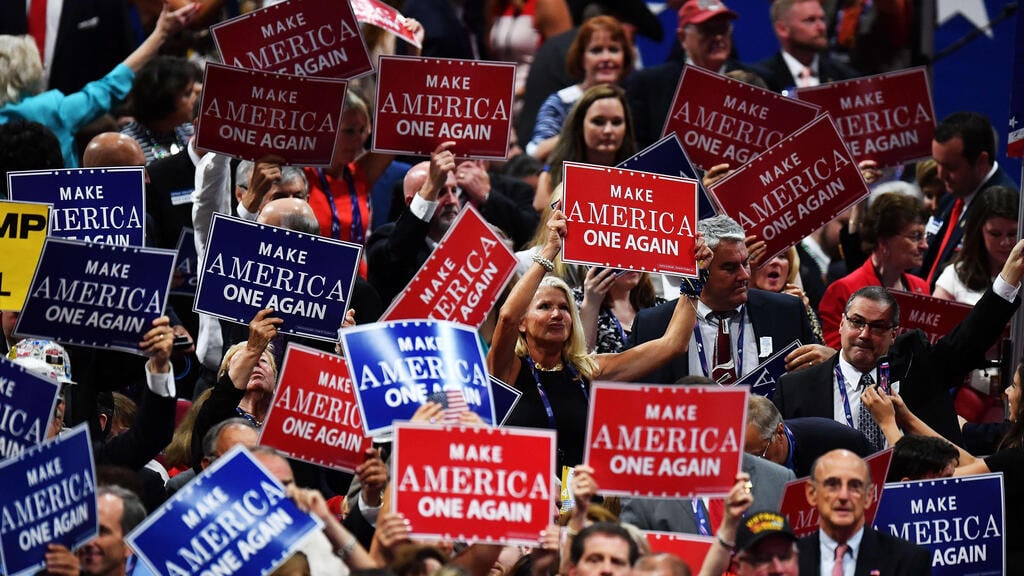
Another feature, “America is falling out of love with Israel,” describes how prominent MAGA figures such as Marjorie Taylor Greene, Steve Bannon, and Tucker Carlson are adopting anti-Israel rhetoric. Greene has tweeted accusations of “genocide” in Gaza and declared she will not fund “a foreign war in a foreign land.”
Once considered a given among Republicans, support for Israel is no longer guaranteed. The Gaza war and the joint U.S.-Israeli strike on Iran in June have fueled resistance among conservative leaders and voters alike.
The Economist highlights growing cracks in Congress. In July, 24 of 47 Democratic senators voted to halt arms shipments to Israel, compared with 18 last November. Lawmakers such as Rep. Jake Auchincloss of Massachusetts report constant revisions to their policy positions under pressure from constituents.
(Photo: Shutterstock)
Anti-Israel activists have also leveraged ties with movements like Black Lives Matter to rally young Americans, especially on the left but also in the center. Even staunchly pro-Israel politicians such as Rep. Ritchie Torres in New York face new challenges from activists in their districts, particularly supporters of anti-Israel mayoral candidate Zohran Mamdani.
Meanwhile, Netanyahu continues to expand settlements and tout Israel as a “super Sparta” capable of standing alone, betting that military superiority will suffice. The Economist calls this a “tragic notion” that risks alienating Israel’s only true shield: the United States.
A fading Palestinian state
The magazine also describes how global recognition of a Palestinian state is rising even as the reality on the ground diminishes. Ramallah presents a modern facade with cafés and new projects, but without real sovereignty. The Palestinian Authority faces collapsing infrastructure, unpaid salaries, shuttered schools, and growing economic dependence on Israel. Disillusioned young Palestinians look to Amman real estate or European passports for escape.
The report cites Finance Minister Bezalel Smotrich’s policies—blocking funds, limiting banking operations, and crippling the PA’s governance—alongside the surge in settlements and outposts, which have quadrupled since 2018 and fractured the West Bank into isolated enclaves. Smotrich’s sovereignty map envisions Israeli control over more than 80% of the territory.
Some Israeli advisers have floated proposals such as “the Hebron Emirate,” suggesting autonomy under Israeli oversight for the West Bank’s largest Palestinian city. While not an official Palestinian initiative, the Economist notes that a few local merchants have expressed interest, even fantasizing about Israeli passports.
At the same time, Israeli public opinion is shifting: surveys show unprecedented support among Jewish Israelis for expelling Palestinians from Gaza and the West Bank.
Long-term dangers
Optimists quoted by the Economist emphasize strong U.S.-Israel security coordination, unprecedented military cooperation against Iran, and Israel’s ongoing centrality in the Middle East. Yet the magazine warns the greatest threat lies not in immediate policy disputes but in long-term shifts in U.S. public consciousness.
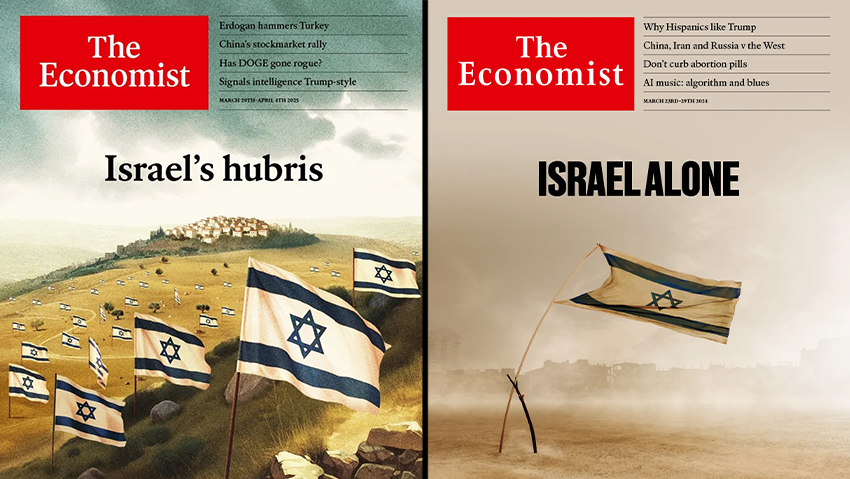
A year apart: the Economist’s criticism of Israel in March 2024 and 2025
With the current U.S.-Israel military aid agreement set to expire in 2028, fears are mounting in Jerusalem that President Donald Trump may refuse to renew it under its existing terms. Israeli officials are exploring ways to rebrand the package not as “aid” but as a “partnership,” stressing joint technological development and access to advanced weaponry. Framing it as mutual rather than one-sided, they believe, may ease approval in Washington.
Meanwhile, for the first time, Democratic senators have introduced a resolution urging Trump to recognize a demilitarized Palestinian state. Led by Sen. Jeff Merkley of Oregon, the symbolic measure is unlikely to pass, given Republican control and opposition to a two-state solution. Still, the sponsors said it aims to send a signal ahead of the U.N. General Assembly and pressure the administration to help Gaza.
A history of warning covers
This is not the first time the Economist has placed Israel on its cover. In March 2024, after more than five months of fighting in Gaza, the magazine depicted a lone Israeli flag in the desert, barely clinging to a thin branch, under the headline “Israel alone.” The image accompanied rising Biden administration criticism and Canada’s decision to halt arms sales to Israel.
A year later, after Israel’s military successes against Hezbollah and Iran in Operations Northern Arrows and Days of Retribution, and airstrikes against Yemen’s Houthis, the March 2025 cover reversed the imagery. It showed a field full of strong Israeli flags over a settlement backdrop, under the caption “Israel’s hubris.”
The magazine drew criticism for what some saw as contrasting portrayals: under Biden, a vulnerable Israel adrift; under Trump, a strong but arrogant Israel portrayed as blinded by its own power.
Adding to the sense of urgency, the New Yorker also dedicated a feature this week to the collapse of U.S. support for Israel. Titled “Israel’s New Occupation,” it argues that Netanyahu’s “super Sparta” rhetoric dovetails with a growing reality of isolation, particularly from its most vital ally.
The piece warns of waning U.S. pressure, declining statements of support, and the risk that American aid, investments, and cooperation could shrink. It portrays a country that once thrived on innovation and openness, now reduced to militarism and insularity, tethering its political course to Netanyahu’s strategy while losing legitimacy abroad—especially in the United States.