

More than a year has passed since Arbel Yehoud was freed from captivity after 482 days in what she describes as the hell of Gaza. Four months have gone by since she was reunited with her partner, Ariel Cunio, who was held for 738 days. Yet even now, Arbel struggles to speak about the horrors she endured, leaving them, in her words, in a “closed suitcase.” “What I went through, I went through from beginning to end, almost every day in captivity,” she said, declining to elaborate.
In a joint interview with Channel 12 News, Arbel said that after Ariel Cunio was released in the latest hostage deal in October, they "sat a little to the side and started talking. Then it dawned on both of us that he didn’t know anything about what I went through in captivity.”
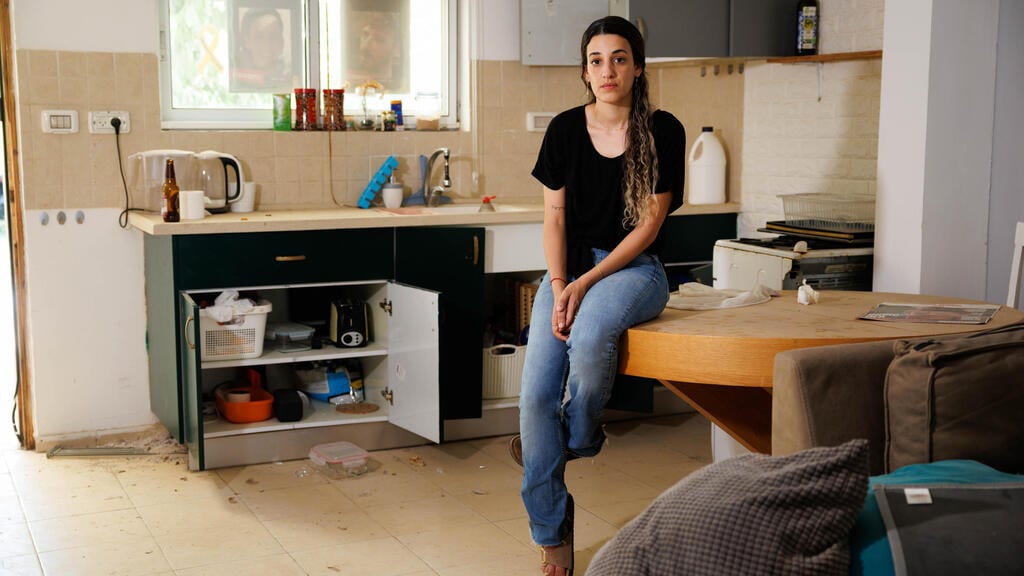
“Even if I understood, I didn’t want to accept it in any way,” Ariel said of the day of his release and the painful conversation that followed. “Then you get punched in the stomach. It feels like your world has collapsed. By the end of that day, you could see it on me. I fainted. I started convulsing. My body just collapsed.”
Arbel said she had been determined to hold everything in until Ariel returned. “He is the person closest to me, the one I want to share with and tell. And we’re not there yet. It’s very hard. I so appreciate and admire and love the hostages who manage to sit down and open their mouths. To tell it, to open up their trauma.”
She said the shift for her came after former hostage Romi Gonen revealed the sexual harassment she endured in captivity, beginning on the fourth day. “I was repressing it well until then,” Arbel said.
Referring to Gonen’s account of meeting other female hostages in a tunnel and realizing she was in worse condition than the others, Arbel said she identified with much of what Gonen described, particularly the gap she felt when she encountered the other women.
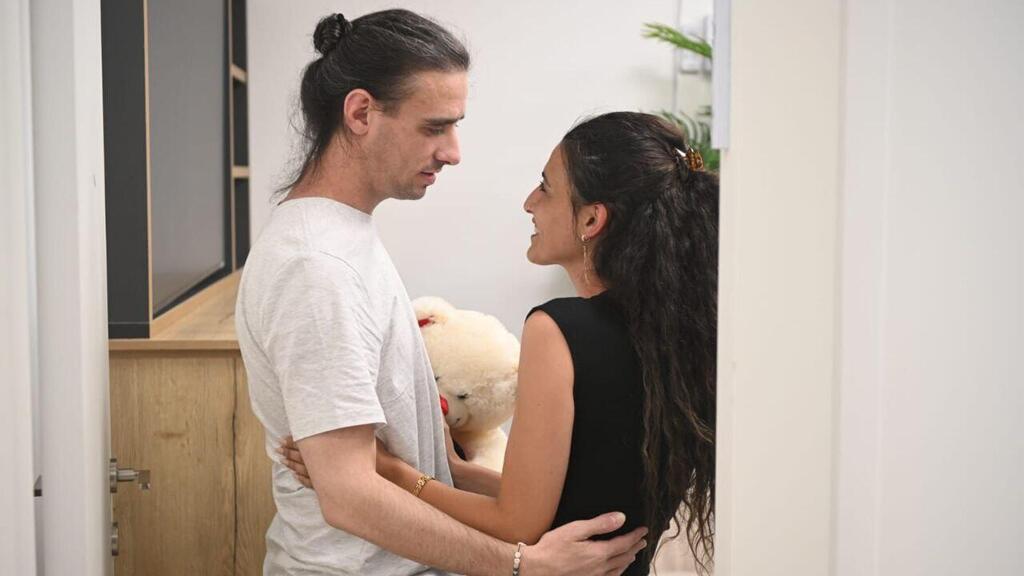
Arbel and Ariel Cunio
“But even after I saw the horrors Romi had to endure, the gap remained. Because it was for so, so long. What I went through, I went through from beginning to end,” she said.
In a separate interview with the Daily Mail, Arbel said that what Gonen endured “I went through almost every day in captivity.” She was held alone throughout that period and said she attempted to take her own life on several occasions. “I tried to end it three times,” she said. “I felt I couldn’t go on. There were moments when I thought it was the only way out.”
What kept her alive, she said, was her love for Ariel, from whom she was separated after the two were abducted together. “Every time I remembered Ariel, it gave me the strength to keep breathing,” she said of her suicidal thoughts.
Arbel declined to provide further details about the abuse but said she was held in complete isolation, starved and subjected to psychological, sexual and physical abuse, including the breaking of two ribs.
Recalling their abduction on October 7, she said: “I put my hand over our dog’s mouth so she wouldn’t bark, but it didn’t help. They found us, dragged us outside and shot Merv in front of our eyes. We heard her crying until she died.” Arbel was beaten, and Ariel suffered severe blows to the head until he bled. Ariel’s brother David, his wife Sharon and their children were also abducted. Arbel’s brother Dolev was initially listed as missing and was later confirmed killed. Three hours after being taken into Gaza, the couple were separated and sent to different hiding places.
Arbel Yehoud and Gadi Mozes walk through crowds of Gazans on the day of their release from captivity
(Video: Reuters)


“I drove them crazy with questions about her,” Ariel said. “I wanted to hear her. I wanted to see her. And they understood I wouldn’t stop until they gave me something.” Eventually, he said, their captors agreed to let them exchange notes through intermediaries. The messages were short and direct: “I’m OK. I love you. Be strong.”
“It gave me strength,” Ariel told the Daily Mail. “It reminded me I wasn’t alone, that someone was fighting with me, even quietly.” Arbel said she constantly feared Ariel would try to escape and risk his life. “So the letters calmed me,” she said. But after several months, the exchanges stopped.
“They told Ariel that if he mentioned my name again, they would kill me,” Arbel said. “Every day I hoped he was safe. I didn’t know if he was alive, if they were hurting him. That fear was worse than anything.”
“The psychological price was insane,” Ariel added. “The separation, the uncertainty about whether she was OK. Sometimes I went crazy. I would walk in circles, bang my head against the wall just to release the tension.”
Arbel, who was held at times in refugee camps in the Gaza Strip, said her captors interrogated her and tried to force her to convert to Islam. The two said that at first there was even talk of selling them or smuggling them out of Gaza. “I was held with a baby who was 4 months old. When I was released, he was 15 months old. They carry knives from age 7 or 8,” Arbel said of the Gazans she encountered. “Three days before I left, the baby pointed a gun at me. He was playing with it. He pointed it at me while I begged his mother to take it away.”
Arbel, who was released last January, walked out alone on her final day into a bloodthirsty crowd, surrounded by hundreds of gunmen. “I remember going out and seeing a sea of green headbands,” she said. “I was the only woman. My brain was trying to process — I’m free, but still surrounded by them? I was afraid, but I knew I had to survive. I thought about Ariel — I had to get back to him.” Then, for the first time since her abduction, she encountered another Israeli — Gadi Mozes, who was also released that day.
Ariel was freed after 738 days in captivity. “Since I came back, I haven’t really come back to life,” Arbel concluded. “What kept him going was the thought of me, the possibility that we would meet again. That maybe we would still have a life together.”
Now they continue to struggle — with sleepless nights, flashbacks and trauma — trying to learn how to live again after their home in the kibbutz of Nir Oz was destroyed.